Which mustelid is noted for representing an evolutionary push toward large size and resistance to cold, often called the 'skunk bear'?
Answer
The wolverine (*Gulo gulo*)
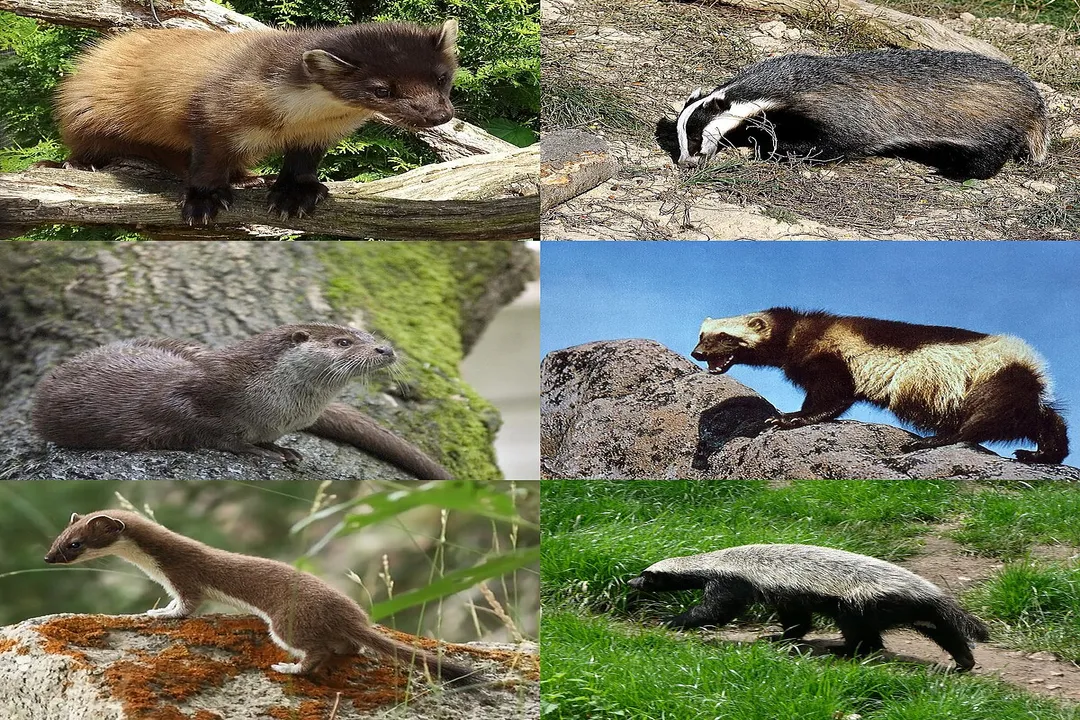
While many mustelids are slender or aquatic, the family includes members that have pushed the limits of size and adaptation to extreme cold. The wolverine, *Gulo gulo*, is specifically mentioned as representing this push toward larger dimensions and robustness, despite sometimes being colloquially referred to as the 'skunk bear.' Crucially, the wolverine remains firmly classified within *Mustelidae*. Its morphology showcases that while elongation is common, ecological demands like surviving harsh winters have driven some lineages toward a heavier build while retaining the fundamental skull architecture inherited from their earlier carnivoran relatives.
Related Questions
What defines the classic weasel morphology that proved successful for exploiting tight spaces?Which groups are specifically named as members of the *Musteloidea* superfamily alongside *Mustelidae*?According to molecular clock analyses, what was the estimated divergence time for Mephitidae (Skunks) and Mustelidae?What major biogeographic event is cited as evidence for Musteloidea superfamily incursions into South America?How did the sea otter, a member of *Mustelidae*, modify the ancestral body plan for its marine environment?What geological period followed the demise of non-avian dinosaurs, initiating significant mammalian diversification?What dietary and cranial characteristic distinguishes the hypothetical Oligocene analog, *Protosmustela*, from modern *Mustela nivalis*?What common evolutionary theme explains the successful diversity within *Mustelidae*?How many species are estimated to comprise the family *Mustelidae* within the order Carnivora?Which mustelid is noted for representing an evolutionary push toward large size and resistance to cold, often called the 'skunk bear'?