Which morphology best describes the overall body shape of *Xenacanthus* compared to modern open-ocean sharks?
Answer
Eel-like or elongated, slender
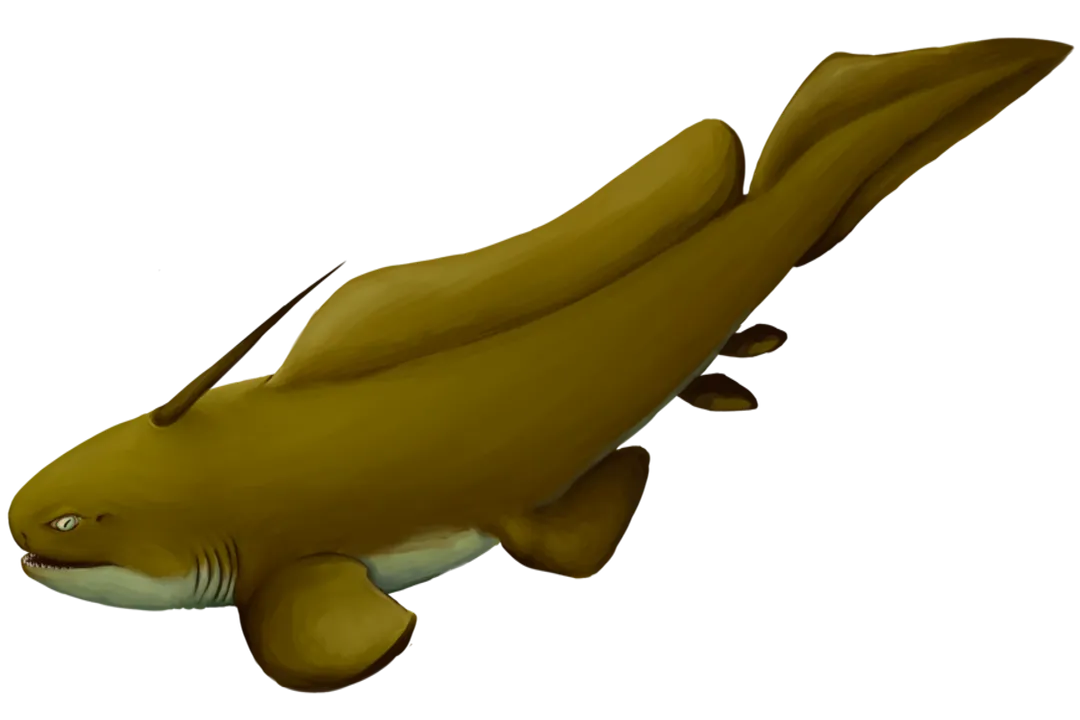
*Xenacanthus* exhibited a body plan fundamentally different from the typical robust, fusiform shape associated with many modern sharks that frequent the open ocean, such as the Great White. Instead, reconstructions show a decidedly eel-like or elongated, slender body. This morphology strongly implies an adaptation for navigating complex, potentially slower-moving, and shallower freshwater environments like swamps or rivers. This body plan provided the necessary agility to weave through dense aquatic vegetation or submerged debris, rather than optimizing for sustained, high-speed pursuit in open water.
Related Questions
What is the direct translation of the genus name *Xenacanthus*?From which specific anatomical area does the defining nuchal spine of *Xenacanthus* extend backward?Which morphology best describes the overall body shape of *Xenacanthus* compared to modern open-ocean sharks?How does the configuration of the dorsal fins in *Xenacanthus* differ from the familiar shark body plan?What specific structural characteristic defines the dentition of *Xenacanthus*?What specialized ecological niche did *Xenacanthus* occupy during the late Paleozoic era?*Xenacanthus* is the most famous genus within which distinct, extinct order of specialized freshwater sharks?Which posterior locomotor structure was significantly elongated in *Xenacanthus*, suggesting optimization for agility?During which periods of the late Paleozoic era did the freshwater shark *Xenacanthus* thrive?Regarding the cranial details, how were the jaws of *Xenacanthus* situated on the head structure?What is the generally hypothesized primary defensive function attributed to the prominent, sharp nuchal spine?