What is the generally hypothesized primary defensive function attributed to the prominent, sharp nuchal spine?
Answer
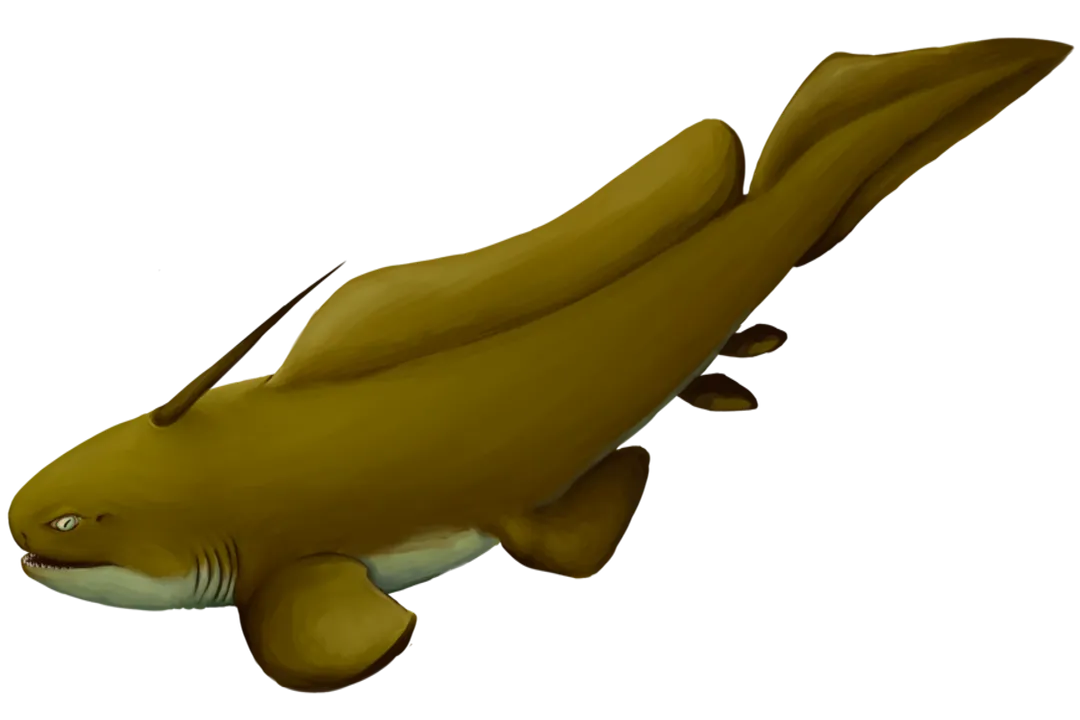
To serve as a primary defense mechanism, making the shark exceedingly difficult for a predator to grasp or swallow.
The function of the nuchal spine, given its sharp, rigid, and backward-pointing nature, has been heavily theorized toward defense. Paleontologists generally hypothesize that this structure acted as a crucial deterrent. If a larger predator, such as a massive amphibian or fish competitor, attempted to attack or engulf *Xenacanthus*, the backward-projecting spike would make the prey exceptionally difficult to swallow or grasp effectively, forcing the attacker to approach from a very specific, perhaps disadvantageous, angle to avoid injury.
Related Questions
What is the direct translation of the genus name *Xenacanthus*?From which specific anatomical area does the defining nuchal spine of *Xenacanthus* extend backward?Which morphology best describes the overall body shape of *Xenacanthus* compared to modern open-ocean sharks?How does the configuration of the dorsal fins in *Xenacanthus* differ from the familiar shark body plan?What specific structural characteristic defines the dentition of *Xenacanthus*?What specialized ecological niche did *Xenacanthus* occupy during the late Paleozoic era?*Xenacanthus* is the most famous genus within which distinct, extinct order of specialized freshwater sharks?Which posterior locomotor structure was significantly elongated in *Xenacanthus*, suggesting optimization for agility?During which periods of the late Paleozoic era did the freshwater shark *Xenacanthus* thrive?Regarding the cranial details, how were the jaws of *Xenacanthus* situated on the head structure?What is the generally hypothesized primary defensive function attributed to the prominent, sharp nuchal spine?