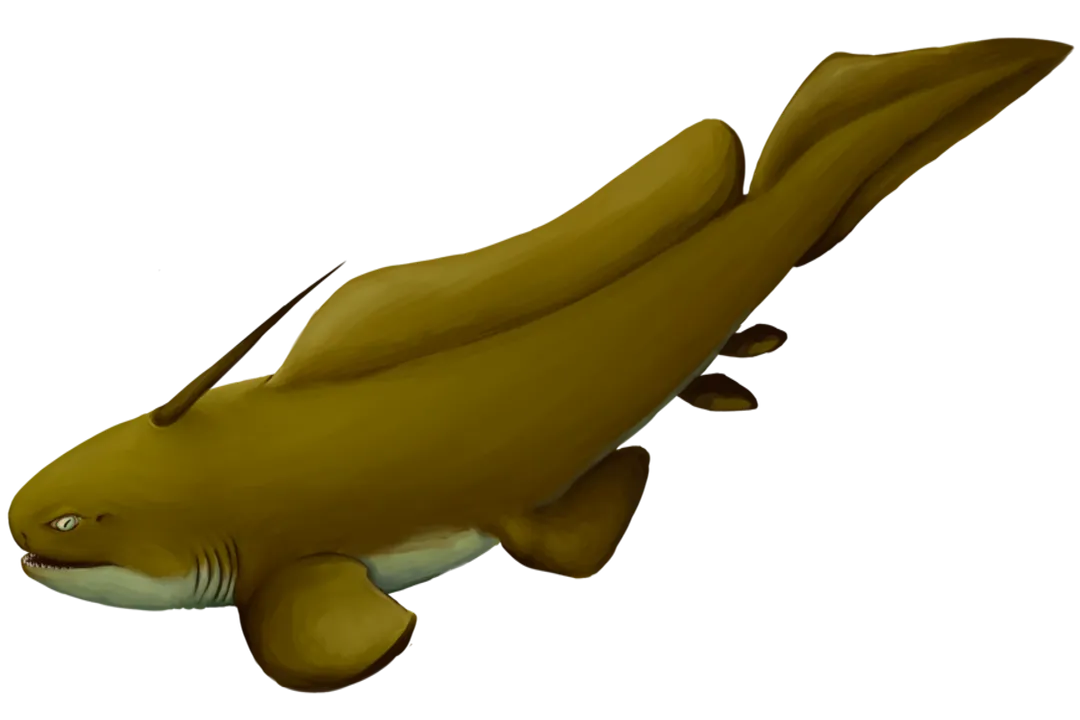
From which specific anatomical area does the defining nuchal spine of *Xenacanthus* extend backward?
Answer
Back of the head or nape region
The nuchal spine is identified as the morphological trait giving the genus its name, and its precise location is critical for identification. This long, sharp projection is situated at the rear of the head, specifically extending backward from the nape region. This positioning distinguishes it from a typical dorsal fin spine, which arises from the main body musculature along the back. The placement suggests a structure specifically evolved for protection of the head and neck area, providing a significant deterrent against predators attempting an engulfing strike from the front or above.
Related Questions
What is the direct translation of the genus name *Xenacanthus*?From which specific anatomical area does the defining nuchal spine of *Xenacanthus* extend backward?Which morphology best describes the overall body shape of *Xenacanthus* compared to modern open-ocean sharks?How does the configuration of the dorsal fins in *Xenacanthus* differ from the familiar shark body plan?What specific structural characteristic defines the dentition of *Xenacanthus*?What specialized ecological niche did *Xenacanthus* occupy during the late Paleozoic era?*Xenacanthus* is the most famous genus within which distinct, extinct order of specialized freshwater sharks?Which posterior locomotor structure was significantly elongated in *Xenacanthus*, suggesting optimization for agility?During which periods of the late Paleozoic era did the freshwater shark *Xenacanthus* thrive?Regarding the cranial details, how were the jaws of *Xenacanthus* situated on the head structure?What is the generally hypothesized primary defensive function attributed to the prominent, sharp nuchal spine?