Xenacanthus Physical Characteristics
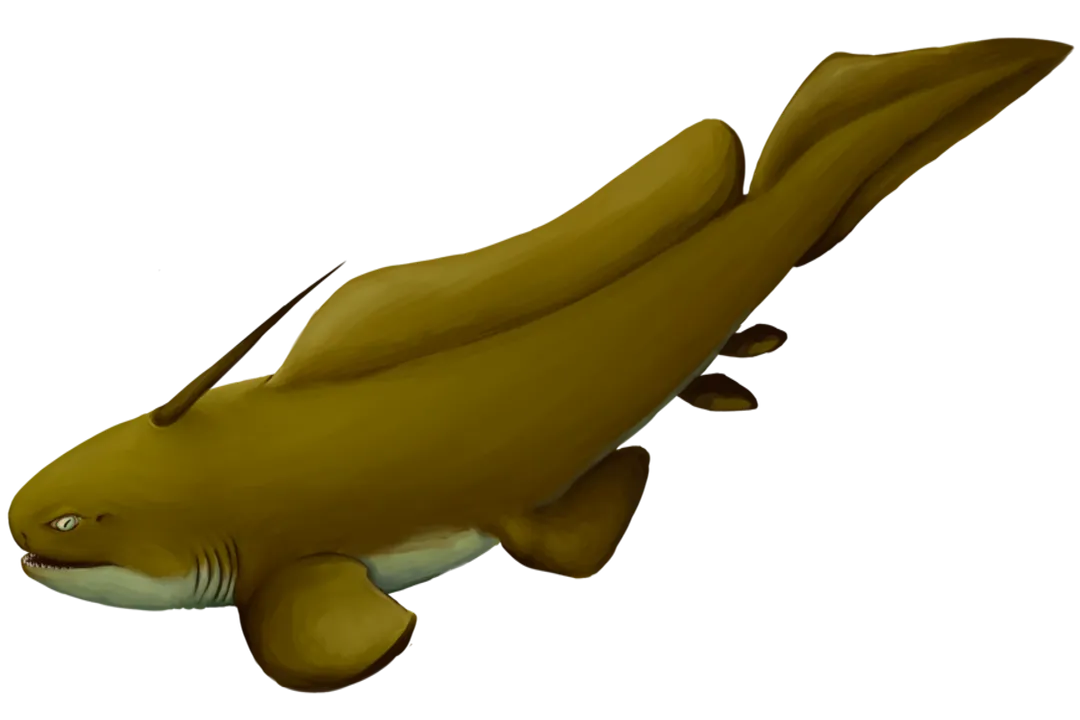
The appearance of Xenacanthus immediately sets it apart from the sharks we commonly picture today. This ancient, extinct genus of freshwater shark swam in the waters of the late Paleozoic era, notably during the Carboniferous and Permian periods. [1][3][4][7] The very name, Xenacanthus, translates to "strange spine," which points directly to its most defining physical characteristic. [4] While modern sharks are often bulky predators of the open ocean, Xenacanthus presented a more specialized, streamlined morphology suited for its freshwater existence. [5]
# Slender Form
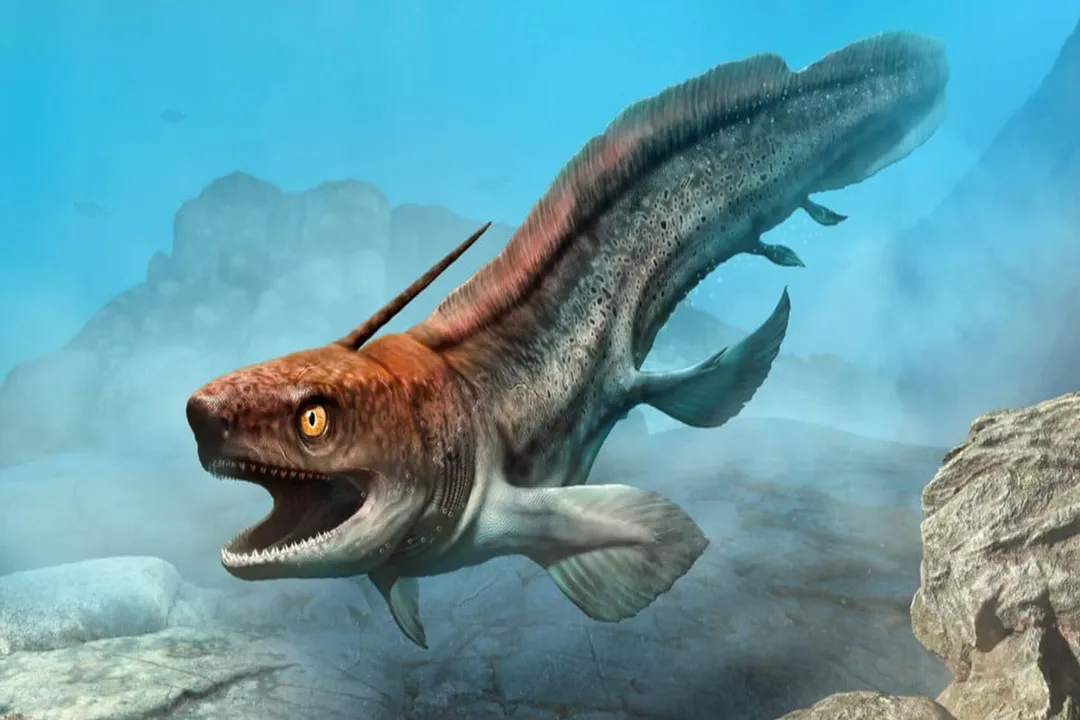
One of the most striking features when observing skeletal reconstructions or artistic renderings of Xenacanthus is its overall body shape. Unlike many of its contemporary marine relatives, Xenacanthus possessed a decidedly eel-like or elongated, slender body. [1][3][5] This body plan suggests an organism adept at navigating complex, perhaps slower-moving or shallower freshwater systems, such as swamps or rivers. [4] While specific size estimates vary across different species within the genus, some accounts place their total length at around one meter, or roughly three feet. [5] Considering the environment, this size places it as a mid-level predator, capable of ambushing smaller prey in cluttered habitats, rather than a massive pursuit hunter. [5] The general fusiform shape typical of many fish is slightly distorted here by the extended fins and the prominent head structure, creating a silhouette quite distinct from, say, an early Cladoselache or a modern Great White.
# Spine Structure
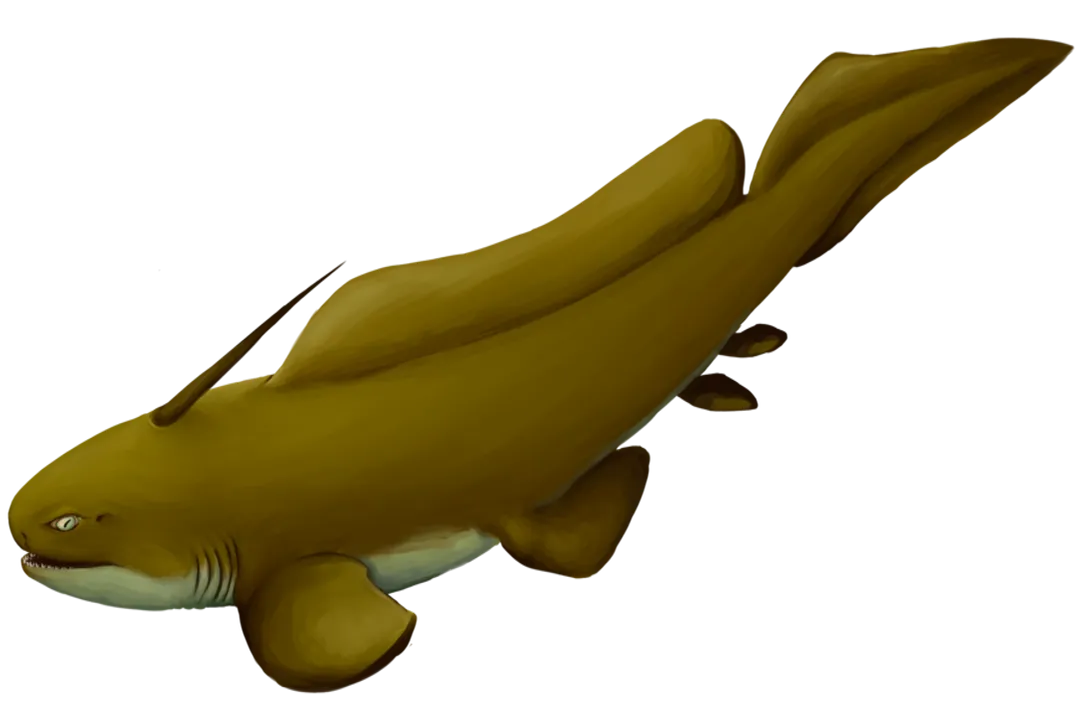
The feature that gives the genus its name is the nuchal spine. [1] This is not a dorsal fin spine, but rather a long, sharp projection that extended backward from the back of the head or nape region. [1][4][6][7] This spine is perhaps the single most important morphological trait defining Xenacanthus and its close relatives within the order Xenacanthiformes. [7]
The exact function of this prominent structure has been debated, as is common with specialized paleo-features. It is generally hypothesized to have served as a primary defense mechanism, making the shark exceedingly difficult for a larger predator to swallow or even grasp effectively. [4][6] Imagine a potential attacker, perhaps a large amphibian or a bigger fish, attempting to engulf this creature only to meet this sharp, backward-pointing spike; it would necessitate a very specific approach angle for any successful strike. Furthermore, given that this feature is present in many, if not all, species of this ancient group, it may have also played a role in species recognition or display during mating rituals, similar to elaborate head ornamentation seen in some modern freshwater fish species, albeit much more overtly dangerous. [1] The presence of such a rigid, non-flexible spine suggests a static, rather than dynamic, defensive role once the animal was in danger.
# Fin Arrangement
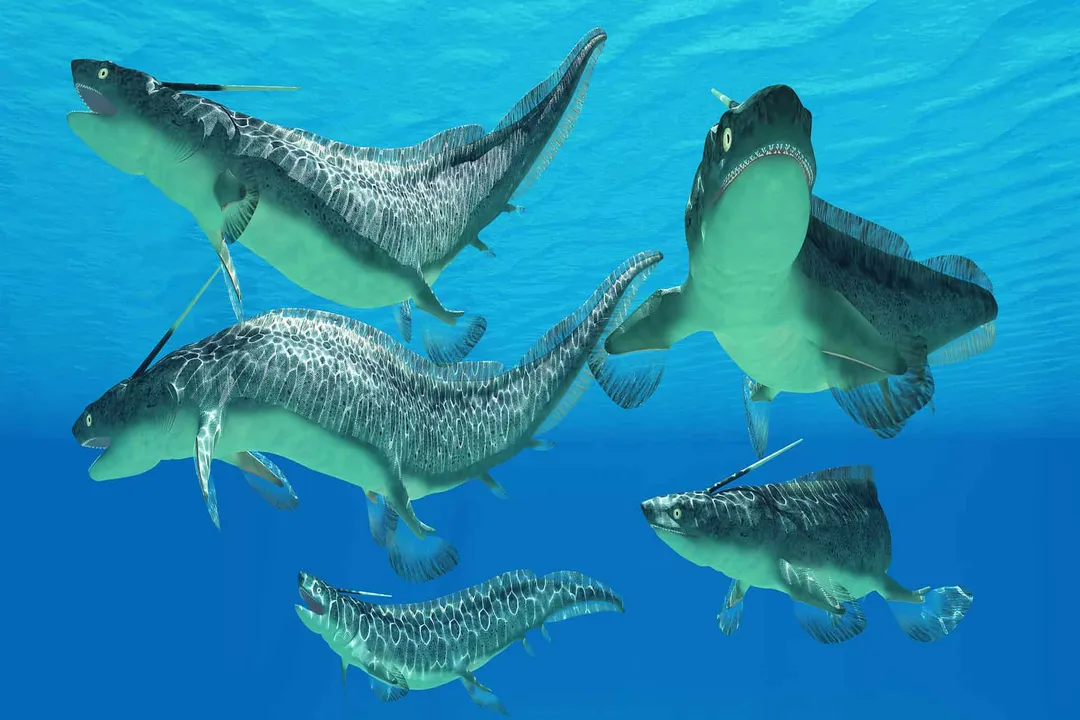
The configuration of the fins on Xenacanthus represents another significant divergence from the familiar shark body plan. [1] Instead of a single, large dorsal fin set centrally on the back, Xenacanthus typically exhibited two dorsal fins. [1][3]
However, the most noteworthy feature of its posterior locomotion apparatus is the anal fin. This fin was significantly elongated, running along much of the rear underside of the body. [1][3][5] This long anal fin, combined with the powerful caudal (tail) fin, would have provided a strong thrust mechanism, likely optimized for short bursts of speed or precise maneuvering in confined spaces, again supporting the idea of a habitat requiring agility over sustained, open-water cruising. [1][5]
The paired fins—the pectoral fins (the front pair, analogous to arms) and the pelvic fins (the rear pair)—were present, as expected in sharks. [1] The pectoral fins, being positioned closer to the head, would have been essential for stabilization and subtle steering, balancing the drag created by the lengthy anal fin structure. When considering how such an animal might have hunted, its slender body and long anal fin suggest an ability to "slither" or weave through submerged logs or dense aquatic vegetation, using its pectoral fins for fine control while the tail propelled it forward toward unsuspecting prey. [5]
# Cranial and Dental Details
Moving to the head region, Xenacanthus possessed a relatively broad, perhaps somewhat flattened skull structure compared to some marine sharks. [1] The jaws were positioned ventrally, meaning they were situated on the underside of the head, a common trait among sharks that scrape food off the bottom or consume benthic (bottom-dwelling) invertebrates and smaller fish. [1][3]
The dentition of Xenacanthus is particularly diagnostic, offering a clear window into its diet. The teeth are characterized by their asymmetry. [1][3] They are often described as being arranged in rows composed of two diverging sets. [1] Specifically, the teeth are often depicted as having two cusps or points angled in opposite directions. [3] This structure is highly efficient for grasping and tearing food items, suggesting a diet composed of soft-bodied prey, like early amphibians, small bony fish, or larger invertebrates present in its Carboniferous and Permian ecosystems. [3] This specific tooth morphology is crucial for paleontologists in identifying fragments of Xenacanthus remains, as teeth often fossilize better than cartilage skeletons. [1] If one were to compare this tooth structure to a modern, broad-feeding shark, the difference is stark; Xenacanthus favored a gripping, perhaps slightly shearing bite over the massive tearing jaws associated with large marine hunters.

# Context and Classification
To fully appreciate the physical characteristics of Xenacanthus, it is helpful to place it within its taxonomic context. Xenacanthus is the most famous genus within the extinct order Xenacanthiformes. [7] These sharks represent a distinct evolutionary side branch that specialized in freshwater habitats throughout the late Paleozoic. [7] While the group flourished for an extended period, they eventually died out, leaving no modern descendants. [7]
Their primary habitat seems to have been continental freshwaters, such as the vast inland seas, lakes, and river systems of the ancient continents. [4][5] This ecological niche is relatively rare for sharks historically, most of which are marine. The physical adaptations—the slender body for navigation, the dual dorsal fins, the extended anal fin for maneuverability, and the defensive nuchal spine—all converge to paint a picture of a specialized aquatic survivor in a dynamic, non-marine world. Understanding that Xenacanthus was truly a freshwater fish, despite being a shark, fundamentally changes how one interprets its morphology; it was adapted to compete with early tetrapods and armored fish in an environment entirely different from the open ocean where Chondrichthyes (the cartilaginous fishes) generally thrive. [4] The fossil record, particularly from locations like Texas, provides us with tangible proof of this unique freshwater specialization. [4]
# Comparative Morphology
When comparing Xenacanthus features across the available fossil evidence, we see strong consistency supporting the genus definition, though subtle variations exist across the named species. For instance, while the nuchal spine is characteristic, its precise length and robustness might have varied slightly, potentially correlating with the body size or the maturity of the individual. [1]
| Feature | Description in Xenacanthus | Implication/Analogy |
|---|---|---|
| Body Shape | Elongated, slender, eel-like [1][3][5] | Optimized for maneuvering in complex, likely slow-moving water. |
| Nuchal Spine | Long, sharp projection extending backward from the head [1][4][6] | Primary defense mechanism against predation or combat. |
| Dorsal Fins | Two separate dorsal fins [1][3] | Variation from many modern, single-dorsal sharks. |
| Anal Fin | Very long, extending along much of the posterior underside [1][3][5] | Enhanced propulsion/maneuverability for short bursts. |
| Teeth | Asymmetrical, often in rows of two diverging sets [1][3] | Efficient grasping and tearing of soft-bodied prey. |
It is interesting to note the contrast between Xenacanthus and other ancient, basal sharks. For example, early Paleozoic sharks like Cladoselache were known for their relatively smooth, dolphin-like bodies and lack of extensive armor or specialized spines. [1] Xenacanthus, existing much later in the Permian, shows an evolutionary path that favored ornamentation and specialization within its freshwater niche. If we consider the environmental pressures present during the Permian—periods of fluctuating water levels and increasing competition from early reptiles moving into damp terrestrial areas—the development of a highly visible and dangerous defensive structure like the nuchal spine makes evolutionary sense as a response to novel predatory threats. [4] This suggests that the pressures driving shark morphology were highly localized, with freshwater species evolving solutions radically different from their marine cousins.

# Preservation Challenges
While the physical description is compelling, it is important to remember that our understanding is filtered through the fossil record. Most Xenacanthus specimens are known from isolated teeth or partial skeletons preserved in sedimentary rock, such as those found in Texas formations. [4] Cartilaginous skeletons, like those of all sharks, do not preserve as readily as bone. This means that precise measurements, especially of soft tissues or the exact cartilaginous structure supporting the spine, rely heavily on exceptionally preserved specimens or inference based on associated skeletal elements. [1] The distinctiveness of the teeth and the spine, however, allows for confident identification even when other parts of the body are missing, which speaks to the reliability of these specific characteristics as identifiers for the genus. [1][3]
The fact that we can confidently describe the dual dorsal fins and the long anal fin indicates that at least some individuals were preserved in remarkable three-dimensional detail or through carbonization that captured the overall outline of the fins, providing paleontologists with a solid foundation for reconstructing the animal's swimming mechanics and overall silhouette. [1][5]
Related Questions
#Citations
Xenacanthus - Wikipedia
Xenacanthus | Ancient, Prehistoric, Extinct - Britannica
Xenacanthus | Dinopedia - Fandom
Oh, hello there. Meet Xenacanthus, a Permian freshwater shark from ...
Xenacanthus Fish Facts - A-Z Animals
Xenacanthus – @wtf-triassic on Tumblr
Xenacanthus Shark Fossil
Xenacanthus - PaleoCodex