Regarding the cranial details, how were the jaws of *Xenacanthus* situated on the head structure?
Answer
They were positioned ventrally, on the underside of the head.
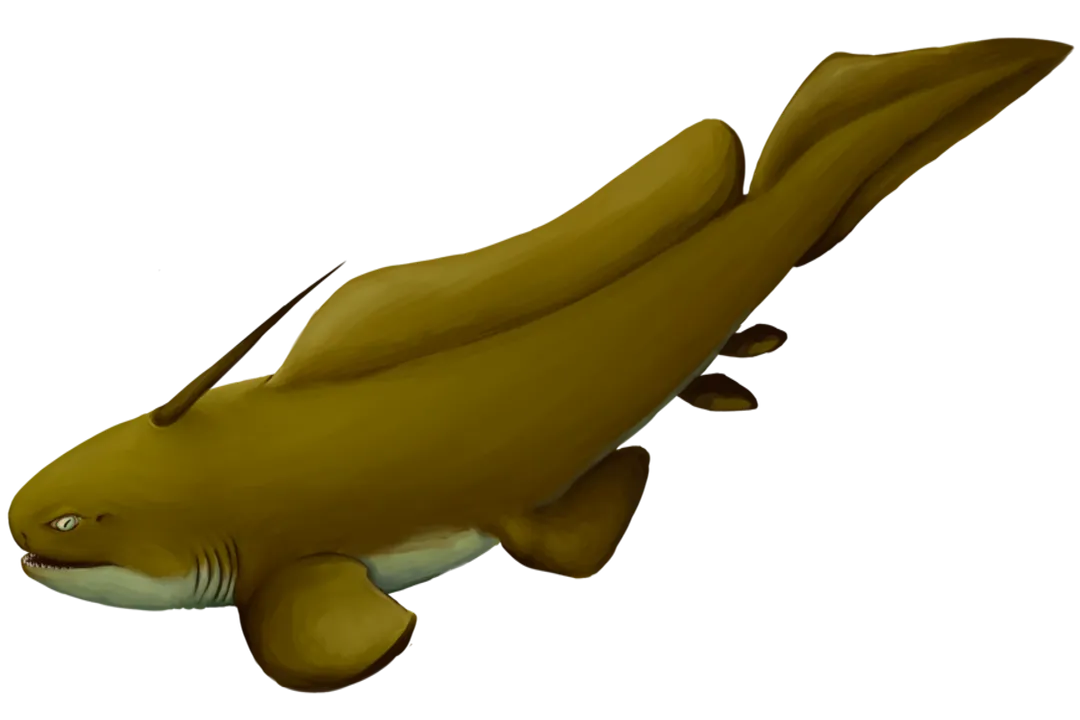
The positioning of the jaws on the skull provides clues regarding feeding behavior. In *Xenacanthus*, the jaws were oriented ventrally, meaning they were located on the underside of the head structure. This ventral jaw placement is typical for sharks that feed close to the bottom of their environment, scraping food off the substrate or consuming benthic invertebrates and smaller fish that inhabit the lower strata of the water column, as opposed to those adapted for capturing prey in mid-water or at the surface.
Related Questions
What is the direct translation of the genus name *Xenacanthus*?From which specific anatomical area does the defining nuchal spine of *Xenacanthus* extend backward?Which morphology best describes the overall body shape of *Xenacanthus* compared to modern open-ocean sharks?How does the configuration of the dorsal fins in *Xenacanthus* differ from the familiar shark body plan?What specific structural characteristic defines the dentition of *Xenacanthus*?What specialized ecological niche did *Xenacanthus* occupy during the late Paleozoic era?*Xenacanthus* is the most famous genus within which distinct, extinct order of specialized freshwater sharks?Which posterior locomotor structure was significantly elongated in *Xenacanthus*, suggesting optimization for agility?During which periods of the late Paleozoic era did the freshwater shark *Xenacanthus* thrive?Regarding the cranial details, how were the jaws of *Xenacanthus* situated on the head structure?What is the generally hypothesized primary defensive function attributed to the prominent, sharp nuchal spine?