Which level in the Linnaean hierarchy places *Python regius* among non-venomous constrictors possessing pelvic vestiges?
Answer
Family Pythonidae
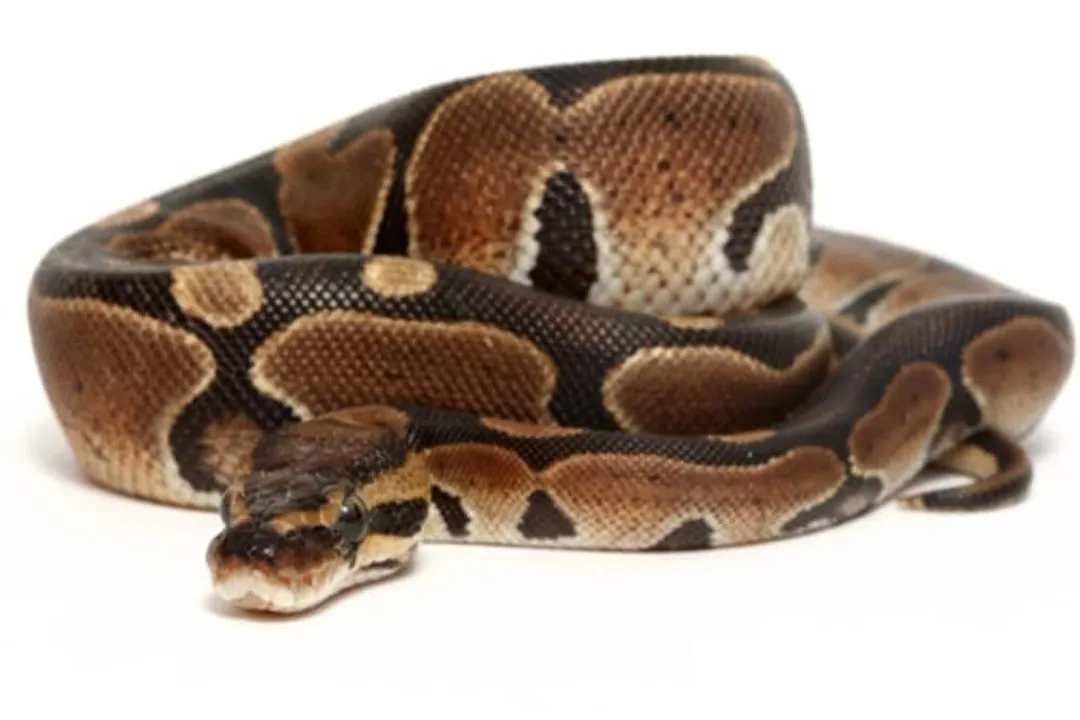
The placement within the Family Pythonidae is specifically responsible for grouping *Python regius* with other pythons that share several characteristics, most notably being non-venomous constrictors. A key anatomical marker that defines this family, distinguishing it from other snake families, is the presence of vestiges of a pelvis and hind limbs, even though these structures are not visible externally on the snake today. This classification level groups snakes based on shared evolutionary traits distinguishing them from, for example, boas or vipers.
Related Questions
What is the genetic classification of the Yellow Belly trait in *Python regius*?What defense mechanism gives the Ball Python its common name?What taxonomic rank separates *Python regius* from other snakes like vipers?How does the Yellow Belly designation differ fundamentally from a recognized subspecies of *Python regius*?What two environmental characteristics of West and Central Africa influence *Python regius* husbandry?What characteristic defines membership in the Order Squamata?Why is the scientific designation *Python regius* essential for international trade of Ball Pythons?What visual characteristics typically differentiate a Yellow Belly morph from wild-type *Python regius* coloration?Which level in the Linnaean hierarchy places *Python regius* among non-venomous constrictors possessing pelvic vestiges?What is the approximate adult length range for *Python regius* in its natural state?How does the evolutionary placement of *Python regius* compare to the emergence rate of new morphs like Yellow Belly?