Which historical breeding areas are cited as being far removed from the current Wood Buffalo National Park site?
Answer
North Dakota and Minnesota
The historical range of the Whooping Crane was significantly wider before extensive human impact. When comparing old range maps to current locations, a massive contraction is evident. Specifically, the historical breeding range used to cover substantial portions of what are now the states of North Dakota and Minnesota. These areas are geographically distant from the current primary breeding site, which is restricted to the remote wetlands of Wood Buffalo National Park in Canada, illustrating how much suitable habitat has been lost, driven primarily by habitat destruction and hunting pressure.
Related Questions
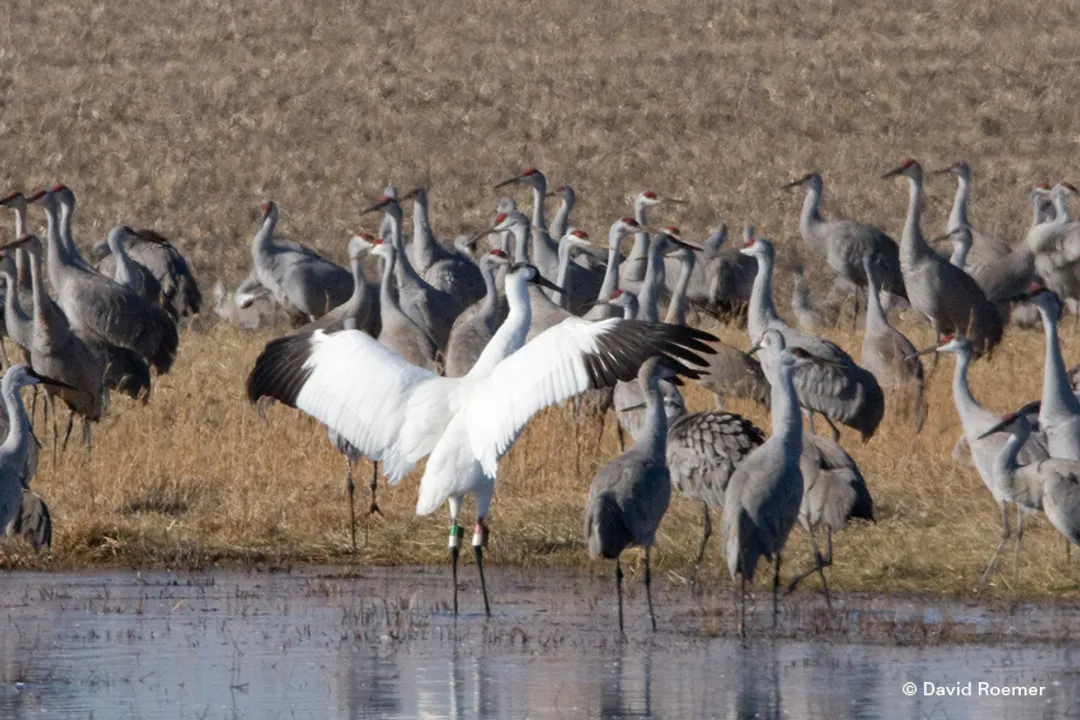
What striking physical feature is visible on Whooping Cranes during flight?Where are the primary breeding sites for the migratory Aransas-Wood Buffalo Population (AWBP)?What primary food source is critical to the winter survival rate of the AWBP at Aransas NWR?What specific geographic features define the core winter haven for the AWBP at Aransas NWR?Which commission primarily manages the established non-migratory Whooping Crane population centered in Florida?What metric do biologists track upon the AWBP's arrival in Texas to gauge the success of the northern breeding season?Which state, mentioned for occasional sightings, is related to the eastern reintroduction efforts rather than the core AWBP route?Which historical breeding areas are cited as being far removed from the current Wood Buffalo National Park site?Which agency is responsible for conservation projects aiming to establish a flock in Louisiana's coastal marshes?Why is observation of the AWBP nearly impossible during the summer months at Wood Buffalo National Park?