Whooping Crane Facts
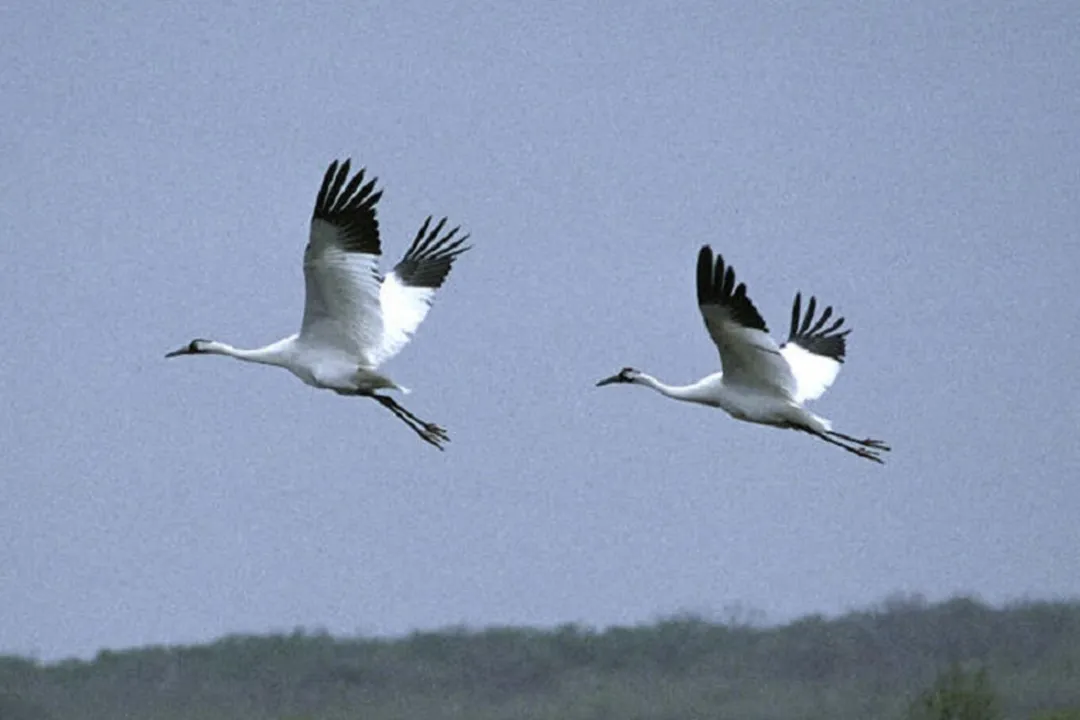
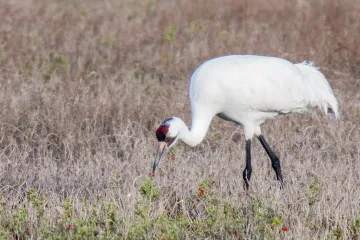
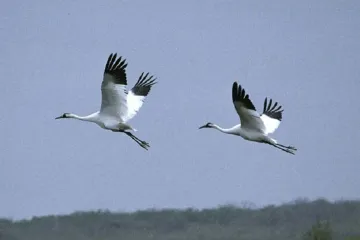
Standing nearly five feet tall, the Whooping Crane (Grus americana) earns its place as the tallest bird in North America and one of the continent's rarest avian species. [1][6][8] These magnificent creatures are immediately recognizable by their stark white plumage, contrasted sharply by black primary and secondary wing feathers, which are only visible when the bird is flying. [1][6][8] The adult's head and upper neck display bare skin that is bright red, and a tuft of black, hair-like feathers droops down the back of the neck, often referred to as a "flapper" plume. [1][6] Juvenile birds present a more muted appearance, covered in rusty or tawny-colored down that transitions to white over their first year. [1]
# Physical Traits
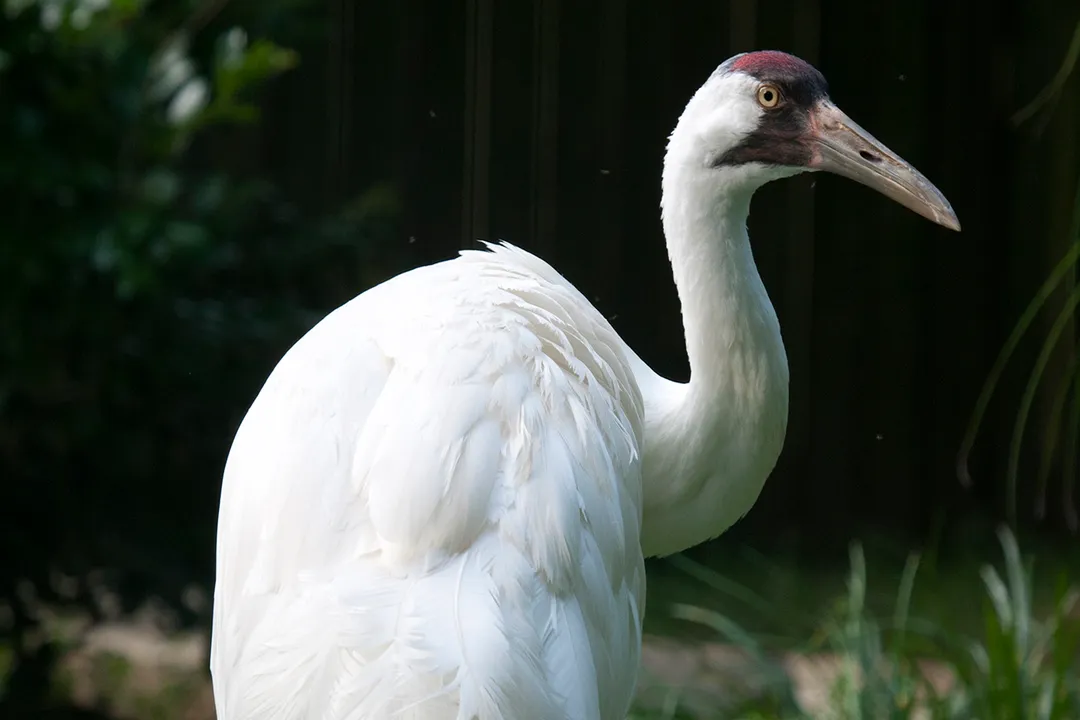
These cranes are imposing birds, capable of reaching heights up to 5 feet. [6][8] When they spread their wings, the span can measure an impressive 6.5 to 7.5 feet across. [6][8] Their legs and bill are long and dark, helping them navigate shallow waters and probe soft substrates for food. [1] The name "Whooping Crane" derives directly from their loud, unmistakable call—a clear, high-pitched whoop, whoop, whoop that carries for miles across open landscapes. [1][6][10] This vocalization is a critical element of their social structure and pair bonding. [4]
# Lifelong Pairs
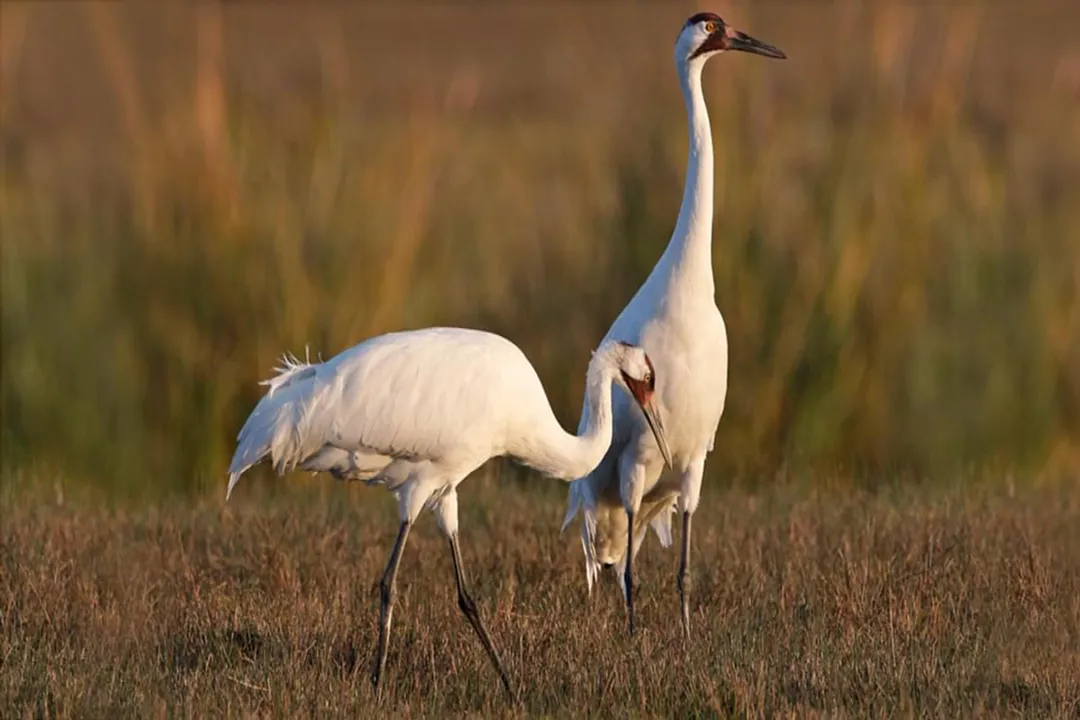
Whooping Cranes exhibit remarkable fidelity in their relationships, typically forming breeding pairs that last for life. [1][4] Courtship involves an elaborate ritual that includes bobbing heads, snapping bills, bowing, and leaping into the air, all accompanied by their signature calls. [1][4] This pair-bonding behavior begins when the birds are quite young, often before they reach maturity, reinforcing their lifelong association. [4]
Their nests are substantial structures, built on the ground in shallow wetland areas, sometimes utilizing scrapes in the mud lined with reeds and grasses. [1] The nesting site selection seems heavily dependent on finding undisturbed, shallow water surrounded by vegetation for cover. [7] A typical clutch size consists of one to three eggs, although often only one chick survives to fledging in the wild. [1][6] Both parents share the duties of incubation, which lasts about a month, and they also take turns guarding the nest and feeding the young, which are called colts. [1][4] The colts are precocial, meaning they are relatively developed at hatching, but they rely on their parents for protection and learning for many months. [1]

# Diet Habits
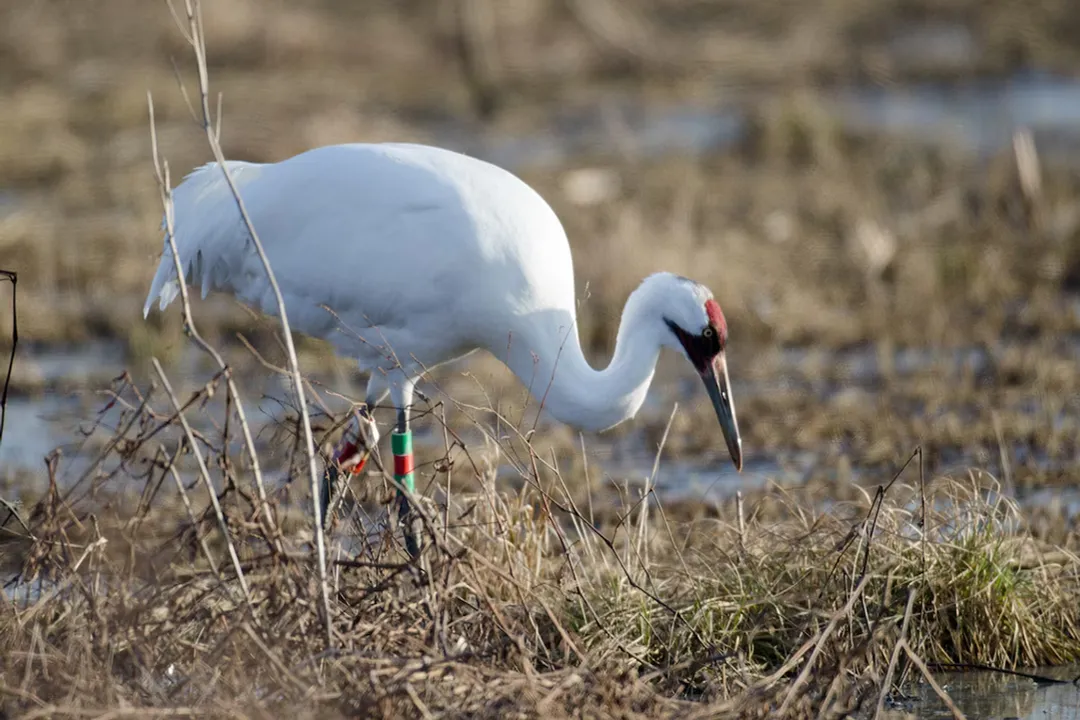
The diet of the Whooping Crane is broad, reflecting an omnivorous nature adapted to various wetland and grassland environments. [1][6] In their wintering grounds, like the Aransas National Wildlife Refuge, they frequently consume blue crabs, clams, and other invertebrates found in saltwater or brackish marshes. [1][6] During the spring and summer breeding seasons further north, their diet shifts to include grains, aquatic tubers, insects, frogs, crayfish, and even small rodents or fish. [1][6] This dietary flexibility is likely a key factor in the species' ability to utilize vastly different ecosystems across its migratory route and breeding grounds. [10] Observing the relative proportion of plant matter versus animal protein consumed across the migratory corridor could offer conservationists fine-tuned insights into nutritional needs during different life stages, especially considering the varying quality of foraging habitats they encounter between Texas and Canada. [5]
# The Path to Recovery
The story of the Whooping Crane is inextricably linked to conservation efforts, as the species faced absolute collapse due to relentless human pressures throughout the 19th and early 20th centuries. [2][7] The primary threats included unrestricted hunting, habitat destruction through wetland drainage, and the impact of collisions with human infrastructure like fences and power lines. [2][7] By 1941, the wild population had plummeted to a terrifying low of just 21 individuals remaining in one flock. [2][5] This marked the nadir from which modern recovery programs were built. [7]
Today, while the species is still listed as endangered under the Endangered Species Act, the numbers have significantly increased thanks to dedicated recovery programs. [7] These programs often rely on a combination of protecting the remaining natural flock and establishing new, supplemental flocks through captive breeding and managed reintroduction. [3][5]
# Key Populations
There are generally recognized recovery efforts centered around distinct populations:
- The Aransas-Wood Buffalo Population (AWBP): This is the original migratory flock. These cranes breed in Wood Buffalo National Park in the Northwest Territories, Canada, and migrate south to winter along the Texas coast near Aransas National Wildlife Refuge. [2][5][10] This entire population relies on the successful navigation of their multi-thousand-mile migration route. [4][10]
- Non-Migratory/Reintroduced Flocks: Significant effort has gone into establishing other flocks that either winter in the southern U.S. or Canada or do not migrate at all. [3][5] For example, a flock was established in central Nebraska, and another non-migratory group was introduced in central Colorado, often utilizing managed wetlands and provided with captive-reared birds. [3][5] These efforts, sometimes using techniques like the Ultralight Guided Migration program, aim to diversify risk and expand the species' geographical range. [5]
The recovery journey illustrates the success possible when concentrated scientific and management resources are applied to a species teetering on the brink. However, reliance on managed flocks means that localized disasters—like severe weather events or disease outbreaks—can still pose a disproportionate threat to the overall small population size. [7]
# Habitat Needs
Whooping Cranes require specific, high-quality habitats across their annual cycle. [10] Their needs are distinct for breeding, migration, and wintering. [4]
# Breeding Grounds
In the summer, they seek out vast, remote wetlands in northern areas—primarily marshes, bogs, and shallow ponds offering good cover for nesting. [1][4][7] These remote locations minimize disturbance, which is crucial for ground-nesting birds facing low reproductive output. [1]
# Wintering Sites
The main wintering site, Aransas, provides shallow saline and brackish waters critical for foraging on crabs and clams during the colder months. [1][10] The health of the surrounding coastal prairie is also vital, as it provides necessary upland habitat and resources. [10] Maintaining the proper salinity levels in these coastal estuaries is an area where human management directly impacts crane survival; too much freshwater inflow from rivers, or conversely, too much drought, can decimate the invertebrate food base the cranes depend upon. [10]
# Staging Areas
Migration is a process, not a single flight. Cranes need safe places, known as staging areas, to rest and refuel along their routes. [4][10] The Platte River in Nebraska is perhaps the most famous and important of these staging corridors for the migratory AWBP flock, serving as a vital refueling station during both spring and fall movements. [5][10] The conservation of the entire Platte River ecosystem, from headwaters to mouth, is therefore synonymous with the survival of the migratory cranes. [10]
# Conservation Challenges
Despite the celebrated recovery from the 1941 low, the Whooping Crane remains vulnerable. [7] Threats persist throughout their range. In the migratory corridor, collisions with power lines remain a significant source of mortality, especially for young birds less familiar with the landscape. [2][7] Furthermore, the reliance on specific migration routes means that any degradation to key staging habitats along that corridor can have ripple effects, potentially forcing birds into suboptimal or more dangerous alternative routes. [4]
Another concern is the genetic bottleneck. Even with increasing numbers, the entire wild population descends from the few survivors of the 1941 crash. [2] This low genetic diversity can potentially make the species more susceptible to diseases or environmental changes over the long term. [2] Ongoing management involves careful monitoring, habitat restoration, and efforts to minimize human disturbance at key sites like nesting grounds and major stopovers. [7] For instance, sometimes the public is asked to report sightings but strictly adhere to maintaining distance, recognizing that habituation to humans can lead to unnecessary risk-taking by the birds. [3]
# Behavior and Communication
The dance of the Whooping Crane is famous among birdwatchers, serving not just for courtship but also for reinforcing pair bonds and expressing excitement or territoriality throughout the year. [1][4] It’s a complex series of bows, jumps, and calls that scientists believe solidifies the long-term commitment between mates. [4]
Vocal communication is central to crane life. Beyond the loud whoop, they also use softer clucking calls when close together, and the unison call—where both members of the pair call alternately—is a significant display of pair cohesion. [1] If you ever find yourself near a suitable wetland in the fall or spring and hear a sound that seems too large to be real, you might be lucky enough to be hearing a group of these cranes communicating across the vast expanse of the landscape. [10]
An interesting aspect of their general behavior, which speaks to their history of near-extinction, is their extreme wariness. Having been intensely persecuted, the surviving wild birds exhibit high levels of vigilance, making them incredibly difficult to approach or study without specialized remote techniques. [2] This wariness is an instinctual adaptation to survive in a world that once sought to eliminate them. [7]
# A Look at Management Techniques
The reintroduction programs offer fascinating case studies in avian management. The process involves careful selection of captive-reared colts that are imprinted on humans in a way that encourages them to follow an ultralight aircraft, mimicking a parent leading them south. [5] This highly artificial process aims to bypass the dangers of naïve first migrations for new founders of a flock. [5] Once the birds reach their destination, they must integrate into the environment and learn the survival skills—like finding the right food sources—from any resident or returning cranes, or through natural cues if no mentors are present. [3]
To put the population increase in perspective, if we consider the 1941 low point of 21 birds, and the current wild population is now in the hundreds, that represents a growth of over 1000%. [2][7] While this is a conservation success story, the total number is still fragile when compared to other North American species. For example, if a single severe hurricane were to impact the Aransas wintering ground severely, the loss could represent a devastating percentage of the entire wild population due to their localized wintering concentration. [10] This highlights why the development of several secure, geographically separate flocks remains a primary goal for federal and state wildlife agencies. [5] The goal is to ensure that no single catastrophic event can erase the species again. [7]
# Crane Identification
For birders or citizen scientists hoping to spot a Whooping Crane, distinguishing them from other large white birds is essential. [8] The most common confusion is with the Snow Goose. [8] Snow Geese, however, are significantly smaller, have black wingtips and black on the ends of their wings that are visible even when perched, and they typically gather in much larger, denser flocks. [8] Furthermore, the Snow Goose has a distinct black bill and black feet, whereas the Whooping Crane possesses a dark bill and dark legs. [1][8] Another large white bird sometimes confused with them is the Great Egret, but the egret has yellow legs and a yellow bill. [8] Knowing these subtle but crucial field marks is the first step in responsible birdwatching, ensuring that conservationists can focus their attention on verified sightings of this rare treasure. [3]
# Habitat Cycling
The cranes demonstrate an incredible capacity to cycle through distinct ecological niches based on the season. [1] This means that their health is not just dependent on one region, but on the successful connection between those regions. [4] The maintenance of the entire migratory corridor is essentially a commitment to the cranes' entire life cycle. If the wetlands in a specific staging area degrade due to water diversion or pollution, the cranes are forced to spend more energy searching for alternatives, potentially arriving at the breeding or wintering grounds malnourished and less prepared to breed or survive the winter. [10] This interconnectedness means that successful Whooping Crane conservation requires coordination across international borders—Canada, the United States, and Mexico—as their paths traverse these jurisdictions. [7]
# Size Comparison Table
To better visualize the scale of the Whooping Crane compared to other commonly seen large birds in North America, the following comparison provides context:
| Species | Approximate Height | Key Distinguishing Markings |
|---|---|---|
| Whooping Crane | Up to 5 feet | White body, black wingtips (in flight), red head patch [1][6] |
| Sandhill Crane | 3 to 4 feet | Grayish-brown body, rusty wash, red forehead patch (smaller than Whooping Crane's) [1] |
| Great Blue Heron | Up to 4.5 feet | Gray-blue body, long S-curved neck (different posture than crane) [1] |
| Snow Goose | About 2.5 feet | Smaller size, black wingtips visible when perched, often in large flocks [8] |
This comparison underscores why the sheer size and the specific pattern of white body/black primary feathers are the most reliable visual cues for identifying the Whooping Crane in the field. [8]
# Reproductive Output Management
One key difference between the wild flock and the reintroduced flocks often revolves around reproductive management. In the original migratory flock, the survival of a single chick is a significant success. [1] However, in controlled environments or managed non-migratory settings, researchers have sometimes been able to encourage higher nesting rates, often by providing artificial nesting structures or removing eggs to be incubated in captivity, allowing the parents to attempt a second clutch. [5] While this captive-rearing and supplemental stocking is essential for population growth, it introduces the inherent risk of dependency on human intervention, a balancing act conservationists must continually manage as they strive for a truly self-sustaining wild population. [7] The long-term health of the species depends on the success of the Aransas-Wood Buffalo flock achieving complete independence from intensive human management for their survival and reproduction. [2]
# The Call of the Wild
Understanding the Whooping Crane is understanding a profound symbol of perseverance. They are creatures that demand vast, pristine spaces to thrive, and their survival is a testament to the fact that dedicated, science-based intervention can pull a species back from the edge of oblivion. [7] Every loud whoop heard echoing across the plains or the coastal marsh is a victory, a sound that nearly vanished from the North American soundscape forever. [10] The work continues, not just to maintain the current count, but to secure the quality of every mile of their existence, from the Canadian boreal forests to the salty flats of the Texas coast [5][4].Standing nearly five feet tall, the Whooping Crane (Grus americana) earns its place as the tallest bird in North America and one of the continent's rarest avian species. [1][6][8] These magnificent creatures are immediately recognizable by their stark white plumage, contrasted sharply by black primary and secondary wing feathers, which are only visible when the bird is flying. [1][6][8] The adult's head and upper neck display bare skin that is bright red, and a tuft of black, hair-like feathers droops down the back of the neck, often referred to as a "flapper" plume. [1][6] Juvenile birds present a more muted appearance, covered in rusty or tawny-colored down that transitions to white over their first year. [1]
# Physical Traits
These cranes are imposing birds, capable of reaching heights up to 5 feet. [6][8] When they spread their wings, the span can measure an impressive 6.5 to 7.5 feet across. [6][8] Their legs and bill are long and dark, helping them navigate shallow waters and probe soft substrates for food. [1] The name "Whooping Crane" derives directly from their loud, unmistakable call—a clear, high-pitched whoop, whoop, whoop that carries for miles across open landscapes. [1][6][10] This vocalization is a critical element of their social structure and pair bonding. [4]
# Lifelong Pairs
Whooping Cranes exhibit remarkable fidelity in their relationships, typically forming breeding pairs that last for life. [1][4] Courtship involves an elaborate ritual that includes bobbing heads, snapping bills, bowing, and leaping into the air, all accompanied by their signature calls. [1][4] This pair-bonding behavior begins when the birds are quite young, often before they reach maturity, reinforcing their lifelong association. [4]
Their nests are substantial structures, built on the ground in shallow wetland areas, sometimes utilizing scrapes in the mud lined with reeds and grasses. [1] The nesting site selection seems heavily dependent on finding undisturbed, shallow water surrounded by vegetation for cover. [7] A typical clutch size consists of one to three eggs, although often only one chick survives to fledging in the wild. [1][6] Both parents share the duties of incubation, which lasts about a month, and they also take turns guarding the nest and feeding the young, which are called colts. [1][4] The colts are precocial, meaning they are relatively developed at hatching, but they rely on their parents for protection and learning for many months. [1]
# Diet Habits
The diet of the Whooping Crane is broad, reflecting an omnivorous nature adapted to various wetland and grassland environments. [1][6] In their wintering grounds, like the Aransas National Wildlife Refuge, they frequently consume blue crabs, clams, and other invertebrates found in saltwater or brackish marshes. [1][6] During the spring and summer breeding seasons further north, their diet shifts to include grains, aquatic tubers, insects, frogs, crayfish, and even small rodents or fish. [1][6] This dietary flexibility is likely a key factor in the species' ability to utilize vastly different ecosystems across its migratory route and breeding grounds. [10] Observing the relative proportion of plant matter versus animal protein consumed across the migratory corridor could offer conservationists fine-tuned insights into nutritional needs during different life stages, especially considering the varying quality of foraging habitats they encounter between Texas and Canada. [5]
# The Path Recovery
The story of the Whooping Crane is inextricably linked to conservation efforts, as the species faced absolute collapse due to relentless human pressures throughout the 19th and early 20th centuries. [2][7] The primary threats included unrestricted hunting, habitat destruction through wetland drainage, and the impact of collisions with human infrastructure like fences and power lines. [2][7] By 1941, the wild population had plummeted to a terrifying low of just 21 individuals remaining in one flock. [2][5] This marked the nadir from which modern recovery programs were built. [7]
Today, while the species is still listed as endangered under the Endangered Species Act, the numbers have significantly increased thanks to dedicated recovery programs. [7] These programs often rely on a combination of protecting the remaining natural flock and establishing new, supplemental flocks through captive breeding and managed reintroduction. [3][5]
# Key Populations
There are generally recognized recovery efforts centered around distinct populations:
- The Aransas-Wood Buffalo Population (AWBP): This is the original migratory flock. These cranes breed in Wood Buffalo National Park in the Northwest Territories, Canada, and migrate south to winter along the Texas coast near Aransas National Wildlife Refuge. [2][5][10] This entire population relies on the successful navigation of their multi-thousand-mile migration route. [4][10]
- Non-Migratory/Reintroduced Flocks: Significant effort has gone into establishing other flocks that either winter in the southern U.S. or Canada or do not migrate at all. [3][5] For example, a flock was established in central Nebraska, and another non-migratory group was introduced in central Colorado, often utilizing managed wetlands and provided with captive-reared birds. [3][5] These efforts, sometimes using techniques like the Ultralight Guided Migration program, aim to diversify risk and expand the species' geographical range. [5]
The recovery journey illustrates the success possible when concentrated scientific and management resources are applied to a species teetering on the brink. However, reliance on managed flocks means that localized disasters—like severe weather events or disease outbreaks—can still pose a disproportionate threat to the overall small population size. [7]
# Habitat Needs
Whooping Cranes require specific, high-quality habitats across their annual cycle. [10] Their needs are distinct for breeding, migration, and wintering. [4]
# Breeding Grounds
In the summer, they seek out vast, remote wetlands in northern areas—primarily marshes, bogs, and shallow ponds offering good cover for nesting. [1][4][7] These remote locations minimize disturbance, which is crucial for ground-nesting birds facing low reproductive output. [1]
# Wintering Sites
The main wintering site, Aransas, provides shallow saline and brackish waters critical for foraging on crabs and clams during the colder months. [1][10] The health of the surrounding coastal prairie is also vital, as it provides necessary upland habitat and resources. [10] Maintaining the proper salinity levels in these coastal estuaries is an area where human management directly impacts crane survival; too much freshwater inflow from rivers, or conversely, too much drought, can decimate the invertebrate food base the cranes depend upon. [10]
# Staging Areas
Migration is a process, not a single flight. Cranes need safe places, known as staging areas, to rest and refuel along their routes. [4][10] The Platte River in Nebraska is perhaps the most famous and important of these staging corridors for the migratory AWBP flock, serving as a vital refueling station during both spring and fall movements. [5][10] The conservation of the entire Platte River ecosystem, from headwaters to mouth, is therefore synonymous with the survival of the migratory cranes. [10]
# Conservation Challenges
Despite the celebrated recovery from the 1941 low, the Whooping Crane remains vulnerable. [7] Threats persist throughout their range. In the migratory corridor, collisions with power lines remain a significant source of mortality, especially for young birds less familiar with the landscape. [2][7] Furthermore, the reliance on specific migration routes means that any degradation to key staging habitats along that corridor can have ripple effects, potentially forcing birds into suboptimal or more dangerous alternative routes. [4]
Another concern is the genetic bottleneck. Even with increasing numbers, the entire wild population descends from the few survivors of the 1941 crash. [2] This low genetic diversity can potentially make the species more susceptible to diseases or environmental changes over the long term. [2] Ongoing management involves careful monitoring, habitat restoration, and efforts to minimize human disturbance at key sites like nesting grounds and major stopovers. [7] For instance, sometimes the public is asked to report sightings but strictly adhere to maintaining distance, recognizing that habituation to humans can lead to unnecessary risk-taking by the birds. [3]
# Behavior Communication
The dance of the Whooping Crane is famous among birdwatchers, serving not just for courtship but also for reinforcing pair bonds and expressing excitement or territoriality throughout the year. [1][4] It’s a complex series of bows, jumps, and calls that scientists believe solidifies the long-term commitment between mates. [4]
Vocal communication is central to crane life. Beyond the loud whoop, they also use softer clucking calls when close together, and the unison call—where both members of the pair call alternately—is a significant display of pair cohesion. [1] If you ever find yourself near a suitable wetland in the fall or spring and hear a sound that seems too large to be real, you might be lucky enough to be hearing a group of these cranes communicating across the vast expanse of the landscape. [10]
An interesting aspect of their general behavior, which speaks to their history of near-extinction, is their extreme wariness. Having been intensely persecuted, the surviving wild birds exhibit high levels of vigilance, making them incredibly difficult to approach or study without specialized remote techniques. [2] This wariness is an instinctual adaptation to survive in a world that once sought to eliminate them. [7]
# Management Techniques
The reintroduction programs offer fascinating case studies in avian management. The process involves careful selection of captive-reared colts that are imprinted on humans in a way that encourages them to follow an ultralight aircraft, mimicking a parent leading them south. [5] This highly artificial process aims to bypass the dangers of naïve first migrations for new founders of a flock. [5] Once the birds reach their destination, they must integrate into the environment and learn the survival skills—like finding the right food sources—from any resident or returning cranes, or through natural cues if no mentors are present. [3]
To put the population increase in perspective, if we consider the 1941 low point of 21 birds, and the current wild population is now in the hundreds, that represents a growth of over 1000%. [2][7] While this is a conservation success story, the total number is still fragile when compared to other North American species. If a single severe hurricane were to impact the Aransas wintering ground severely, the loss could represent a devastating percentage of the entire wild population due to their localized wintering concentration. [10] This highlights why the development of several secure, geographically separate flocks remains a primary goal for federal and state wildlife agencies. [5] The goal is to ensure that no single catastrophic event can erase the species again. [7]
# Crane Identification
For birders or citizen scientists hoping to spot a Who
#Videos
Whooping Crane: 5 Fascinating Facts - YouTube
Related Questions
#Citations
Whooping Crane Overview, All About Birds, Cornell Lab of Ornithology
Whooping crane - Wikipedia
Top Ten Whooping Crane Facts for Endangered Species Day
Whooping Crane Facts - Journey North
Whooping Crane - Colorado Parks and Wildlife
Whooping crane | Smithsonian's National Zoo and Conservation ...
Whooping Crane (Grus americana) | U.S. Fish & Wildlife Service
Whooping Crane | National Geographic Kids
Whooping Crane: 5 Fascinating Facts - YouTube
Whooping crane - Platte River Recovery Implementation Program