Whooping Crane Evolution
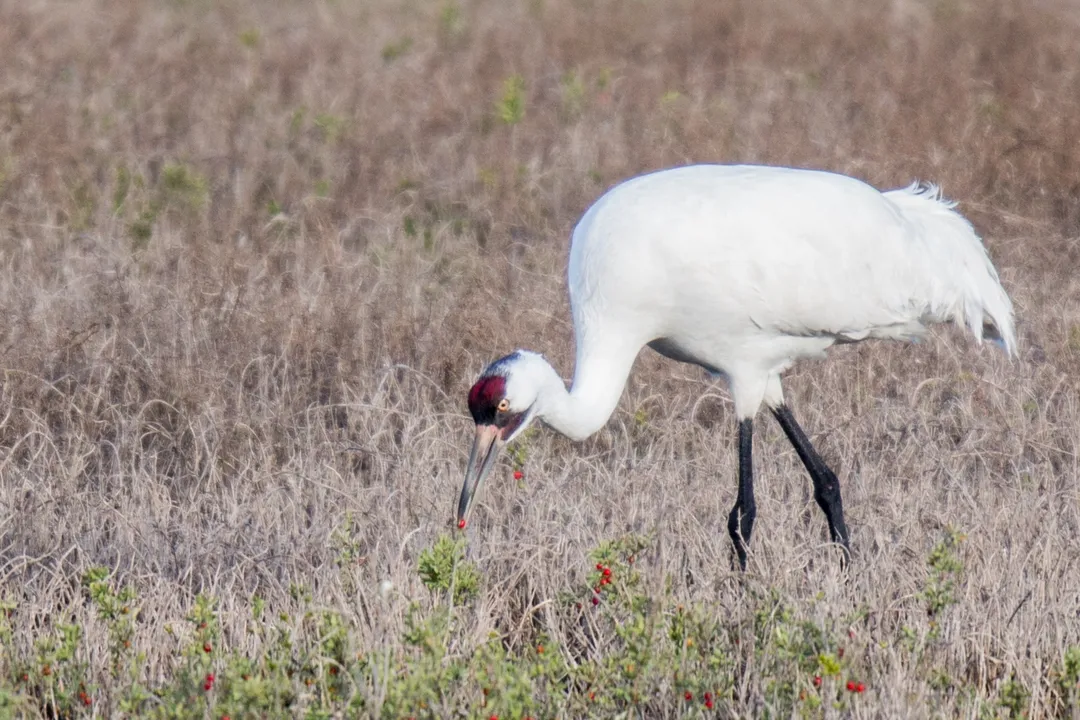
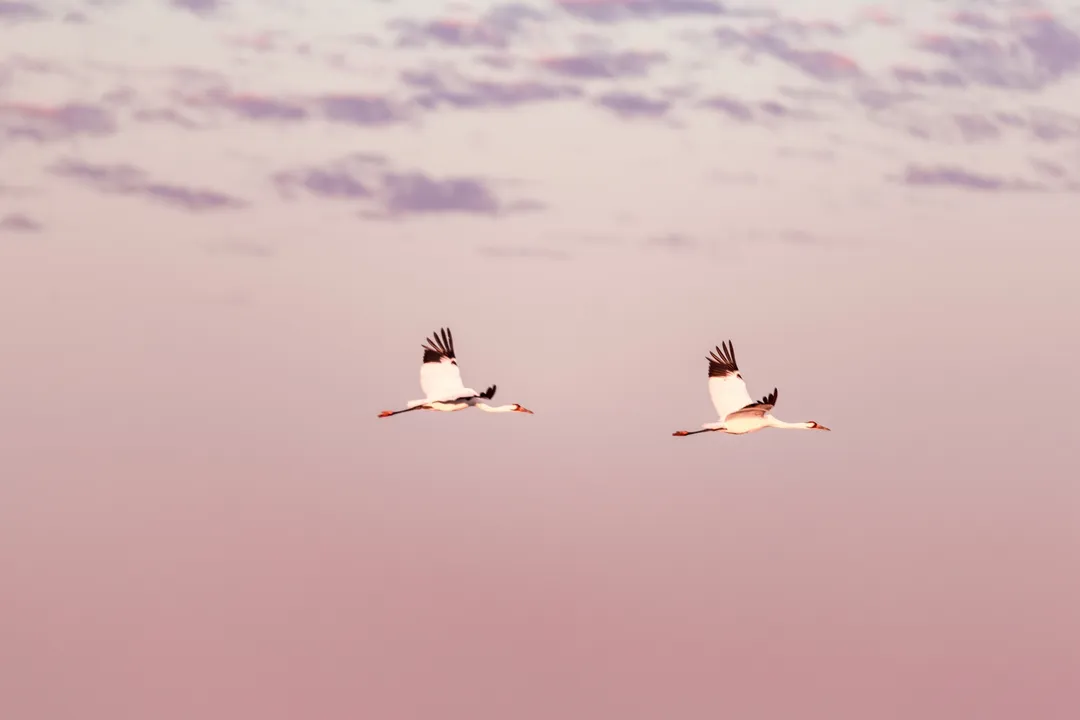
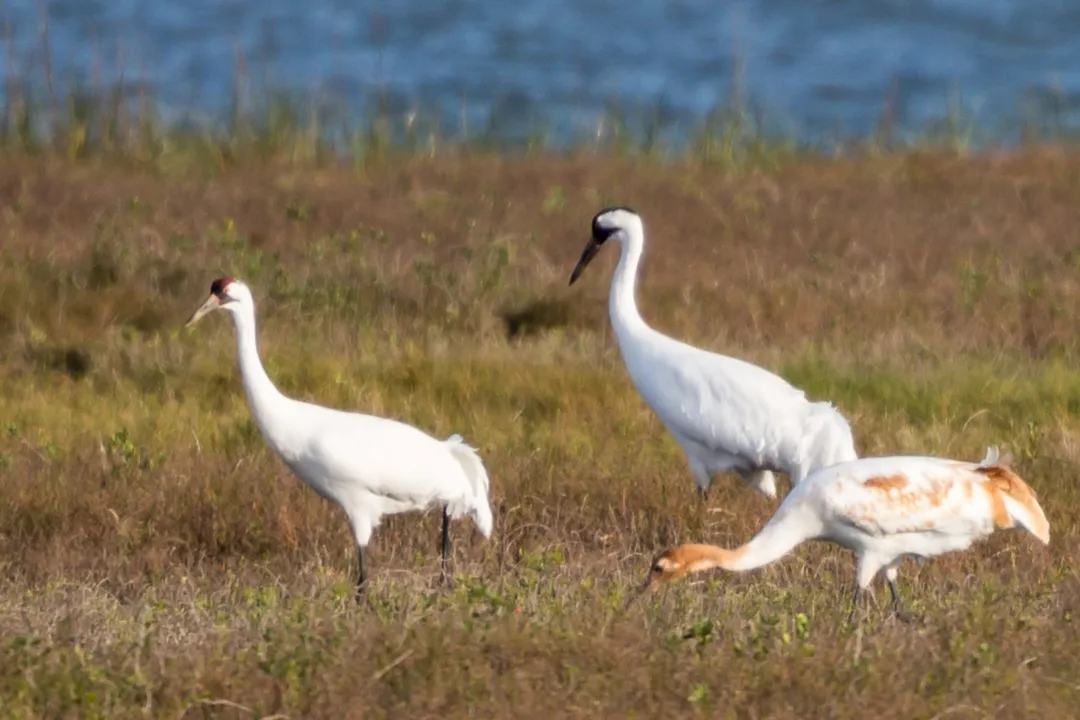
The magnificent Whooping Crane, the tallest bird in North America, stands today as a powerful symbol of conservation struggle, yet its very biology offers clues to its ancient lineage and the intense selective pressures that shaped it over millennia. Distinguishable by its stunning white plumage, black wingtips visible only in flight, black legs, and a patch of bare red skin atop its head, this crane is instantly recognizable. [2][6] It is also the rarest of the world's fourteen crane species. [4] While the provided information leans heavily toward the recent human-impacted history of this species, understanding their current life history—their slow reproduction, long lifespan, and demanding migratory habits—provides a window into the successful evolutionary strategies they employed before the modern era drastically altered their world. [2]
# Crane Biology
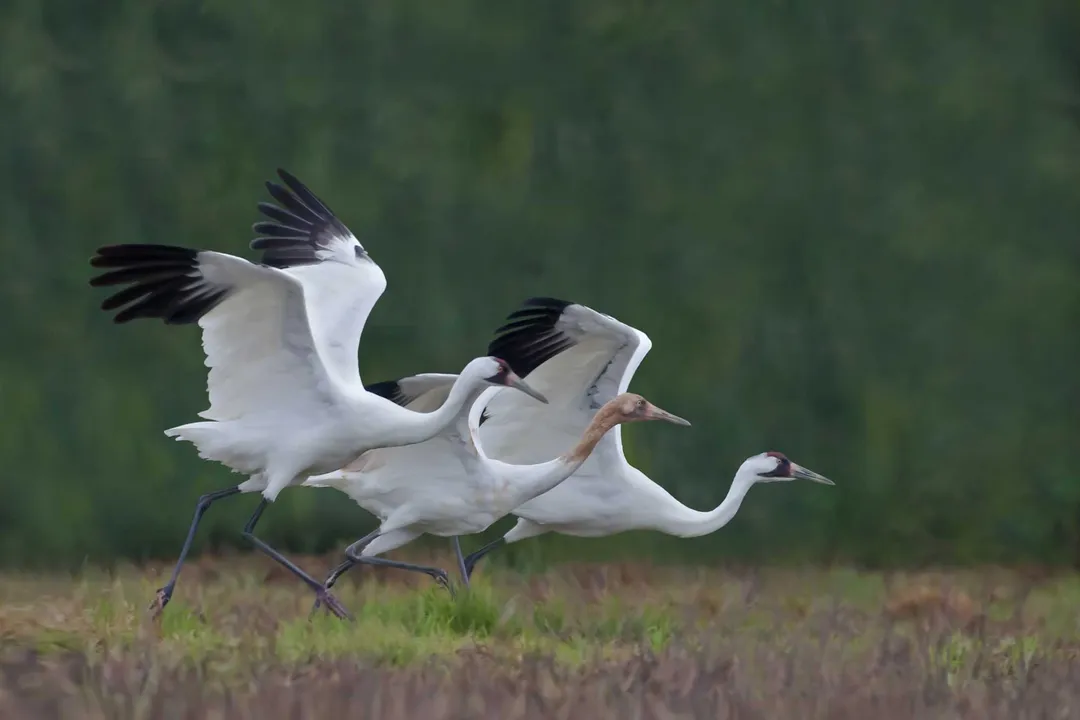
The physical characteristics of the Whooping Crane are impressive. Standing between 4.5 and 5 feet tall, these birds weigh between 11 and 15 pounds, with a wingspan that can stretch up to 7.5 feet. [2][6] They are omnivorous, with their diet shifting seasonally and geographically. In breeding areas, they consume crustaceans, insects, small vertebrates, aquatic tubers, and other vegetation. [2] During migration and on wintering grounds, they rely heavily on invertebrates like crabs and clams, along with aquatic plants and sometimes small fish or amphibians. [2][6] This adaptability in diet suggests an evolutionary plasticity that allowed them to thrive across various wetland ecosystems across the continent. [2]
A defining feature of their life history, which speaks volumes about their long-term evolutionary path, is their delayed maturity and low reproductive output. Whooping Cranes typically do not reach sexual maturity until they are four to seven years old. [2] Once paired, they usually lay only two eggs per clutch, and often only one chick successfully survives to fledge. [2] Their lifespan in the wild can exceed 22 years, and in captivity, individuals have lived past 30 years. [2] This combination—late maturity, low annual reproductive output, but high individual longevity—is a classic K-selection strategy, favoring survival of the few offspring produced rather than high numbers, which is typically successful in stable, predictable environments. [2][4] This ingrained biological rate of replacement means population recovery is inherently slow, even when threats are removed. [9]
# Ancient Migrations
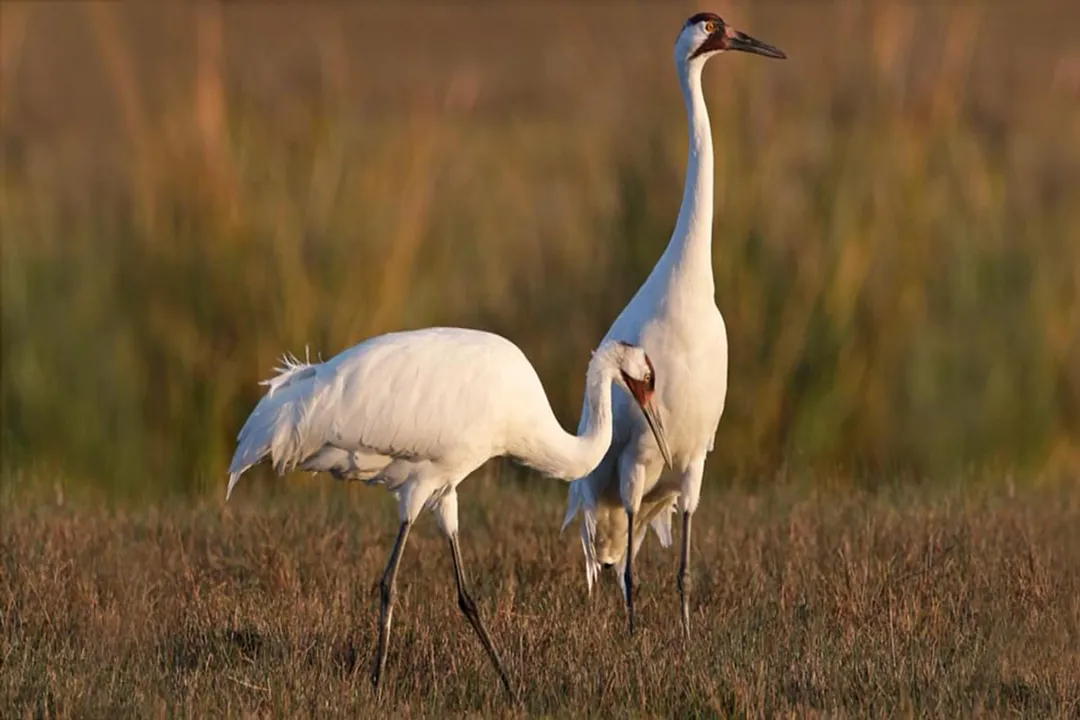
Historically, the Whooping Crane range was vast, covering much of North America. [4] These birds once migrated between breeding grounds in central Canada and wintering areas that stretched from the central U.S. coast down to Mexico. [4] The migratory population, which is the subject of the most intense modern conservation efforts, historically bred in Wood Buffalo National Park in northern Canada and wintered along the Texas coast in Aransas National Wildlife Refuge. [1][7]
It is fascinating to consider the ancestral pressures that cemented this lengthy, multi-stage migration pattern. Flying up to 2,500 miles one way, often following specific river corridors and landmarks, requires significant inherited knowledge and physical adaptation. [3] The ability to navigate vast distances, locate critical staging and stopover habitats for refueling, and then find precise breeding territories years later suggests an evolutionary pathway honed over countless generations where migratory success meant survival. [3][8] The fact that the primary flock has a relatively small number of critical stopover points along the Central Flyway speaks to the fidelity of these inherited migration routes. [3]
# The Bottleneck Event
The story of the Whooping Crane is tragically intertwined with human expansion, leading to an unprecedented genetic and demographic crisis. By the 1940s, rampant hunting, habitat loss due to agriculture and development, and accidental shooting had decimated the species. [5] The lowest point for the migratory population occurred in 1941 when only 21 individuals remained in the wild flock at Aransas, Texas. [1][5][7] This small aggregation represents one of the most severe population bottlenecks recorded for any species.
This near-extinction event is critical when discussing the crane’s current "evolutionary potential." When a population crashes this dramatically, the genetic diversity carried by the few survivors becomes the entire future gene pool for the species. [8] While conservation programs have worked diligently to increase the numbers—through captive breeding and reintroduction programs alongside the wild flock—the genetic foundation is far narrower than it was even a century ago. [7][5] This limited genetic base increases the risk that a novel disease or a sudden environmental shift (like an extreme weather event impacting a critical staging ground) could pose an existential threat, as the population may lack the necessary genetic variation for rapid adaptation. [9] We must remember that while we are managing the population numbers, the evolutionary recovery from such a bottleneck takes much longer than simply counting birds. [8]
# Conservation Structure
Following the recognition of the crisis, a concerted effort began, formalized by key legislative actions. The Whooping Crane was listed as endangered under the Endangered Species Act (ESA) in 1970. [7] The timeline of recovery efforts shows several distinct phases: the initial protection of the last wild flock, followed by the beginning of captive breeding programs in the 1960s. [1][5] The development of techniques to hatch and raise chicks outside their natural environment was a major turning point. [1]
Today, the conservation effort often involves cooperation between agencies like the U.S. Fish and Wildlife Service (FWS), the USGS, and various state and private organizations. [7][8] For instance, the reintroduced non-migratory population in Florida demonstrates a different management approach than the migratory flock, showing human intervention can establish new, self-sustaining populations where historical ranges were lost, although this requires ongoing support. [4] The dedication of groups like the International Crane Foundation (ICF) in captive breeding and rearing programs has been essential to boosting numbers above the immediate brink of extinction. [3]
To put the progress in context, the migratory flock has grown significantly from the 21 birds in 1941, reaching over 500 birds in the wild in recent years, demonstrating the effectiveness of focused intervention. [7] However, the wild population size often hovers below what many scientists would consider genetically secure. [9]
# Habitat Dependence
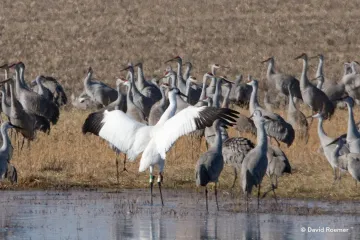
The cranes' survival hinges entirely on the quality and availability of specific wetland habitats across their massive range. [6] Successful reintroductions or expansions depend on providing adequate stopover sites for rest and feeding during migration, as well as safe wintering and breeding grounds. [3][8] For the Texas wintering flock, the Aransas National Wildlife Refuge remains absolutely vital, as these birds rely heavily on the blue crabs found there in winter. [7] Any long-term alteration to the Gulf Coast ecosystem—be it due to climate change shifting salinity or human activity altering water flow—directly threatens the survival of this critical segment of the population. [7]
Consider the energy demands: a crane flying thousands of miles must consume enough calories at each stop to fuel the next leg. If a stopover site is degraded, that crane might perish before reaching the next known, safe location. This dependency on an entire chain of intact habitats across international borders highlights a logistical challenge in management that is far more complex than simply protecting one park. [3] The success of conservation shows the evolutionary pressures for site fidelity are still present; cranes tend to return to specific, proven locations, underscoring the importance of maintaining those ancestral waypoints. [3]
# Threats Post-Bottleneck
Even as populations recover numerically, the threats that caused the initial collapse have merely changed form rather than disappeared. [9] While direct market hunting is largely gone, accidental take remains a factor. This includes birds colliding with power lines or fatally ingesting lead shot from hunters in mixed-use habitats. [4][9] Furthermore, habitat degradation is an ongoing concern; marshes that supported the historical population are often altered by drainage, water diversion, or development pressures, reducing the carrying capacity for cranes. [9][6]
The very low reproductive rate, an evolutionary trait suited for stability, now acts as a significant impediment to rapid recovery. [2][9] If a pair loses its clutch or its single chick to predation or weather, the entire reproductive output for that year for that pair is zero, and they must wait until the next spring. [2] For the species to rebound against modern pressures, the survival rate of every single juvenile that fledges is magnified in importance due to this slow reproductive pacing. [9]
In essence, the Whooping Crane is a magnificent creature evolved for a relatively stable, pre-industrial North America. Its highly specialized life history—slow growth, long life, high site fidelity—was an evolutionary triumph in that context. Today, that same specialization makes the species exquisitely vulnerable to the rapid, broad-scale changes inflicted upon the landscape. [8] The current conservation management is not just about protecting individuals; it is a continuous, active attempt to buffer the species against environmental pressures that its ancient evolutionary path did not prepare it for. [7]
Related Questions
#Citations
Whooping Crane Timeline - International Crane Foundation
Whooping Crane Life History - All About Birds
Whooping Crane - Journey North
Whooping crane - Wikipedia
Conservation History | Whooping Crane Chronicles
[PDF] Whooping Crane Grus americana
Whooping Cranes: Reflecting on 50 Years of ESA Protection and ...
Whooping Cranes past and present - USGS Publications Warehouse
A Wild Year for the Whooping Crane
Why are whooping cranes still so rare?