Which habitat type does the White-eyed Vireo consistently favor across both breeding and wintering grounds?
Answer
Dense, shrubby vegetation like old fields and thickets
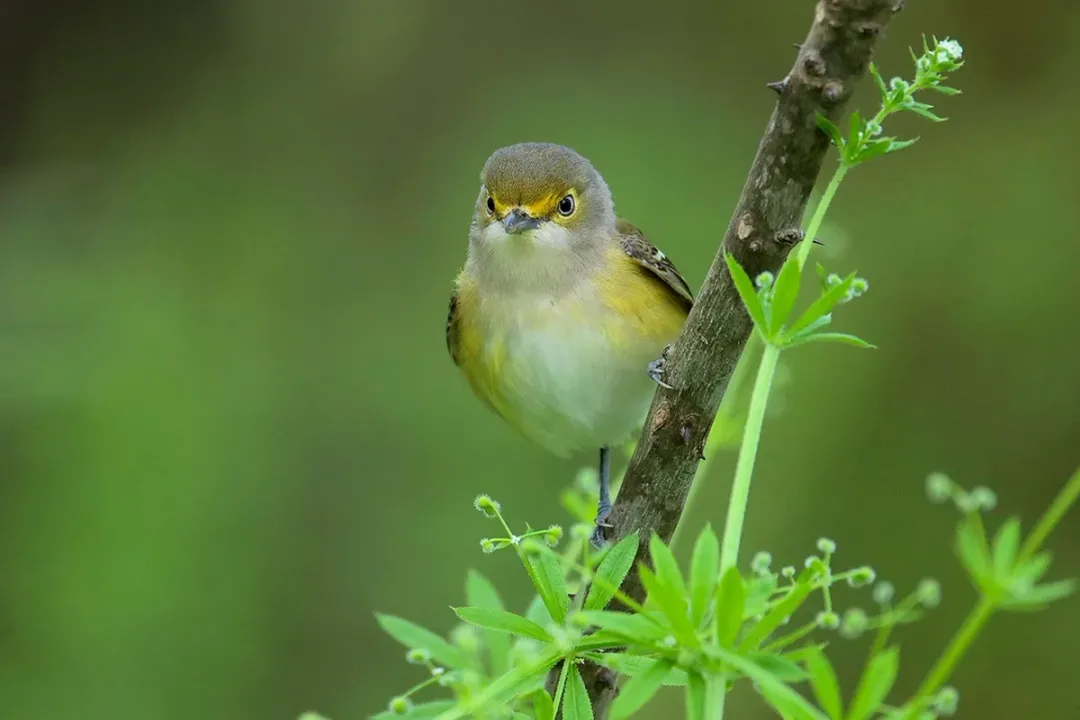
The White-eyed Vireo exhibits a strong habitat fidelity, preferring environments characterized by dense, low-growing, shrubby vegetation throughout its annual cycle. Whether they are establishing breeding territories or occupying wintering grounds, they seek out areas where low, thick growth has been allowed to develop undisturbed. Specific examples of preferred locales include overgrown fields that have lain fallow for many years, thickets found along streamsides, and the tangled understory layers within woodlands. This dense cover near water sources, such as brushy canyons or marsh-side tangles, allows them to remain concealed while singing.
Related Questions
What distinctive facial markings characterize adult White-eyed Vireo plumage?How does the eye color of a juvenile White-eyed Vireo differ from an adult's?What characteristic notes typically bookend the White-eyed Vireo's rapid, energetic song?Which habitat type does the White-eyed Vireo consistently favor across both breeding and wintering grounds?Which White-eyed Vireo singing duty is shared by both males and females during the non-breeding season?How does the White-eyed Vireo's diet typically shift when moving to its wintering grounds?Where is the deep, suspended, cup-shaped nest of the White-eyed Vireo typically situated?What population trend has been noted for the White-eyed Vireo at the extreme northeastern edge of its breeding range in Massachusetts?What is the typical weight range, in ounces, for a small White-eyed Vireo?What unique historical distinction does the White-eyed Vireo hold regarding North American avian fossils found in Florida?