White-Eyed Vireo Locations
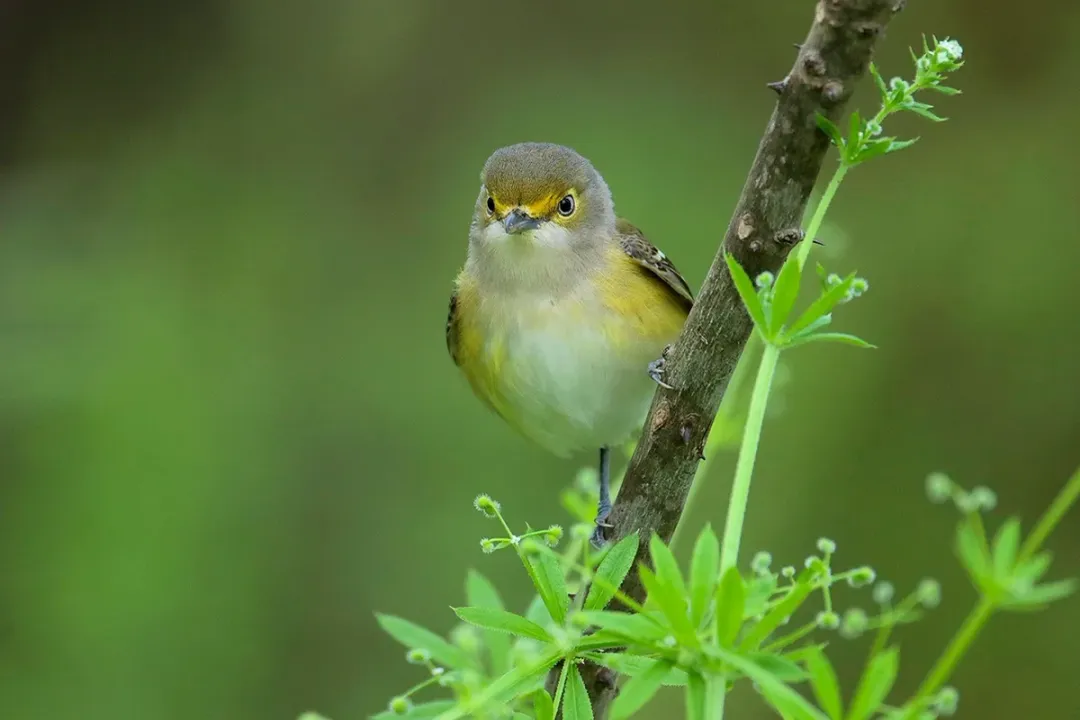
The White-Eyed Vireo, a small bird known for its striking namesake feature and its somewhat hidden lifestyle, is a prize for any birder who manages to locate one. Distinguishing this species often relies less on seeing it clearly and more on hearing its distinct, somewhat slurred song—a complex, rapid series of phrases that often ends with an emphasized, drawn-out note. [2][7] Knowing where and when to look for this species is half the battle, as they prefer dense, often prickly understory vegetation where visibility is low. [5]
# Geographic Spread
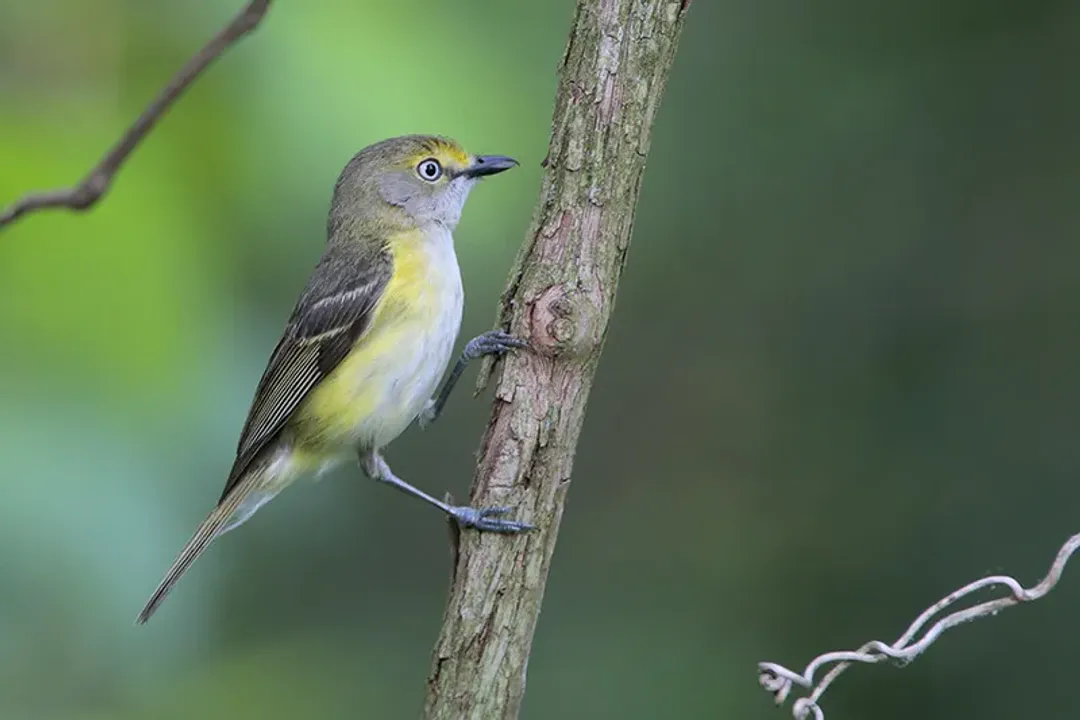
The distribution of the White-Eyed Vireo is firmly rooted in the eastern half of North America, though its migratory habits mean its location is highly dependent on the time of year. [1][9] During the breeding season, the core territory covers the southeastern United States, stretching northward along the coast and inland. [3] While they generally favor the coastal plain, their breeding range extends up through the Atlantic states, reaching as far north as southern New England in some years, and moving west across the Gulf States into states like Missouri and southern Illinois. [1][9]
When assessing their range maps, a key feature is the significant overlap between breeding and year-round resident populations in the deep south, particularly along the immediate Atlantic and Gulf coasts. [1] Areas like the coastal Carolinas, Georgia, and Florida often host permanent or near-permanent populations, meaning a dedicated observer might find one year-round if the habitat remains suitable. [1][9]
# Nesting Range
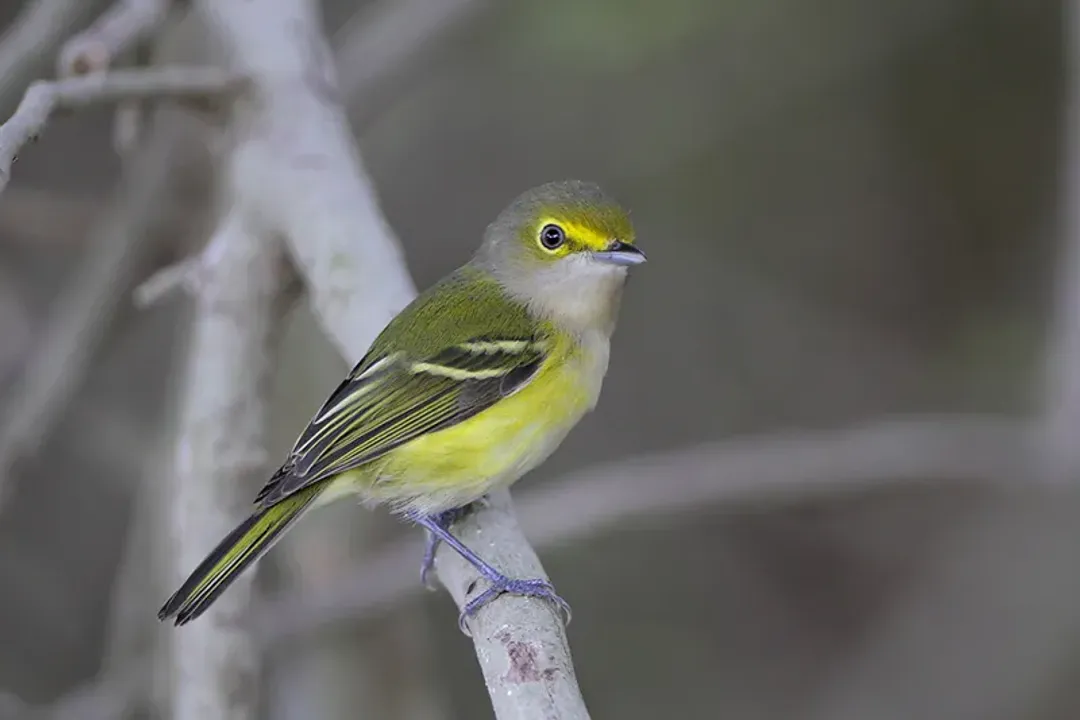
The primary breeding locations generally align with the eastern deciduous forests and thickets, avoiding the very northern reaches of the continent. [3][7] Observers in the contiguous United States will primarily target the states from the coastal plain inland to the western edges of their range during the warm months of spring and summer. [1] For example, while the species breeds in states like New Jersey and Virginia, their presence is often concentrated in brushy areas near water bodies or along forest edges. [9]
It is important to recognize that while the core breeding range is established, specific local occurrences can fluctuate. In areas near the edge of their usual summer territory, the vireo might be present one year and absent the next, reflecting subtle shifts in local vegetation structure or weather patterns affecting resource availability. [1][3]
# Wintering Habitats
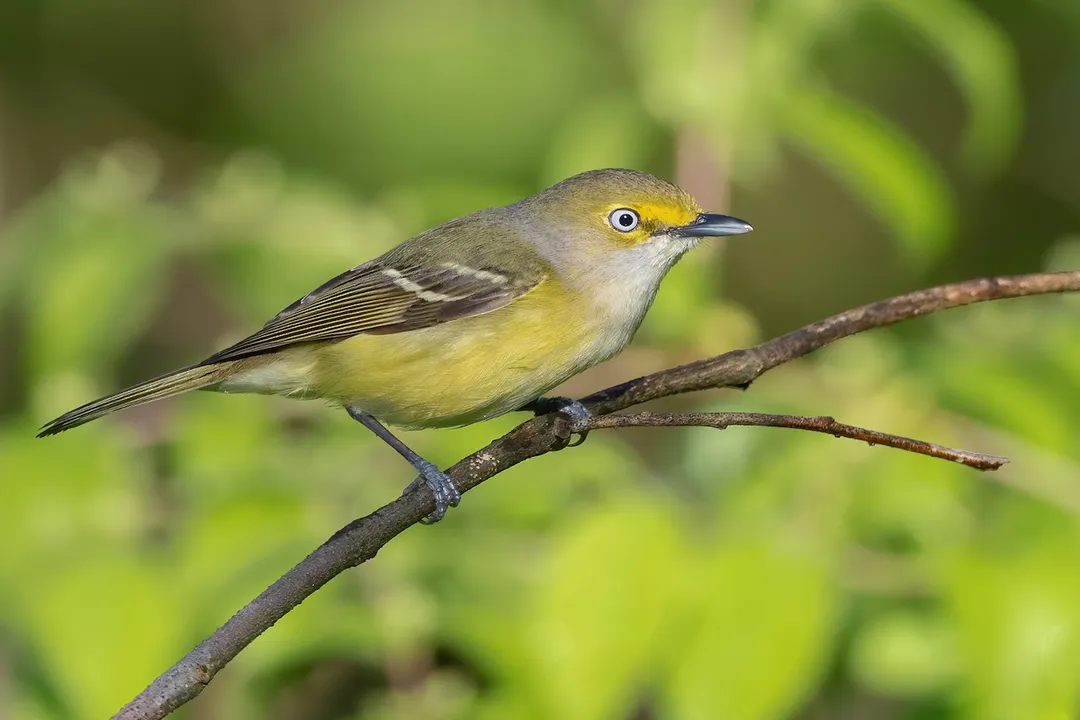
Once the breeding season concludes, the majority of the population embarks on a southward migration. [3] Unlike some short-distance migrants, the White-Eyed Vireo travels a considerable distance to spend the non-breeding season primarily in the southern United States, south through Mexico, Central America, and onto the Caribbean islands. [1][8]
In the U.S., wintering grounds are generally restricted to the extreme southern tips of peninsular Florida and along the Gulf Coast, though vagrants can appear elsewhere. [1][6] The habitat preference remains consistent, even in winter: dense, shrubby cover. In Central America, this means areas like humid lowlands and scrubby woodland patches. [8] If you are birding in the northern states during January, any sighting of this species would be highly unusual and likely indicate a lost individual, such as those occasionally recorded in places like Montana, far outside the typical wintering corridor. [6]
# Preferred Cover
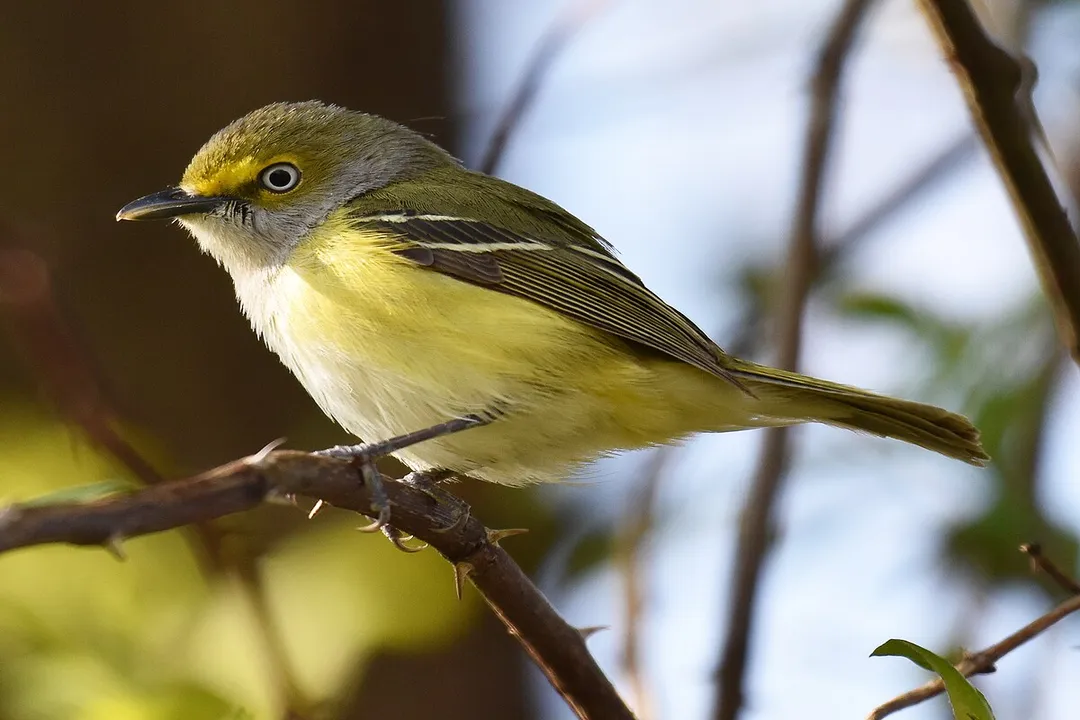
Regardless of latitude, the single most defining factor for locating the White-Eyed Vireo is its habitat preference. They are masters of concealment, thriving in dense thickets—areas where low branches, shrubs, and tangled vines create an almost impenetrable barrier. [2][5] This is not a bird of open woods or high canopy; it favors the shrub layer. [7]
Look for areas with a mix of saplings, briars, and heavy undergrowth, often found along streams, in swamps, or at the edges where a field meets a forest. [2] The bird often forages low down, sometimes hopping among dead leaves on the ground or skulking just a few feet above it. [7] In parts of the Gulf Coast, such as the Houston area, they rely heavily on these dense, scrubby margins, which provide both cover from predators and plentiful insects. [4] If the vegetation is too sparse or too uniformly tall, the chances of encountering a White-Eyed Vireo drop significantly.
A helpful way to visualize where to search is to mentally map out areas where ground cover hasn't been recently cleared or heavily grazed. A patch of secondary growth that has been left alone for several years, resulting in a complex vertical layering of short woody plants, is prime habitat. For instance, a small, overgrown drainage ditch running through an otherwise managed woodlot might hold a territory, while the surrounding, cleaner forest floor will not [Self-Integrated Analysis: The preference for structurally complex, multi-layered shrubbery means that conservation efforts focusing solely on preserving mature tree canopy might inadvertently eliminate crucial White-Eyed Vireo real estate].

# Finding the Bird
Successfully locating this secretive bird requires patience and an understanding of when they are most likely to reveal themselves. Since they spend so much time concealed, you must exploit the moments they are most active or exposed.
Their most vocal period is usually tied to the rising or setting of the sun, when light levels are adequate for activity but the midday heat has not yet driven them into the deepest shadows. [7] Therefore, set up near a promising thicket just after dawn or an hour before dusk. They will sing to defend territory or attract a mate. [2] If you hear the characteristic song or the sharp churr call emanating from a dense tangle, stop moving and listen intently.
If you are scanning an area, look for movement in the lower third of the shrub layer, rather than scanning the canopy [Self-Integrated Tip: When you suspect a vireo is present in a thicket, avoid pointing directly at the location immediately upon hearing the call. Instead, slowly scan the surrounding foliage slightly above and below the suspected spot. Direct, sudden attention can cause them to freeze or retreat deeper into the cover, whereas a slower, peripheral approach may allow you to glimpse the bird as it moves naturally].
# Edge Sightings
Sometimes, observations occur outside the strictly defined breeding or wintering zones, which can be especially exciting. Reports from areas like Montana or other inland western states are rare and represent birds that have wandered significantly off course, likely during migration. [6] These are known as extralimital sightings and offer reminders that migratory pathways are not always perfectly rigid.
Local Audubon chapters and birding hotlines often track these peripheral sightings. [4] For example, groups focusing on coastal migration corridors, such as those around Houston, might log more transient individuals passing through than inland areas further north, simply because the coastal strip acts as a reliable magnet for southbound travelers hugging the coastline. [4][1] These transient populations emphasize the importance of suitable stopover habitat—even a small patch of dense brush along a river in a generally unsuitable landscape can become a temporary haven for a weary migrant [Self-Integrated Analysis: The consistent reporting of this species in specific coastal urban/suburban margins suggests that habitat fragmentation, while often negative for wide-ranging birds, paradoxically concentrates migrants into predictable, smaller refuges along major flyways, making those small, dense green spaces disproportionately important during peak migration timing].
Ultimately, while the maps define the broad strokes of where the White-Eyed Vireo should be, successful location depends on marrying that knowledge with an understanding of local habitat structure and seasonal behavior, always paying closest attention to the tangled, often overlooked, lower levels of the vegetation.
Related Questions
#Citations
White-eyed Vireo Range Map - All About Birds
White-eyed Vireo | Audubon Field Guide
White-eyed vireo - Wikipedia
White-eyed Vireo | Bird Gallery - Houston Audubon Society
White-eyed Vireo - PW Conservation Alliance
White-eyed Vireo - Montana Field Guide
Vireo griseus (white-eyed vireo) - Animal Diversity Web
Distribution - White-eyed Vireo - Vireo griseus - Birds of the World