Yellow-Eyed Penguin Facts
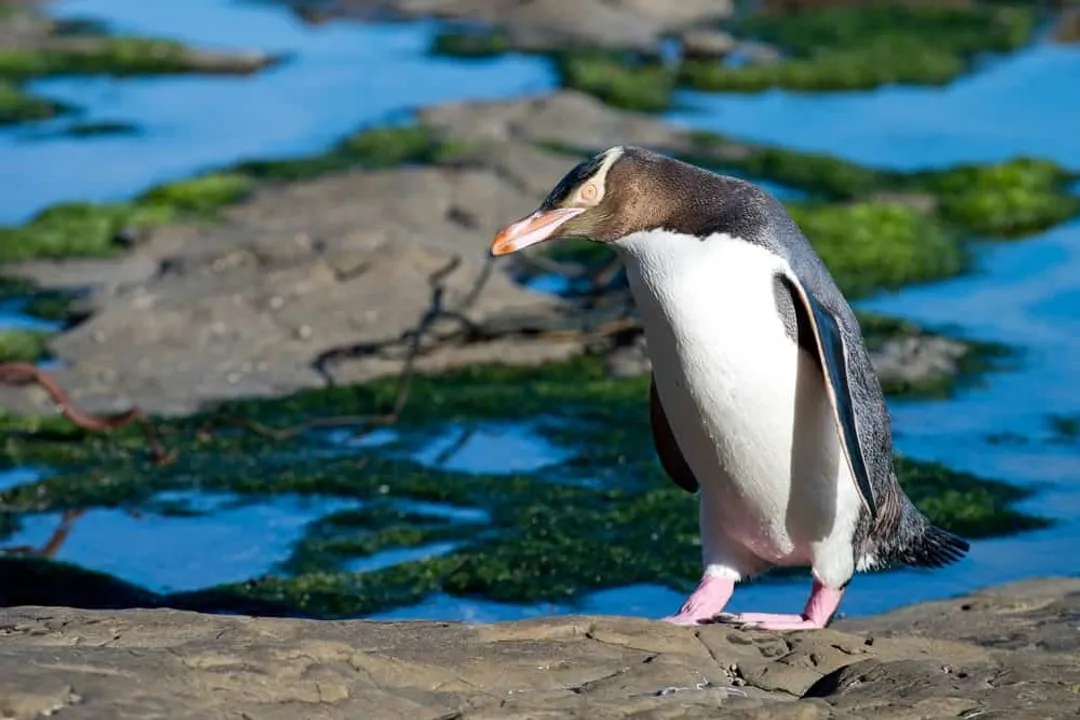
The Yellow-eyed Penguin, known in Māori as Hoiho, stands apart from its more numerous, tightly packed relatives, possessing a distinct and somewhat shy demeanor that has earned it a place as one of the rarest penguin species globally. Unlike many penguins that cluster in vast, noisy colonies, these birds prefer a more solitary existence, making their study and conservation particularly challenging for researchers. They are instantly recognizable, not just for their rarity, but for the pale yellow band of feathers that encircles their eyes, extending back to meet at the crown of the head, giving them their common name.
# Distinct Look
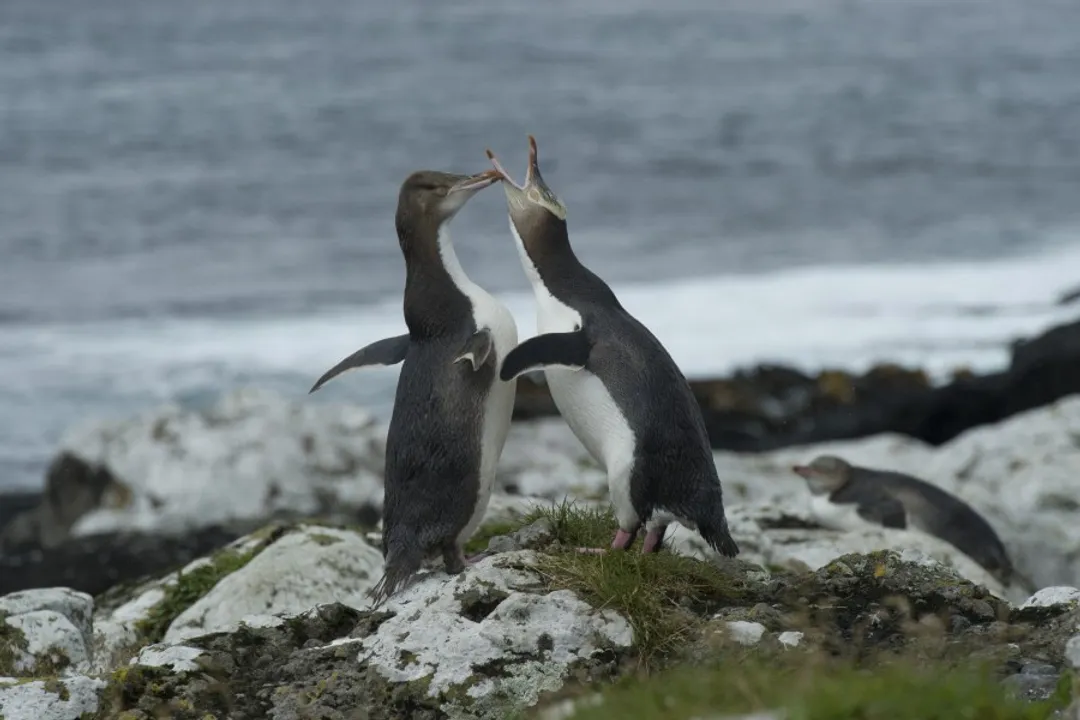
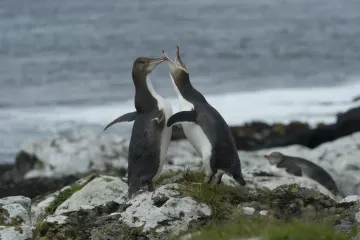
The visual characteristics of the Hoiho set them apart from virtually every other penguin on Earth. Their appearance is elegant, featuring a silvery-grey back and a creamy white front. The eponymous yellow eye-ring is the most striking feature, often described as an ivory or pale yellow band. This feature is consistent across both sexes, meaning visual identification of male versus female relies on subtler clues, though males are generally reported to be slightly larger. In terms of size, they are moderately large birds, standing around 65 to 79 centimeters tall, or roughly two and a half feet. Their weight usually falls in the range of 5 to 8 kilograms, though they bulk up considerably before breeding season. These measurements place them larger than Little Blue Penguins but smaller than Emperor Penguins, occupying a mid-range size within the broader penguin family.
# Geographic Spread
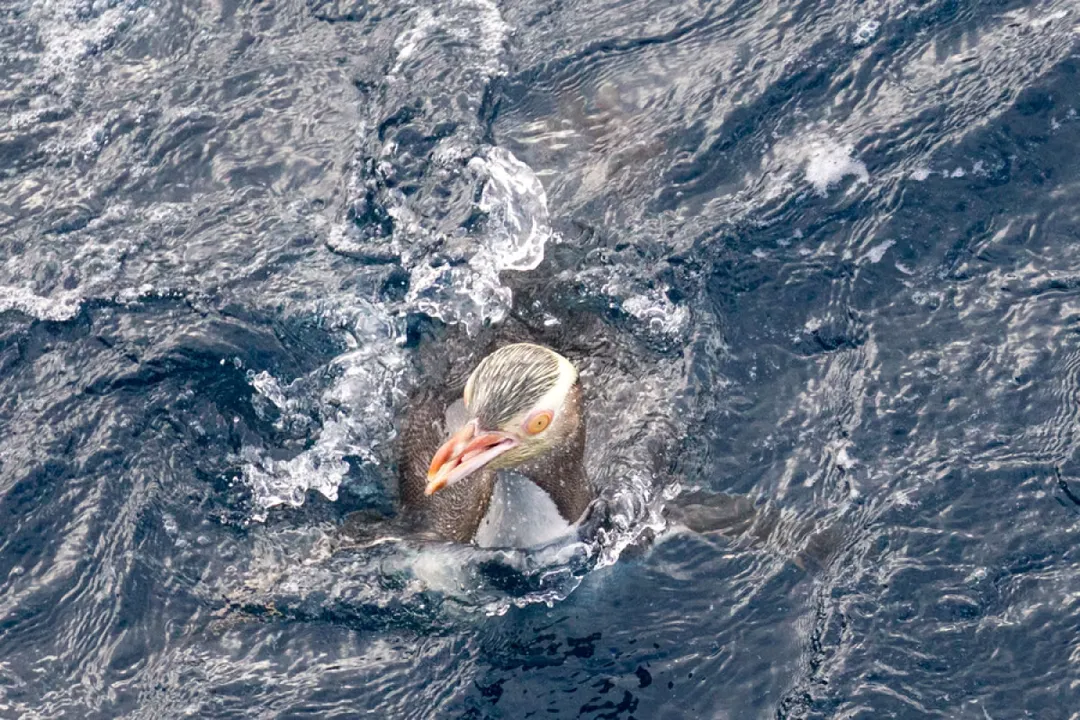
The geographical distribution of the Yellow-eyed Penguin is notably restricted, making them endemic to New Zealand. Their core breeding populations are found along the southeastern coast of the South Island, including areas like the Otago Peninsula, Stewart Island, and Campbell Island. They also maintain a presence on Auckland Island. While their breeding range is confined to these specific New Zealand locations, historically, their foraging range extended much further.
It is interesting to note that while many of the world’s most recognizable penguin species, like Adélies or Gentoos, are concentrated in Antarctica or the sub-Antarctic islands, the Hoiho is one of the few temperate-zone penguins. This requires them to adapt their behavior and diet to slightly warmer waters compared to their icy-dwelling cousins. When they are not actively breeding, they can sometimes be found as vagrants, occasionally appearing on beaches far from their usual haunts, demonstrating a capacity for dispersal that keeps hope alive for finding new, isolated habitats.

# Nesting Habitats
One of the most unusual aspects of the Yellow-Eyed Penguin is their choice of nesting environment, which deviates significantly from the typical open, rocky beaches favored by many other penguin species. Instead of large, exposed colonies, Hoiho prefer to construct their nests in sheltered, dense vegetation, often deep within coastal forests, scrub, or tussock grasslands. They require significant ground cover for camouflage and protection from the elements and predators.
This preference for secluded nesting sites means that observers must often look quite hard to find them. A pair will typically construct a nest platform on the ground, sometimes using twigs or debris, and defend a relatively large territory around it. This solitary nesting behavior, where pairs maintain considerable distance between themselves and their neighbors, contrasts sharply with the high-density, competitive breeding grounds of, say, King Penguins. This isolation, while potentially offering less colonial defense against aerial predators, seems to suit their temperament and perhaps the historical availability of sheltered forest edges in their native land. To ensure their survival, dedicated conservation efforts often involve creating or maintaining this specific type of coastal forest habitat, as their reliance on it makes them highly vulnerable to deforestation or land use changes.
# Foraging Life
When it comes to hunting, the Yellow-Eyed Penguin is a dedicated provider, undertaking impressive foraging trips to secure food for themselves and their chicks. Their diet consists mainly of small to medium-sized fish, such as red cod, sprat, and silversides, though they also consume squid. Their dives are deep and can last for extended periods as they search the depths for sustenance.
Foraging trips can be long, sometimes taking them many kilometers offshore, especially when feeding demanding chicks during the height of the breeding season. Because they are not foraging in massive groups, their success depends on individual skill and knowledge of local feeding grounds. Comparing this to the large-scale, coordinated feeding often observed in highly colonial species, the Hoiho seems to rely more on individual tenacity. This might translate to a need for cleaner, fish-rich waters close to their sheltered nesting sites, as long, energy-draining commutes become less sustainable for the species as a whole if food resources become scarce near the coast.
# Reproduction Cycle
Yellow-eyed Penguins exhibit strong fidelity to their nesting sites, often returning to the same patch of forest year after year. They are generally considered to be monogamous, forming pair bonds that can last across multiple breeding seasons. A typical breeding attempt involves laying two eggs, usually between September and November.
The incubation period lasts for approximately 35 to 45 days, shared between both parents. Once the chicks hatch, the demanding phase of chick-rearing begins. For the first few weeks, one parent remains almost constantly on guard at the nest, while the other commutes to forage. After this initial brooding phase, both parents will spend time out at sea hunting, returning to feed the growing chicks in shifts. The fledging period—the time it takes for the chicks to become independent enough to head to sea—is relatively long for a penguin, often stretching to around 100 days. This slow reproductive rate, producing only one or two chicks per season that take a long time to mature, is a significant factor contributing to the species’ overall vulnerability; there is little room for high rates of reproductive failure.
# Conservation Status
The conservation status of the Yellow-Eyed Penguin is a serious concern, generally classified as Endangered by conservation bodies. Official data suggests the total population is alarmingly small, estimated to be around 220 breeding pairs, or roughly 500 to 600 individuals remaining in the wild, though these numbers fluctuate and have shown concerning declines over recent decades. This low number places significant pressure on every surviving individual.
The challenges facing the Hoiho are multi-faceted, stemming from human activity and natural pressures acting upon a species already biologically predisposed to low reproductive output. A good way to view their precarious position is to consider the ratio of breeding effort to population resilience. If a typical colony of a more fecund penguin species loses 20% of its young due to a localized storm, the impact is buffered by the sheer numbers present. For the Hoiho, a similar localized event can represent a devastating percentage of the total global population.
# Major Threats
The threats that plague the Hoiho are diverse and often overlap, complicating management strategies.
- Disease: Diseases, such as avian diphtheria, have historically caused catastrophic mortality events within the population.
- Predation: While adults are powerful swimmers, terrestrial predators pose a huge risk, particularly to the chicks and nesting females. Introduced mammals, such as dogs, are a known cause of direct fatality if they access nesting areas. Stoats and feral cats can also prey on eggs and young chicks.
- Habitat Degradation: Because these penguins rely so heavily on specific coastal scrub and forest areas for nesting, any habitat destruction, fragmentation, or degradation from agriculture or human development directly reduces their breeding success.
- Fisheries Interaction: While perhaps less critical than disease or habitat loss based on some reports, interactions with fishing gear and competition for food resources remain concerns that require ongoing monitoring.
# Protecting Hoiho
The work being done to protect the Yellow-Eyed Penguin requires dedication from both governmental bodies and local community groups. Conservation efforts focus on mitigating the identified threats and actively supporting the existing population to boost recruitment numbers.
A key component of protection involves managing the terrestrial environment where they nest. This includes fencing off sensitive breeding areas to keep out domestic animals, especially dogs, and controlling introduced predators. For those interested in supporting conservation firsthand, one actionable step is to support local land trusts or community groups focused on restoring native coastal vegetation in known Hoiho territories; this directly addresses their need for safe, dense nesting cover away from human disturbance. Furthermore, responsible tourism is essential. Given their preference for nesting in secluded spots, maintaining the recommended safe viewing distance—often cited as at least 20 meters—is non-negotiable for wildlife observers. This distance is vital not just to avoid stress, but because they are easily startled, and a sudden flight from a nest could leave eggs or chicks exposed to the elements or predators for a critical length of time.
Researchers are also actively involved in monitoring population trends, treating sick birds, and managing high-risk nesting sites to ensure the survival of the next generation. The very fact that this species requires such intensive, hands-on management across a fragmented landscape highlights its extreme sensitivity to environmental change—a stark reminder that not all penguins thrive in the cold, open Antarctic environments we often associate with the order Sphenisciformes. Success in saving the Hoiho will rely on continued commitment to maintaining the delicate balance of their unique temperate habitat.
Related Questions
#Citations
Yellow-Eyed Penguin - Oceanwide Expeditions
Yellow-Eyed Penguin Facts and Information | United Parks & Resorts
Yellow-eyed penguin - Wikipedia
Yellow-Eyed Penguin Facts | New Zealand Wildlife Guide
Megadyptes antipodes (yellow-eyed penguin) - Animal Diversity Web
Yellow-eyed penguin Facts for Kids
Yellow-eyed penguin/hoiho: Sea and shore birds
Species Profile for yellow-eyed penguin(Megadyptes antipodes)
Yellow-Eyed Penguin - Megadyptes antipodes - A-Z Animals
Yellow-Eyed Penguin: Facts, Habitat, Surprising Height & More | Fahlo