How does the undercoat of a black sable typically differ from that of a solid black German Shepherd?
Answer
The black sable's undercoat is often visibly lighter or tinged with gray/tan.
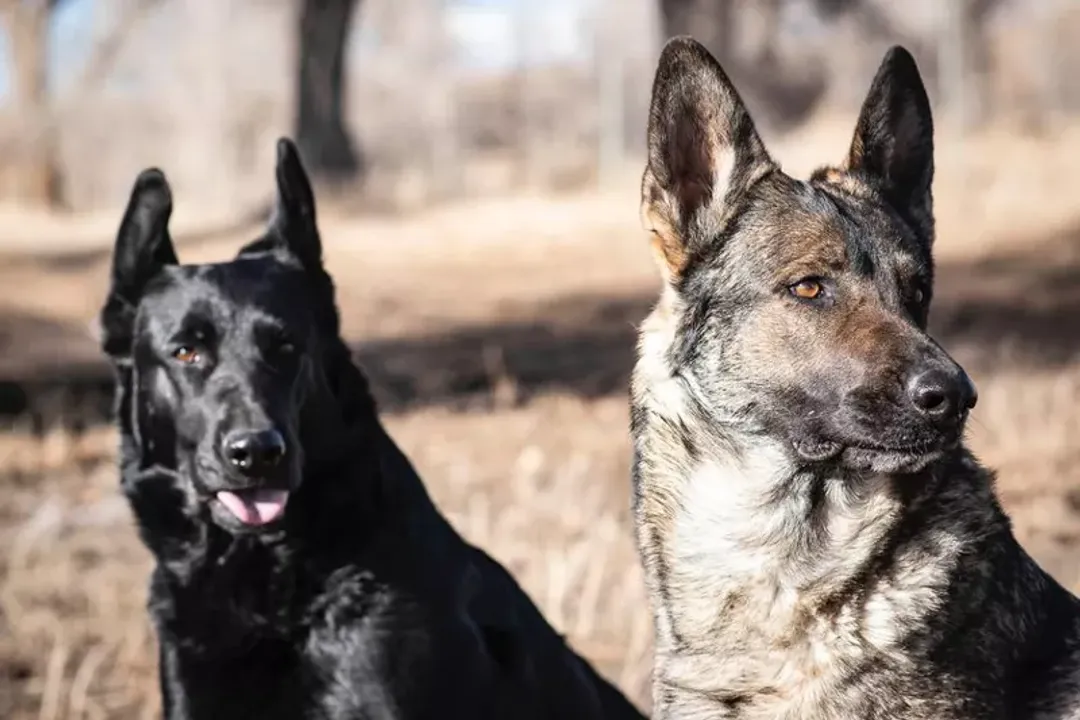
A key method for distinguishing between a black sable and a solid black German Shepherd involves a careful examination of the undercoat, especially compared to the guard hairs. For a true solid black dog, the undercoat typically matches the guard hairs, exhibiting a deep, almost bluish-black coloration throughout. Conversely, in a genuine black sable, even if the guard hairs are tipped heavily in black, the undercoat often reveals its true underlying color, showing lighter tones such as gray or tan pigmentation. This difference in the underlying coat color provides strong visual confirmation that the banding dictated by the Agouti gene is present.
Related Questions
What function does the Agouti (A) series of genes control in German Shepherds?Which dominant allele typically causes solid black coloration by overriding the Agouti gene?What specific feature defines a black sable coat pattern on the individual hair shaft?What visual characteristic creates a primary source of confusion between a black sable and a solid black GSD?What is suggested about the historical prevalence of the sable coat color in German Shepherds?What detail should an observer look for on the guard hairs along the back ridge to distinguish a black sable?Why does only one copy of the dominant E^D gene cause a dog to appear solid black?What are the two main reasons cited for the high perceived rarity of the black sable German Shepherd?What effect does a breeder focusing on uniform solid black dogs have on their litters?How does the undercoat of a black sable typically differ from that of a solid black German Shepherd?