How much should you pay for a German Shepherd?

Deciding on the purchase price for a German Shepherd puppy is rarely straightforward, as the figure you encounter can range from a few hundred dollars to several thousand, depending entirely on the source and the puppy’s lineage. [1][6] Prospective owners often find themselves looking at a spectrum of prices, making it crucial to look past the initial dollar amount and consider the total investment required for a healthy, well-adjusted companion. [7] Understanding where these costs originate helps set realistic expectations for bringing home one of these intelligent and capable dogs. [5]
# Acquisition Price

The upfront cost for a German Shepherd puppy is the first major hurdle for prospective owners, and it varies significantly based on several key factors. [6][7] While some sources indicate that a puppy from a reputable breeder might start around \500 to \1,500 for a pet-quality dog, others suggest a more common range centers closer to \1,500 to \2,500 for a quality companion. [7] However, if you are seeking puppies with impeccable pedigrees, proven working lines, or show potential, the price tag can easily climb above $3,000 or even higher. [6]
Anecdotal evidence shared by current owners reflects this wide disparity. Some have reported paying around \500** for their GSD, often when the breeder was less established or the puppy was mixed-breed or from rescue channels [^1][^3]. Conversely, others have paid **\2,000 or more, justifying the cost by citing extensive health testing of the parents and documented working titles. [1] This variability highlights a critical point: you are often paying for the breeder's investment in health screening, titling, and early socialization, not just the dog itself. [6]
# Price Variances
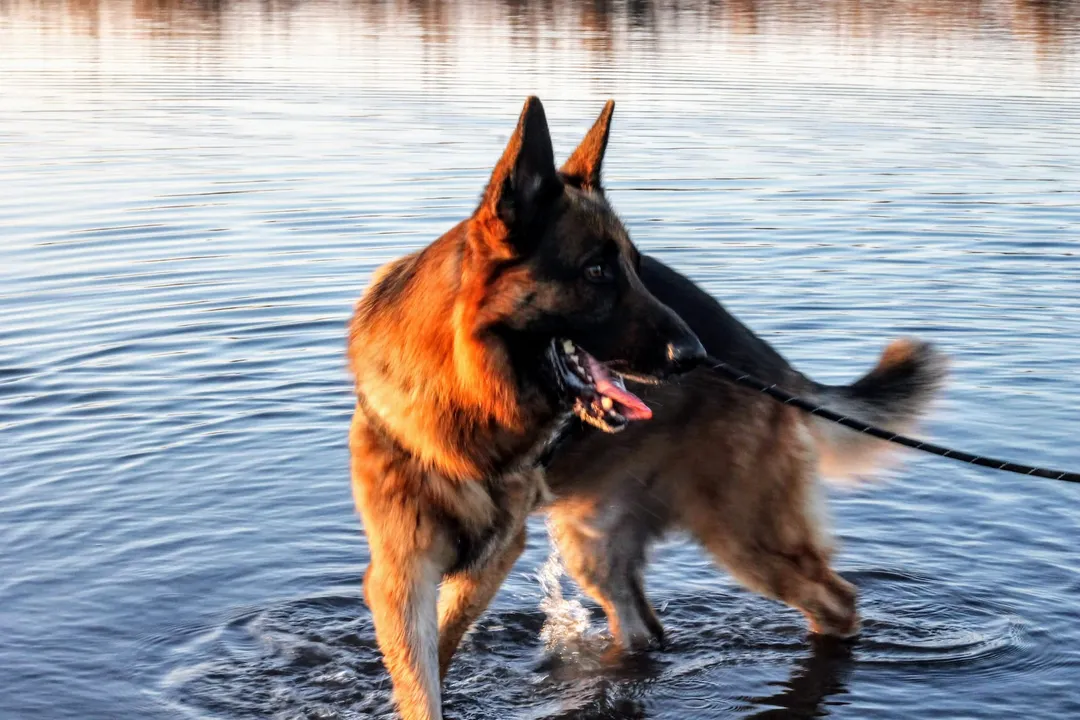
Several distinct elements contribute to the final price tag on a German Shepherd puppy, moving the cost beyond a simple market rate. [7]
# Bloodlines Status
The most significant differentiator in price often relates to the puppy’s ancestry. Puppies descending from champion show lines or established working lines—such as those used for police, military, or high-level sport—command premium prices. [6] Breeders investing in top-tier stud dogs and proven brood bitches that have undergone extensive health and temperament evaluations pass those costs onto the buyer. [6] If the parents hold titles in conformation (beauty) or performance events (like Schutzhund or IGP), the puppy’s initial cost will reflect this proven quality. [6]
# Location and Breeder Type
Geographic location plays a role, as does the type of breeder. A breeder dedicated solely to preserving the breed standard, performing thorough health checks (like hip and elbow certifications), and providing extensive lifetime support will charge more than a backyard breeder or someone simply looking to make a profit. [6][7] Purchasing a puppy from a dedicated, reputable source, despite the higher initial outlay, is generally a safer investment against future unexpected medical bills due to genetic issues. [6]
# Included Care
A well-bred puppy from a conscientious breeder will typically come with more than just the dog itself. This usually includes initial vaccinations, deworming, microchipping, and health guarantees. [7] Some breeders even include initial food, registration papers, and sometimes, puppy starter kits. [7] These inclusions add value to the initial purchase but are often absent in lower-priced transactions, leaving the new owner responsible for these immediate necessities.
When budgeting, remember that the cheapest puppy available often carries the highest potential cost down the road if it lacks proper health screening for common GSD issues like hip or elbow dysplasia. [6]

# New Dog Setup

Once the acquisition price is settled, the immediate startup costs for supplies and initial veterinary care begin to accumulate. [5] These are necessary, non-negotiable expenses that you should budget for even before the dog arrives home. [5][7]
A realistic initial setup can be broken down as follows:
- Housing & Containment: A large crate or kennel, sturdy gate(s), and perhaps puppy pads for house training. [5]
- Feeding Supplies: Stainless steel bowls for food and water, and an initial supply of high-quality puppy food appropriate for a large breed. [5][7]
- Health & Safety: Initial vet check-up, necessary first vaccinations (if not already given), deworming treatments, and possibly microchip implantation. [5][7]
- Comfort & Training Gear: A good quality collar, leash, identification tags, appropriate chew toys for teething, and perhaps grooming supplies. [5]
While it might be tempting to buy the least expensive items, German Shepherds are powerful dogs, and investing slightly more in a secure crate or durable collar can prevent future frustration or injury. [5]
# Monthly Budget

The initial purchase price is just the beginning; the true cost of ownership is realized over the dog's lifespan, which can easily exceed ten years. [9] Ongoing costs are substantial for a large, active breed like the German Shepherd. [5][9]
# Sustenance Needs
Food is typically the largest recurring expense. [9] German Shepherds eat significantly more than smaller breeds, and premium large-breed formulas are recommended to support their bone and joint health. [9] Owners often estimate monthly food costs to fall in the range of \60 to \150 or more, depending on the brand's quality and current market prices. [9]
# Routine Wellness
Beyond food, routine veterinary care is mandatory. This includes:
- Annual Checkups: Wellness exams, necessary boosters for core vaccines, and regular parasite prevention (flea, tick, heartworm medications). [5][9]
- Grooming: While GSDs are often groomed at home, professional deshedding treatments during seasonal changes can be beneficial, though not always strictly necessary for every owner. [5]
- Toys and Chews: Replacing worn-out toys is a constant expense, especially with a strong chewer like a GSD. [5]
Many experienced owners calculate their ongoing monthly expenditures, excluding emergency funds, to average between \150 and \300 for a healthy adult German Shepherd. [9] This figure can easily rise if you factor in professional training classes or high-end supplements. [5]
# Insurance Consideration
For a large breed, budgeting for potential emergencies is paramount. Pet insurance is a method some owners use to mitigate catastrophic financial risk. [2][4] Premiums vary based on coverage level, the dog's age, and location, but this expense must be incorporated into the long-term budget if chosen. [2][4]
If we were to build a simplified annual budget for a healthy adult GSD, it might look like this:
| Expense Category | Low Estimate (Annual) | High Estimate (Annual) |
|---|---|---|
| Premium Food | $720 | $1,800 |
| Routine Vet/Meds | $250 | $500 |
| Supplies/Toys Replacements | $150 | $400 |
| Total Estimated Annual Recurring Cost | $1,120 | $2,700 |
This calculation excludes insurance premiums and emergency savings, which an owner must account for separately. [2][9]

# Specialized Training
German Shepherds thrive with structure and mental stimulation, meaning training is an essential component of responsible ownership, which incurs its own costs. [6] Basic obedience classes are often recommended immediately after puppyhood and can cost several hundred dollars for a multi-week course. [5]
For owners interested in working lines or protection sports, the financial commitment escalates sharply. Purchasing a fully trained protection dog, for instance, represents a massive financial undertaking, potentially costing upwards of \15,000 to \50,000 or more, depending on the dog's training level, age, and lineage. [10] This level of investment far surpasses the cost of the puppy itself and reflects years of specialized professional handling and rigorous conditioning. [10] Even lower-level protection or advanced tracking training involves significant fees that must be factored into the budget if those activities are desired. [10]
# Ownership Value Analysis
When evaluating the cost, it is helpful to compare the expense of purchasing from a high-quality breeder versus acquiring a dog that may have unknown origins, perhaps through an online classified ad or a poorly vetted rescue situation. [1][6] While the initial savings on a cheaper puppy—say, \500 instead of \2,500—seems significant, that $2,000 difference must be weighed against the value provided by the reputable breeder.
This value often translates into predictable temperament, documented health clearances (Hips/Elbows/OFA testing), and breeder support. [6] A dog that requires expensive orthopedic surgery at age three due to undiagnosed dysplasia, for example, can wipe out any initial savings many times over. Therefore, the true cost of ownership for the poorly sourced dog skyrockets when factoring in potential, preventable medical debt.
Consider this perspective: if you purchase a well-vetted puppy for **\2,500** and it lives a long, healthy life with minimal unforeseen expenses, your total cost of ownership over ten years is heavily weighted toward maintenance. If you buy a \500 puppy that develops serious, expensive joint issues requiring surgery costing \5,000** at year three, your effective cost for that dog is already **\5,500 plus maintenance, without even considering the quality of life impact for the dog. This subtle calculation—the difference between price paid and total invested—is where prospective owners often miss the mark when budgeting for a high-energy, large breed prone to specific orthopedic conditions. [6]

# Long Term
Looking at the very long term helps contextualize the entire financial commitment. If we take a middle-ground estimate of \2,000** for the initial purchase and an average recurring cost of **\1,800 per year (midpoint between the low and high annual estimates provided earlier, plus a buffer for incidentals), [9] the ten-year financial picture emerges.
Ten-Year Financial Snapshot (Estimate):
- Initial Cost: $2,000
- Annual Maintenance (10 Years): \1,800 x 10 = \18,000
- Estimated Subtotal (Excluding Emergencies/Insurance): $20,000
This rough estimate illustrates that the purchase price is merely a small fraction—often 10% or less—of the total financial outlay required to responsibly care for a German Shepherd over its lifetime. [9] The true commitment is to the daily, monthly, and annual needs of a demanding, large breed dog. Owners planning to adopt rather than buy should factor in initial veterinary rehabilitation and behavioral assessments, which can also represent a significant upfront cost if the dog has an unknown history. [3] The consistent provision of high-quality food, preventative medicine, and mental engagement remains the enduring financial requirement for keeping this breed happy and healthy.
Related Questions
#Citations
Planning on getting a GS puppy. How much should I expect to pay?
How Much Does It Cost to Own a German Shepherd? - Lemonade
What is the cost of a German Shepherd? - Facebook
Cost of Owning a German Shepherd (2025) - Insurify
How expensive is it to own and maintain a German shepherd? - Quora
How Much Do German Shepherd Puppies Cost?
How Much Does a German Shepherd Cost? - Embrace Pet Insurance
How Much Does a German Shepherd Cost to Own?
How Much Does a German Shepherd Cost Per Month
Cost Of Owning A Trained German Shepherd Protection Dog