How much should a German Shepherd mix eat?
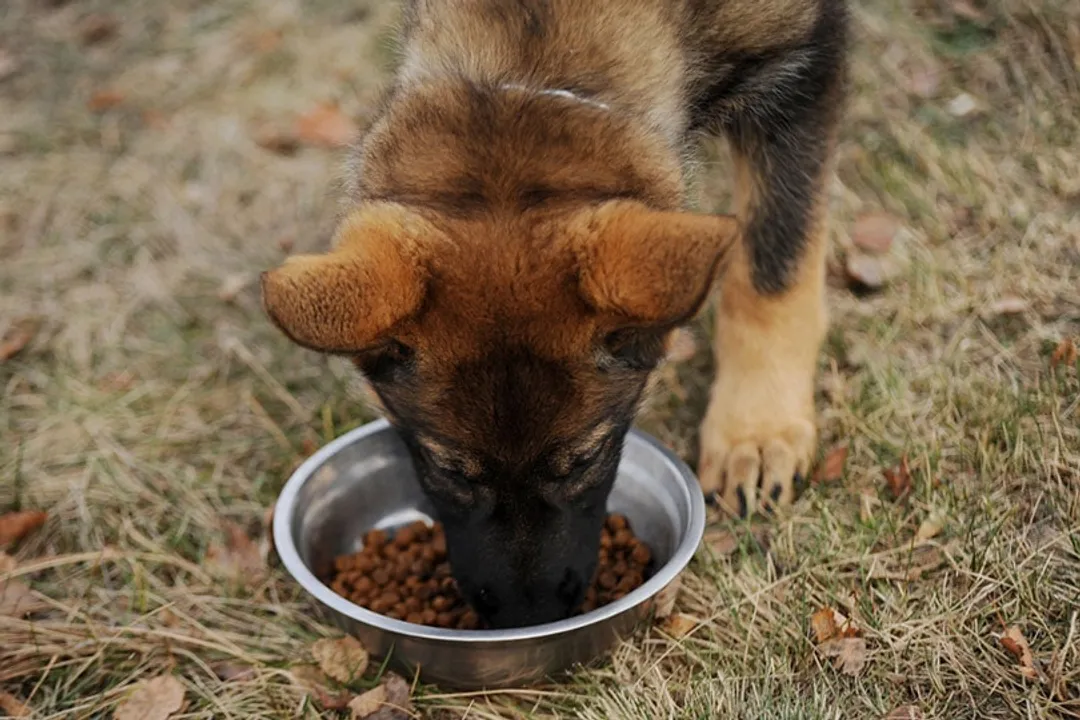
Figuring out the exact right amount of food for a German Shepherd mix isn't as simple as consulting a single chart; it’s a dynamic calculation that shifts based on several critical factors unique to your dog. While a purebred German Shepherd's needs are well-documented, mixing in another breed means you must pay closer attention to individual body composition and energy output. [2][7] A dog weighing between 75 and 85 pounds might require anywhere from three and a half cups to five cups of dry food daily, but this is just a starting point that depends heavily on the food's caloric density and your dog’s lifestyle. [1][4]
# Weight Activity Factors
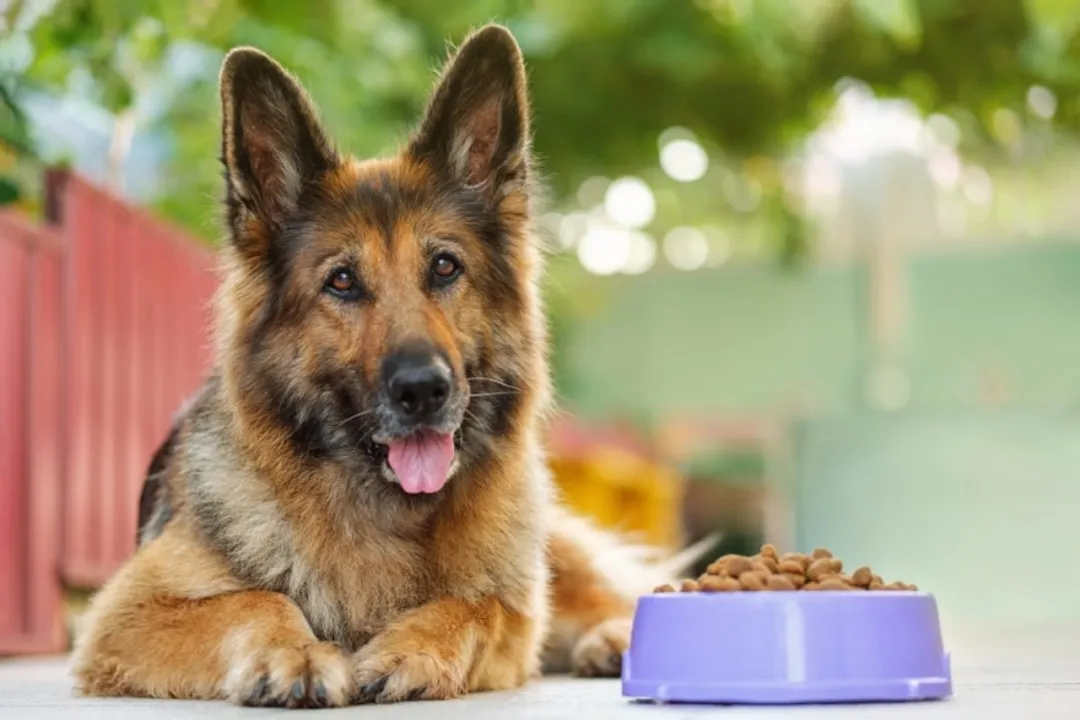
The most immediate variables dictating daily caloric needs are the dog’s current weight, its age, and just how much exercise it gets on a typical Tuesday. A highly active dog, perhaps one that trains daily or works as a scent dog, will burn significantly more calories than a moderately active family companion. [2][8] Likewise, puppies require more energy density to fuel rapid growth, while senior dogs often need fewer calories as their metabolism naturally slows down. [2][8] For an adult GSD mix, veterinarians often suggest monitoring their Body Condition Score (BCS) rather than strictly adhering to the scoop measurement, because BCS gives a physical assessment of fat reserves. [7] If you can easily feel the ribs without pressing hard, and you can see a defined waistline when viewed from above, the dog is likely at an ideal weight. [7] If you are feeding a mix whose other breed is significantly smaller or larger, you may need to adjust the standard GSD feeding guidelines—for example, if mixed with a smaller breed, starting at the lower end of the recommended cup range for the target weight is wise. [3]
# Commercial Food Portions

When working with standard commercial dry kibble, the feeding instructions provided by the manufacturer serve as the baseline guide. [2][7] These guidelines are formulated based on the typical caloric content of that specific food. For a standard adult German Shepherd weighing around 70 to 90 pounds, many guidelines suggest an intake hovering near 3.5 to 4.5 cups per day. [1][4] However, it is important to note that what constitutes a "cup" can vary slightly between measuring scoops, so consistency is key. [7] A high-quality, calorie-dense food might require you to feed slightly less volume than a lower-quality food with more fillers, even if both are labeled as "complete and balanced". [2][8] This is where reading the guaranteed analysis on the bag becomes essential, looking specifically for the kilocalories per cup (kcal/cup) to truly compare products.

# Feeding Timing

Deciding how often to serve meals is nearly as important as how much. Most veterinarians and experienced owners recommend feeding an adult German Shepherd mix twice per day: once in the morning and once in the evening. [6] Splitting the total daily amount into two equal feedings helps maintain a steady energy supply throughout the day and prevents the stomach from being overly full at any one time, which can be beneficial for deep-chested breeds prone to bloat. [6] Feeding puppies, on the other hand, typically requires three or four smaller meals spaced throughout the day to support their intense developmental needs. [2] For seniors, two meals are usually sufficient, but sometimes smaller, more frequent meals can aid digestion if they have slower appetites. [8]
# Raw Diet Mathematics
For those choosing a raw food diet, the feeding calculation changes fundamentally from volumetric cups to a percentage of the dog’s body weight. [9] Raw feeding guides often suggest that an average, healthy adult German Shepherd mix should consume between 2% and 3% of their ideal body weight in raw food daily. [9] For a dog at the lower end of the adult weight spectrum, say 75 pounds, this translates to roughly 1.5 pounds of food per day if feeding at a 2% rate (75 lbs * 0.02 = 1.5 lbs). If that dog is very active, you might increase that to 2.25 pounds (3% rate). [9] The advantage here is that the calculation is based on lean body mass rather than the volume of a processed product. A useful way to approach this is to first determine the dog's ideal weight, then calculate the 2% baseline, and then observe the dog’s energy levels and stool quality over a few weeks to fine-tune that percentage up or down by a tenth or two. [9]

# Monitoring Body Shape
Relying solely on the scale or the measuring cup is a common pitfall for new owners. The most authoritative method for determining if your feeding regimen is correct involves using your hands and eyes—the Body Condition Score. [7] If you are tracking your mix's feeding schedule and notice that they seem to be losing muscle mass or appear too skinny despite eating the manufacturer’s recommended amount, this might be an indicator that the food you are feeding is not meeting their specific energy needs, or perhaps that your activity assessment was too low. [8] Think of the food bag recommendation as a first draft for the feeding plan, not the final, finalized document. If your mix is a high-drive working dog, you may find that even the highest recommendation on the bag is insufficient, requiring you to switch to a higher-calorie formula or supplement with safe, high-value treats or toppers. [2]
# Adjusting for Mix Differences
When dealing with a German Shepherd mix, the influence of the other breed cannot be ignored. If the mix is with a breed known for a slower metabolism, like a Basset Hound or perhaps some larger, lower-energy breeds, you must actively lean towards the lower end of any given feeding recommendation for their weight class. [3] Conversely, if the mix includes a high-energy working breed like a Malinois or a Border Collie, you should start testing the upper limits of the suggested cups or raw weight percentage. [9] A simple way to visualize this adjustment is to create an 'Activity Multiplier' based on your veterinarian's assessment. If your dog is sedentary (house pet only), you multiply the baseline 2% raw weight or the manufacturer's lowest cup recommendation by 0.9. If they are moderately active, use 1.0 (baseline). For working dogs, use 1.1 to 1.2. [1][2] This calculated adjustment helps bridge the gap between generic label advice and real-world energy expenditure.

# Troubleshooting Intake Issues
If you notice a sudden, drastic change in appetite—either eating significantly more or less than usual—it warrants immediate attention rather than just changing the food amount. A rapid decrease in food interest, even if the dog still eats the preferred meal, can sometimes signal underlying dental pain or general malaise, issues common enough that they should prompt a check-up. [5] Conversely, a dog that suddenly seems ravenous, even after finishing its correctly portioned meal, might be experiencing metabolic changes or an undiagnosed issue, although it could also simply mean their exercise routine has drastically increased and the owner hasn't yet adjusted the food volume to match. [8] Always evaluate behavior and energy alongside weight fluctuations before making large adjustments to the feeding schedule.
#Videos
How Much Should I Feed My GERMAN SHEPHERD - YouTube
Related Questions
#Citations
Feeding amount : r/germanshepherds - Reddit
Healthy Eating for a German Shepherd | PetCareRx
How much food to feed a hungry shepherd? - Facebook
How much food for 75-85 lb German Shepherd?
How Much Should I Feed My GERMAN SHEPHERD - YouTube
How often and how much should we feed our adult German ... - Quora
How Much to Feed a German Shepherd: Vet-Approved Guide
Dog Feeding Chart: How Much Food Should I Feed My Dog? - PetMD
What's the Best Dog Food for a German Shepherd Pit Bull?