Which dense marine vegetation is frequently associated with wolf eel locations besides rocky reefs?
Answer
Kelp forests
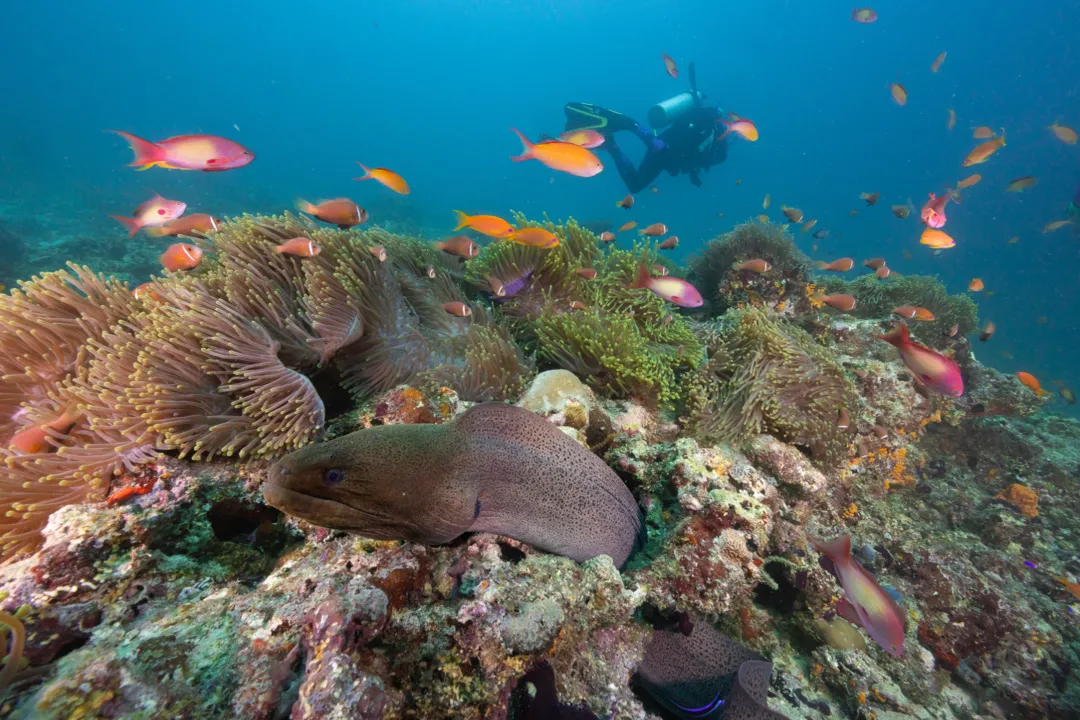
While the primary habitat requirement revolves around rocky reefs offering structural shelter like caves and crevices, the suitability of a location is significantly enhanced by associated marine vegetation. Wolf eels are frequently found in proximity to dense kelp forests throughout their range. These kelp canopies offer dual benefits: they provide essential camouflage for the often-hidden eels and add an extra layer of structural complexity surrounding their established dens, supplementing the protection offered by the underlying rocks.
Related Questions
What marks the typical northern boundary of the wolf eel’s North American home range?To what depth have wolf eel presences been recorded in their vertical habitat slice?What defining characteristic is essential for wolf eel habitat, relating to topography?How are wolf eels characterized regarding their specific hideout or den?Which dense marine vegetation is frequently associated with wolf eel locations besides rocky reefs?What location is often cited as the southern extent of the documented wolf eel range?Which area in Washington State is recognized as a regional hotspot for finding wolf eels?Finding a healthy population of wolf eels often serves as a natural marker for what environmental state?Where does the preferred depth zone seem to concentrate for the majority of the wolf eel species?What is the primary function of the critical den established by the territorial wolf eel?