Wolf Eel Physical Characteristics
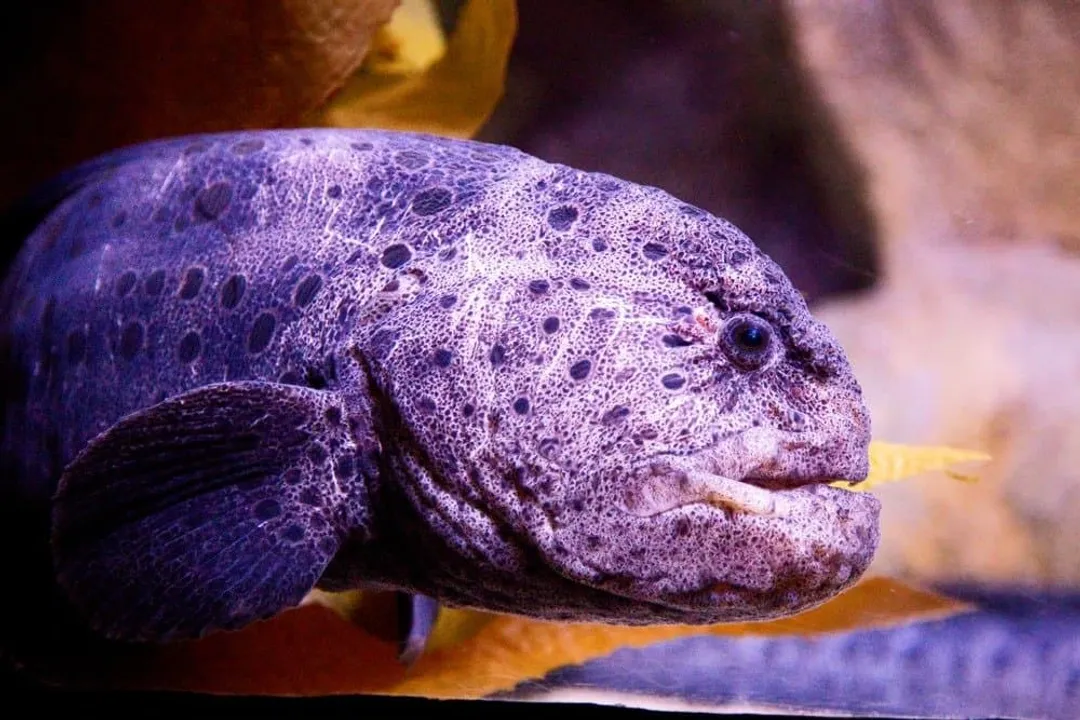
The creature known commonly as the Wolf Eel, scientifically designated as Anarrhichthys ocellatus, presents one of the ocean's most striking examples of misidentification. Despite the "eel" in its name and its decidedly elongated, serpentine form, this animal is definitively a fish, not a true eel. [1][2][5] It stands alone as the sole member of the genus Anarrhichthys within the family Anarhichadidae, the wolf fishes. [3] The lineage name itself offers clues: Anarrhichthys is a combination of Greek roots suggesting "climbing fish," likely referencing its ability to navigate tight, rocky spaces. [1] The species name, ocellatus, is Latin, meaning "eye-like spot," a nod to the distinctive markings seen on its younger self. [1][3]
# Massive Metrics
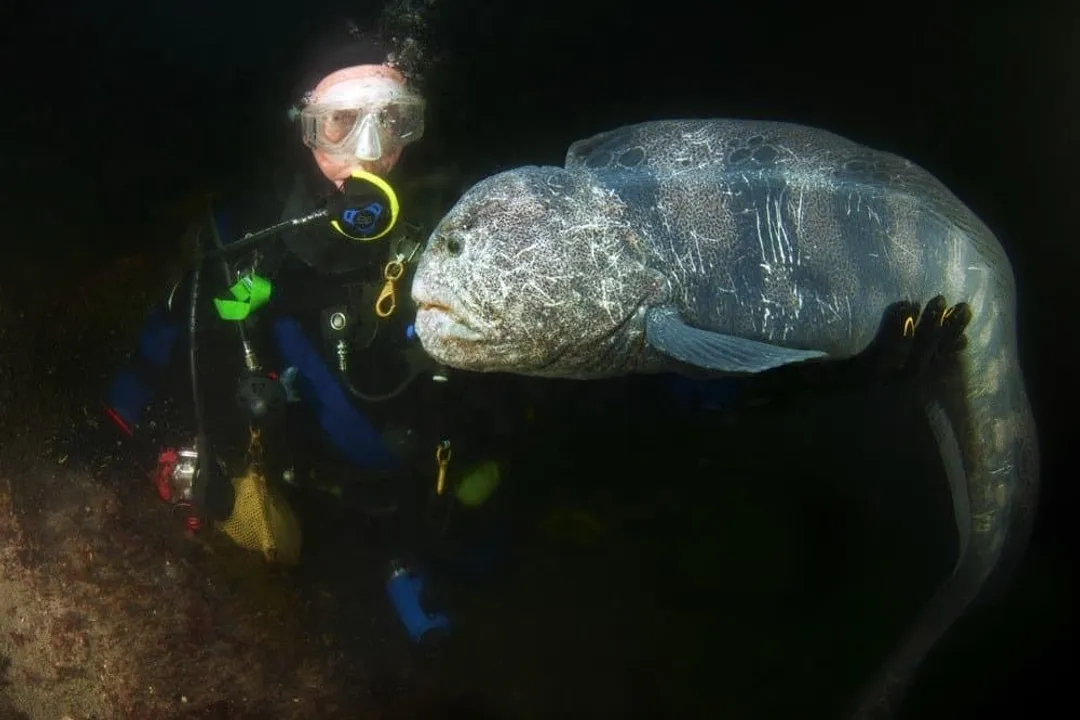
Wolf Eels are not subtle in size; they are among the larger inhabitants of their rocky reef domains. Mature individuals can attain impressive lengths, with reports placing the maximum size at around (nearly ). [3][5][8] Weight can also be substantial, topping out near () or sometimes reported as high as . [3][5] This considerable bulk is supported by a lifespan that stretches over two decades, estimated between $20$ and $28$ years. [3][8] For readers interested in long-term observation, knowing this longevity suggests that the Wolf Eel an individual meets on a dive could potentially be a creature of significant age. [8]
# Fin Structure Anatomy
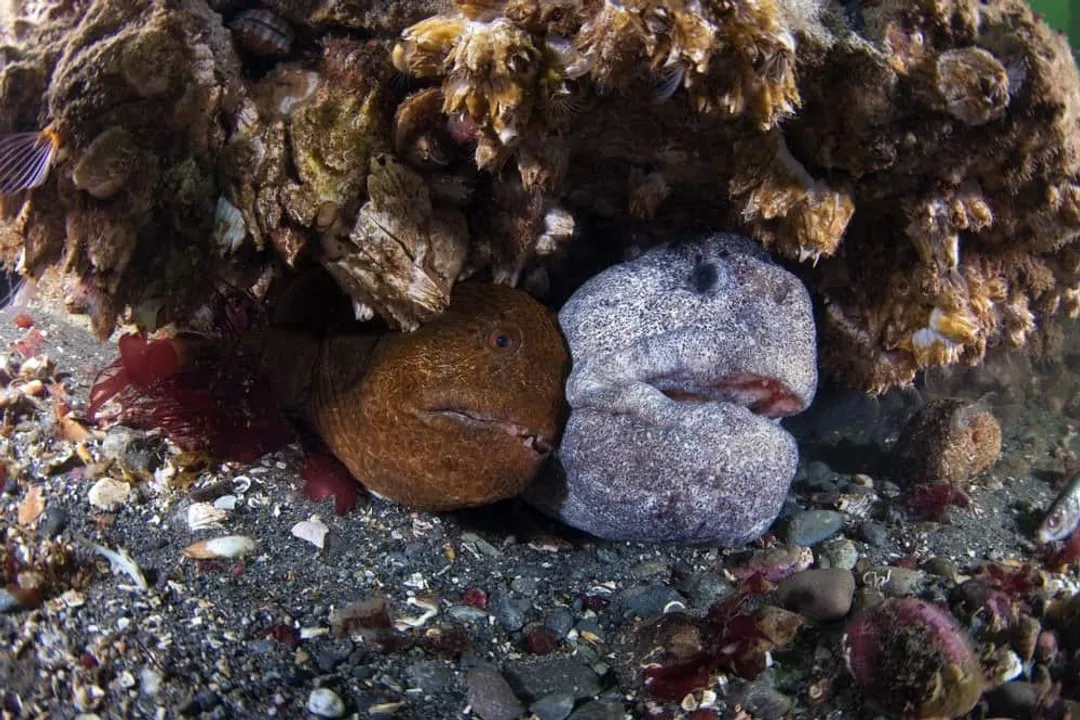
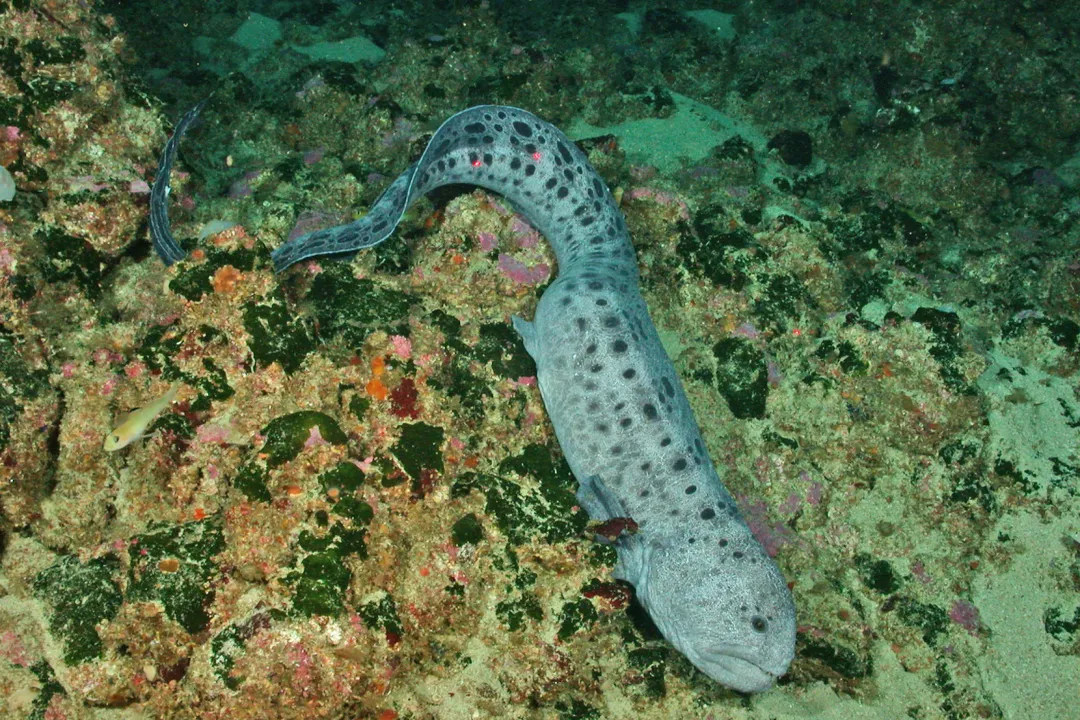
The clearest physical departure between the Wolf Eel and a true eel lies in its fin arrangement. True eels possess a continuous fin structure running along the dorsal, caudal (tail), and anal regions, creating a smooth, ribbon-like edge. [1] The Wolf Eel lacks this fusion. [1] Instead, it features a distinct, singular dorsal fin that runs nearly the entire length of the body, supported by $228$ to $250$ flexible fishbones, or radials. [3] It has a small caudal fin to finish its form. [3] Crucially, Wolf Eels possess paired pectoral fins situated behind their heads—a classic piscine trait entirely absent or vestigial in true eels like morays. [1][2][3][5] They also lack pelvic fins entirely. [3] This combination of features dictates their movement and habitat use. The entire skeleton has a cartilaginous composition, lending the body a remarkable flexibility that allows it to snake and wedge itself into narrow caves and crevices, which is vital for its sedentary, den-based lifestyle. [5][8] It is this powerful, elongated form that results in the visual similarity to eels, though it is actually a product of convergent evolution adapting to a rocky, benthic environment. [1] When maneuvering in these tight quarters, the pectoral fins act primarily for stability and subtle steering rather than propulsion, which is a key adaptation for a creature that spends its life backing into a hole. [1]

# The Wolfish Visage
The "wolf" part of the common name clearly derives from its intimidating facial structure and feeding apparatus. Wolf Eels sport a large head and massive, highly powerful jaws. These jaws are equipped for crushing the hard shells of their preferred prey, such as crabs, sea urchins, and abalone. [2][8] The dental layout is specialized: the front features canine teeth suitable for piercing, followed by rows of strong molars optimized for grinding and crushing. [3][5]
Physical distinctions also appear between the sexes as they mature. [5] Male Wolf Eels develop more prominent features, including a noticeable head crest or protuberance on the top part of the head and notably large lips, which collectively make their jaws appear thicker. [3][8] While they are generally described as curious and gentle with humans they know, observers note that the wrinkled, scarred, and lumpy appearance of their face can be startling. [1]
# Coloration and Surface Texture
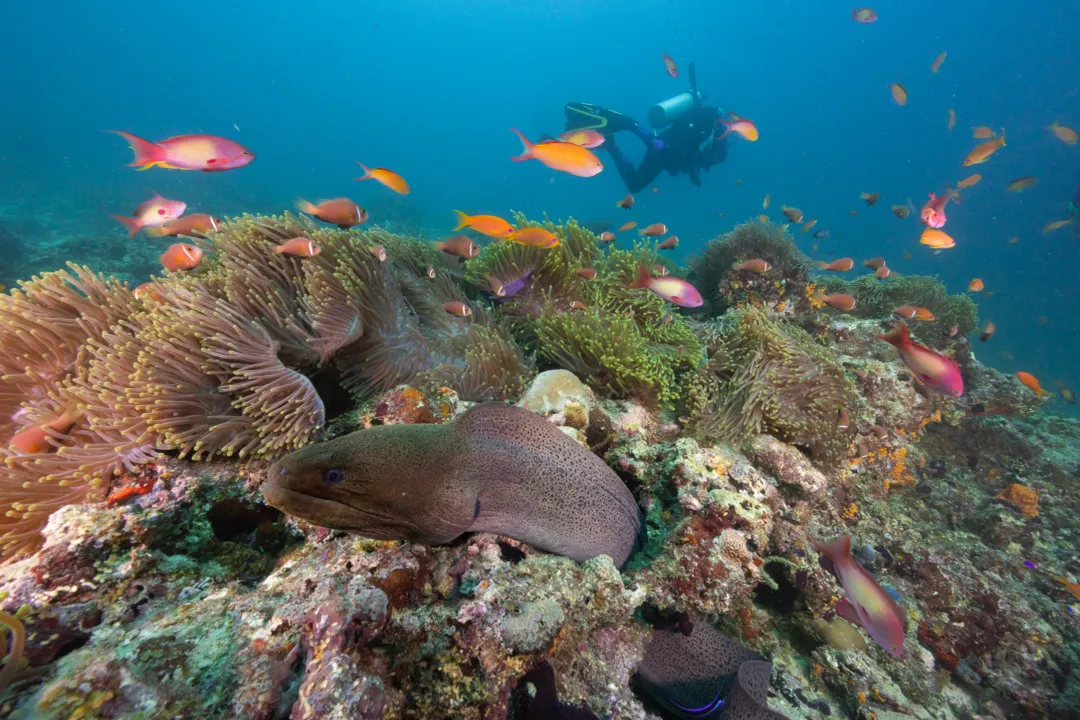
The external appearance of the Wolf Eel undergoes a dramatic transformation from youth to maturity, a process that likely reflects a significant shift in required camouflage. [1][2]
# Juvenile Brilliance
The young Wolf Eel is remarkably vibrant. They emerge with bright colors—often described as orange or brick-color, sometimes with purple highlights—contrasting sharply with large, dark spots across their posterior body. [1][2][5][8] These prominent spots, or ocelli, give the species its name and may serve to break up their outline in the brighter, more open water they inhabit as planktonic larvae before they settle on the seafloor. [1][8]
# Adult Muting
As the fish ages, these bright hues fade entirely. [1][2] The adult coloration settles into more subdued, cryptic tones of gray, brown, dark olive, or blue-gray. [2][5][8] The distinct dark spotting remains, patterning the head and body, but the pattern is said to be unique to each individual, allowing biologists to tell them apart. [2] Interestingly, some sources suggest a mild sexual dimorphism in adult color, with males tending to be grayer and females browner. [5]
The texture of the Wolf Eel's skin is another defining characteristic. They are covered in a thick layer of slime, which functions much like an external immune system, helping to protect them from infection. [2][5] Furthermore, their scales are atypical for most fish; they are very small and embedded within the skin layer. [2][5] This combination of slime and recessed scales gives the adult fish a distinctive, almost leathery appearance, a far cry from the smooth skin associated with true eels. [5]

# Comparing Life Stages
The physical differences between juveniles and adults are functional, reflecting their ecological shift. The bright, visible juveniles drift in the upper water column for up to two years. [8] Conversely, the larger, drab adults retreat to dens in rocky areas. [2][8] A good way to visualize this transition is to think of the juvenile coloration as 'open ocean uniform'—potentially confusing predators in the water column—while the adult's mottled gray-brown coat is the perfect 'rocky reef camouflage' for life spent guarding a den. [1][2] This drastic change in pigment and reliance on a fixed habitat demonstrates a complete physical and behavioral commitment to the benthic life once sexual maturity is reached around seven years of age. [6][8] It’s a clear physical trade-off: youthful visibility for adult security.
Related Questions
#Citations
Wolf eel - Wikipedia
Wolf eel - Seattle Aquarium
Wolf-eel - Alaska Sealife Center
Wolf Eels—The Much-Loved, Little-Researched Fish of the Pacific
Wolf Eel Fish Facts - Anarrhichthys ocellatus - A-Z Animals
Wolf Eels on the Dating Scene - Sitka Sound Science Center
Wolf Eels: Lazy Lovers of the Pacific | Ocean Futures Society
[PDF] WOLF-EEL (Anarrhichthys ocellatus) - Oregon Conservation Strategy