Wolf Eel Facts
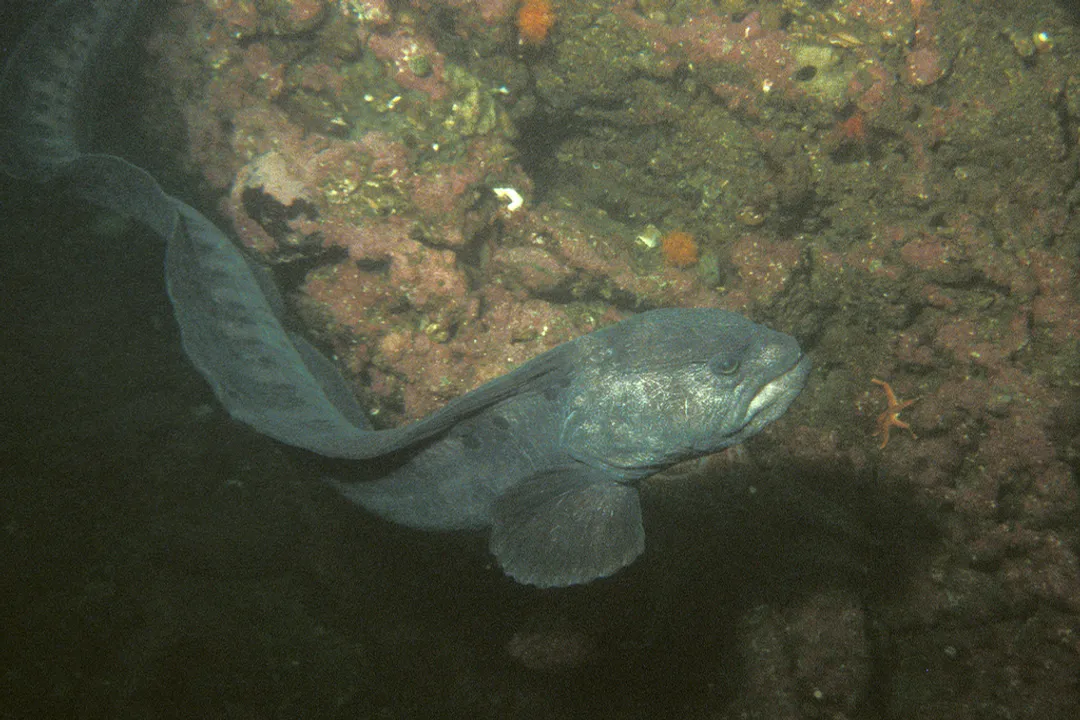
The description of the wolf eel often begins with what it is not: despite its common name and elongated shape, it is not a true eel. [4] Instead, this fascinating creature, Anarrhichthys ocellatus, stands as the sole species in the monotypic genus Anarrhichthys and belongs to the family Anarhichadidae, known commonly as the wolffishes. [4] A key anatomical difference separating it from marine eels, such as the moray, is the presence of pectoral fins located just behind the head, a characteristic true of fish, making the wolf eel fundamentally a very long, skinny fish. [1]
# Appearance Changes
The transformation in appearance a wolf eel undergoes from youth to maturity is one of its most striking features. Newly hatched larvae begin life as quite noticeable, vibrant beings. [1] Juveniles display brilliant coloration, often described with brick-red hues and bright highlights of orange and purple. [1][2] They are not merely colorful; young wolf eels are active hunters, even in their first few days, striking at drifting prey by bending their bodies into a sideways S-shape. [3] At this stage, they rely on long canine teeth to snatch fish, lacking the heavy crushing power their later selves will possess. [3]
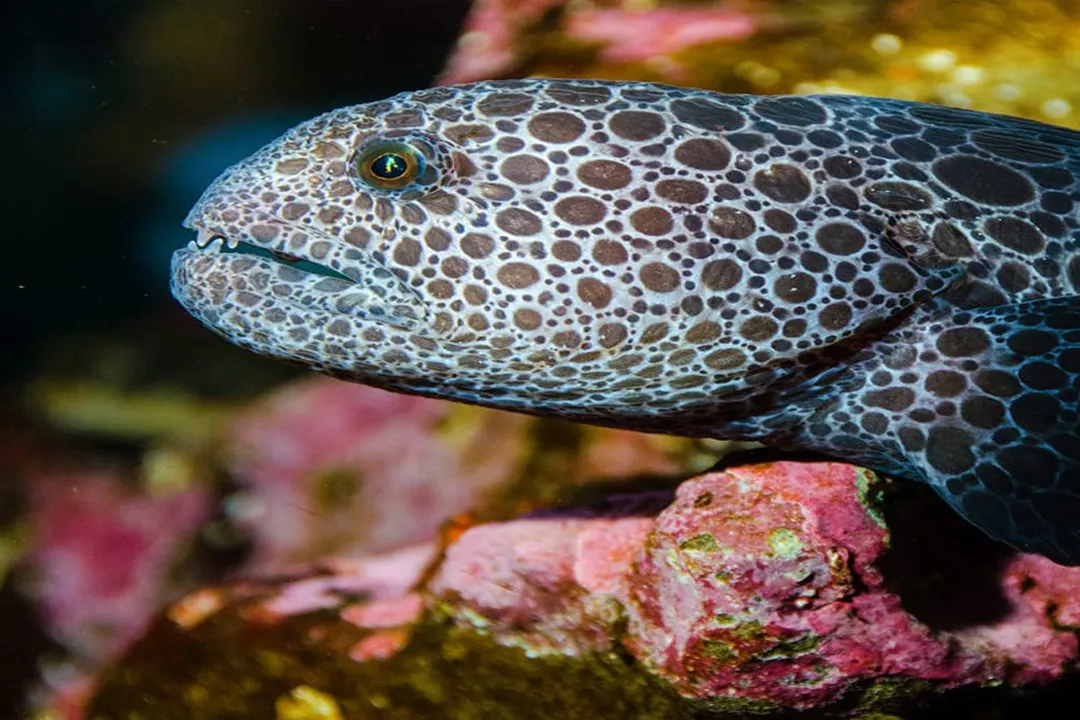
As the fish matures, this youthful vibrancy fades away. [1] The bright colors gradually give way to more subdued, earth-toned shades of gray, brown, or dark olive. [2][4] Adults develop a pattern of dark spots across their heads and bodies; critically, this pattern is unique to each individual, much like a fingerprint, allowing biologists in controlled environments to identify them separately. [1] The adult form can reach impressive lengths, sometimes over or , and weigh up to . [2][3][4] Males may develop distinct secondary sexual characteristics, sometimes featuring large lips and a noticeable protuberance on the superior part of their head. [4] Underlying this coloration is a thick layer of slime that acts as a protective, immune-like coating over skin covered in scales so small they are embedded, lending the fish its distinctive leathery texture. [1] Structurally, it possesses a single, long dorsal fin running the length of its body, but lacks pelvic fins and a lateral line. [4]
# Deep Home
The preferred lifestyle of the adult wolf eel is one of domestic seclusion. They are creatures of the benthos, favoring complex underwater structures for shelter. [2] Their primary residences are dens found in caves, crevices, or around rocky reefs and pilings. [1][2][4] The adult uses its long, muscular body to wind itself deep into these protective spaces, leaving only its fearsome-looking head protruding to scan the surroundings. [1][3] This preference for enclosure is so strong that captive wolf eels, unlike their younger counterparts who spend their early lives drifting in the open water column, will actively seek out and utilize confined areas. [1]
The distribution of the wolf eel spans a considerable portion of the North Pacific. [4] They are found along the Pacific coast of North America, ranging from the northern reaches near Kodiak Island, Alaska, down toward Baja California in the south. [2][3] Their range also extends westward to the Sea of Japan and the Sea of Okhotsk. [2][3] While they inhabit the shallow coastal areas, they can be found down to depths of approximately . [2][4] If you are visiting an aquarium exhibit featuring these fish, remember that their natural inclination is to hide; you might look for several minutes without seeing one unless you catch them during a feeding time, which is often the best opportunity to see them out in the open. [3]
# Diet Tools
Wolf eels are characterized by an unceasing appetite throughout their lives, making them voracious eaters at every stage. [1] Their dietary composition changes significantly as they grow, reflecting their changing physical capabilities. The juvenile stage focuses on smaller, drifting prey in the water column, such as copepods and other zooplankton. [3] Once they settle into their benthic adult life, their diet shifts to include hard-shelled invertebrates. [2][4]
The adult’s powerful jaws are essential for extracting sustenance from its favored prey: crabs, sea urchins, snails, abalone, mussels, and clams. [1][2][3] Unlike many fish that swallow food whole, the wolf eel is equipped with specialized dental architecture: sharp canine teeth at the front for grasping and broad molars in the rear section of the mouth for crushing shells. [1][4] This specialized feeding mechanism effectively turns them into biological nutcrackers of the reef. It is interesting to note that this reliance on hard food is crucial for their dental health; when kept in aquariums, wolf eels that develop a taste for soft offerings like squid have been observed to suffer damage to their back teeth, similar to how an unhealthy human diet affects us. [3] Therefore, aquarists must supplement soft meals with hard supplements like rock crab or sea urchin to ensure their powerful jaws remain functional. [3]
# Life Mates
Wolf eels demonstrate a remarkable dedication to their partners and offspring, engaging in a truly devoted, monogamous relationship. [2][4] It is generally believed that they mate for life, selecting a den early in adulthood and staying with that mate and that specific hideout, perhaps for their entire lives unless displaced by a larger wolf eel or a formidable competitor like a Giant Pacific Octopus. [2] They typically begin pairing up around four years of age and start reproducing closer to seven years old. [2]
The reproductive cycle involves intensive, shared parental care. The female initiates the process, laying a substantial egg mass—sometimes up to $10,000$ eggs—within the safety of their shared den. [1][2][4] She then coils her body around the mass, shaping it into a neat sphere, often described as grapefruit-sized. [3] The male follows, wrapping himself around her as an added layer of security. [4] For the duration of the approximately $13$ to $16$ weeks (or $91$ to $112$ days) until the eggs hatch, both parents guard the clutch fiercely. [1][2][4] During this lengthy incubation period, only one parent ventures out at a time to feed, ensuring constant protection. [1][2] The female actively participates in egg maintenance, periodically massaging and rotating the sphere, which helps circulate oxygen-rich water around the developing embryos. [3] This high investment in a relatively small number of young, compared to broadcast spawners, suggests a survival strategy optimized for stable environments. [4] The lifespan of this species in the wild is estimated to be around $20$ years. [4]

# Threats Stability
From a population perspective, the wolf eel is currently categorized as a species of Least Concern by the IUCN, indicating that, overall, populations are considered stable. [2][4] They are not a species targeted by commercial or sport fisheries, perhaps due to their often reclusive nature making them hard to catch frequently. [2] However, this stability is not without risk; they are frequently taken incidentally, or bycatch, in crab and fish traps. [2][4]
The primary threats they face are often human-related and center on habitat degradation. [1] Because they are so intrinsically linked to the rocky reef ecosystem—their caves and crevices being their life support—any damage to this environment is a direct threat to them. [1][3] This includes issues such as polluted runoff, where oils and chemicals from storm drains enter the ocean, or improperly treated sewage discharge. [1][3] While the adults are large, their young face a wider array of dangers; rockfish and kelp greenling are known predators of eggs and juveniles. [2][4] Even the fully grown can fall victim to larger marine mammals, with harbor seals documented preying on adult wolf eels. [2][4] In certain regions, like Puget Sound, recreational harvesting is specifically prohibited by state wildlife agencies because of the high value these animals hold for underwater observation and photography. [2] This localized protection highlights an important conservation principle: recognizing and safeguarding species whose primary value is ecological and aesthetic, rather than commercial. [2]
# Cultural View
Long before modern scientific observation, the wolf eel held significant meaning for the indigenous peoples of the Northwest coast. In some of these Native American tribes, the fish was revered and given the title of the sacred "doctorfish". [4] This reverence was so deep that the consumption of its flesh was restricted; typically, only tribal healers or shamans were permitted to eat it. [2][4] The belief was that partaking in the fish would serve to enhance their innate healing powers. [2] This cultural respect underscores a long-standing human recognition of the wolf eel’s unique presence in the marine world, often predating formal scientific classification by centuries. [4]
Related Questions
#Citations
Wolf-eel | Animals - Monterey Bay Aquarium
Wolf eel - Wikipedia
Wolf-eel - Alaska Sealife Center
Wolf eel - Seattle Aquarium