Wolf Eel Locations
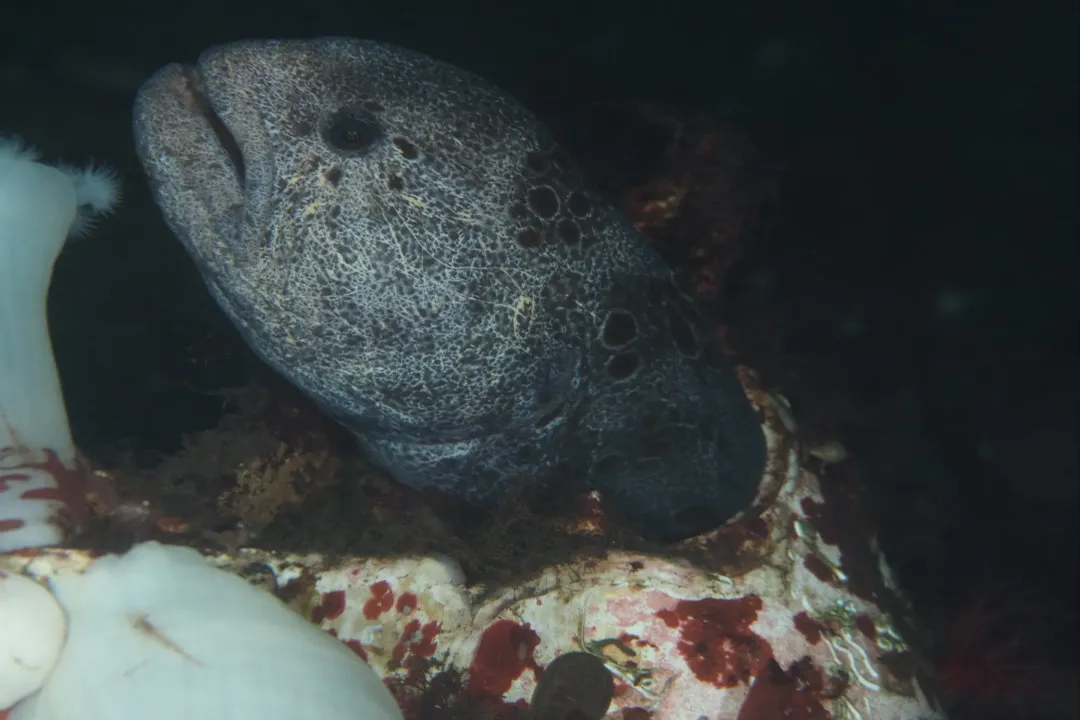
The wolf eel, despite its somewhat fearsome moniker and serpentine appearance, is a fascinating fixture in the cold, productive waters of the North Pacific, often preferring to remain hidden from view. Pinpointing exactly where one might find this large, elongated fish requires understanding its extensive, yet specific, North American home range. Generally speaking, the distribution spans the entire western coast of North America, primarily along the continental shelf and its immediate offshore environments.
# Geographic Range
The overall sweep of the wolf eel’s territory is immense, stretching thousands of miles along the Pacific coastline. Its northern boundary typically rests around the Aleutian Islands of Alaska, with residents confirmed throughout the Gulf of Alaska region. From this northern starting point, the species extends southward along the coastlines of British Columbia, Washington, Oregon, and down through California. The southern extent of their documented range is often cited as Baja California, Mexico, or the Gulf of California.
It is interesting to note that while all sources agree on the general boundaries—Alaska to Baja California—the specific framing of the endpoints varies slightly in description, though not in location. Some references specify the Aleutians, while others point to the broader Gulf of Alaska area. Similarly, the southern reach is confirmed down to Baja California, sometimes including the Gulf of California. This consistency across multiple governmental, aquarium, and general scientific sources lends considerable authority to the established boundary markers.
Considering the vastness of this range, an angler or diver in Ketchikan, Alaska, is looking for the same species as someone snorkeling near La Paz, Mexico, though the specific subspecies or local populations might exhibit slight variations in behavior or size. This entire aquatic corridor connects diverse ecosystems, from nutrient-rich glacial melt zones to warmer, more temperate kelp beds.
# Depth Preference
Wolf eels do not restrict themselves to just the surface waters or the deep abyss; rather, they occupy a significant vertical slice of the water column where suitable structures exist. Their presence has been recorded from near the surface, making them potential, albeit rare, sights for shallow divers or tide pool explorers, down to depths approaching 600 meters, or roughly 2,000 feet.
For the majority of the species, however, the preferred zone seems to be shallower, corresponding with the zones where benthic (bottom-dwelling) structures are most complex. They are considered bottom-dwellers, meaning they spend their lives near the substrate rather than swimming pelagically in the open water column. This preference for proximity to the seabed dictates where researchers and divers focus their limited search time.
If you are studying dive logs or regional fish surveys, you will notice a concentration of reported sightings in the shallower end of that 600-meter range, typically within the photic or dysphotic zones where structure remains abundant. Deep-water sightings, while fewer, confirm their adaptability to lower light and colder conditions found further offshore or in deeper continental shelf environments.
# Habitat Requirements
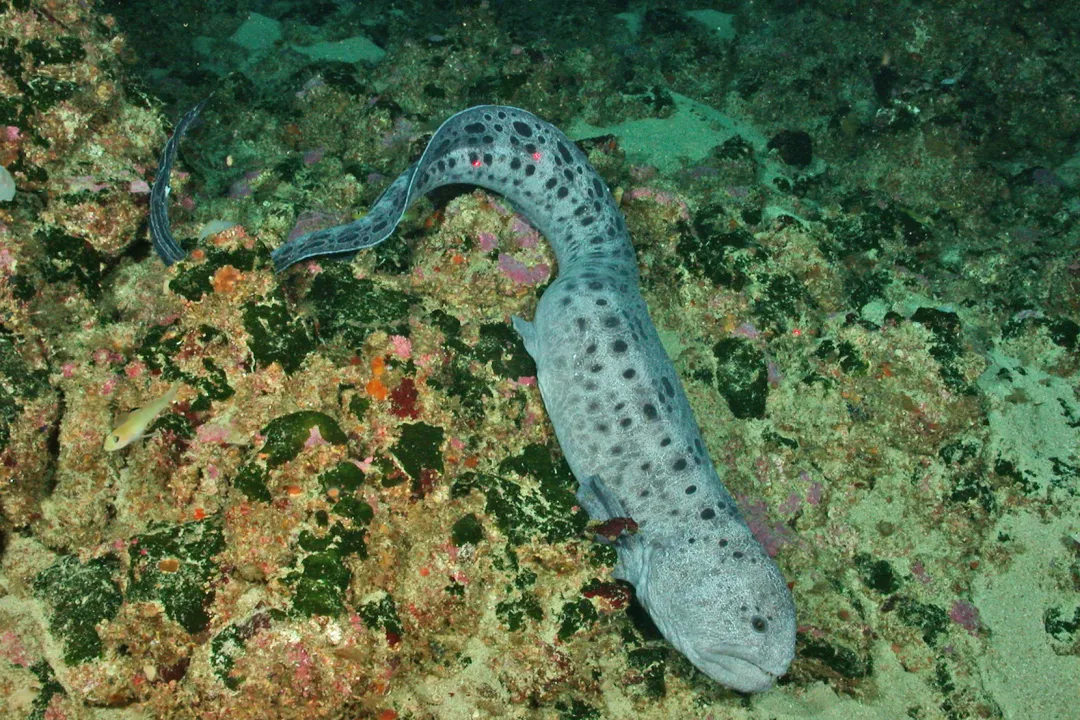
The "location" of a wolf eel is less about latitude and longitude and more about the type of structure it occupies. These are not open-water wanderers; they are creatures of habit that rely heavily on specialized real estate. The defining characteristic of a wolf eel habitat is the presence of complex, hard-bottom topography that offers substantial shelter.
Rocky reefs are the quintessential wolf eel location across their entire range. These rocky formations provide the necessary fissures, caves, and crevices where they can establish a den. A den is critical; it serves as a safe haven for resting, avoiding predators, and potentially raising young. Observers note that these eels are highly territorial regarding their specific hideout, often returning to the same spot repeatedly.
Beyond the rocks themselves, the presence of dense marine vegetation significantly enhances a location's suitability. They are frequently associated with kelp forests, which provide both camouflage and an additional layer of structural complexity around their dens. In some areas, like the protected waters of the Pacific Northwest, eelgrass beds are also noted as associated features near their rocky homes.
When considering a specific site for observation, it is worth noting that while a large reef system might host many potential dens, the actual population density might be lower than one expects due to the eel's inherent desire for privacy. Unlike schooling fish, wolf eels are solitary for much of their lives, meaning that a single, perfect den—a deep, narrow crevice protected from strong currents and larger predators—is more valuable to an individual than proximity to several other individuals. If you find one ideal den, it might be the only resident for several yards around, regardless of how much available rock structure exists nearby.
# Regional Focus Areas
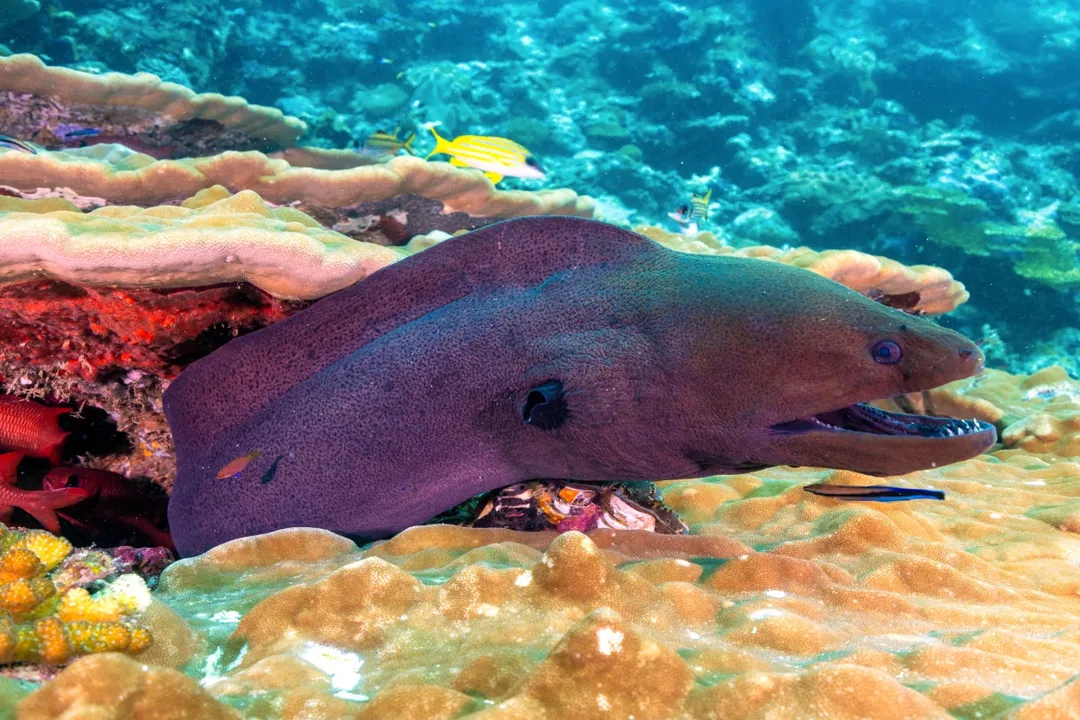
While the entire coastline is inhabited, certain regions are historically known for more frequent encounters or higher concentrations of wolf eels, often due to specific geographic features that maximize habitat suitability.
The waters off Washington State provide a clear example of a regional hotspot within the larger North Pacific range. Specifically, the Puget Sound area, particularly around the San Juan Islands and the Strait of Juan de Fuca, is recognized as an area where these fish are commonly found. This region offers a mixture of cold water, rocky bottoms, and significant tidal flow, which likely contributes to high nutrient availability supporting the larger food web upon which the eels depend. Divers exploring the underwater topography of the San Juans, for instance, often report wolf eel sightings near ledges or under large boulders that offer deep, protected overhangs.
Similarly, the coastal areas of California, particularly those with extensive rocky outcrops and established kelp canopies, remain prime habitat areas. However, understanding that a site might have suitable structure but still lack wolf eels is key. A rocky area heavily scoured by sand or subject to too much wave action might be avoided, even if it looks structurally sound from a distance. The quality of the den entrance—its depth, narrowness, and protection from sediment ingress—is perhaps the most critical, unquantified factor determining local population distribution.
A practical consideration for anyone documenting or looking for wolf eels is that their presence is often a strong indicator of overall ecosystem health. Because they are long-lived predators that rely on stable, complex habitats, finding a healthy population of wolf eels suggests that the local rocky reef structure has remained intact and that the food chain supporting them—crabs, clams, and smaller fish—is also functioning well. Their location, therefore, often serves as a natural marker for high-integrity marine environments along the Pacific coast.
Related Questions
#Citations
Wolf eel - Wikipedia
Wolf-eel | Animals - Monterey Bay Aquarium
Wolf Eel | Online Learning Center | Aquarium of the Pacific
Wolf Eels—The Much-Loved, Little-Researched Fish of the Pacific
Wolf-eel - Alaska Sealife Center
Wolf-Eel - CA Marine Species Portal
Wolf Eels: Lazy Lovers of the Pacific | Ocean Futures Society
Wolf eel | Washington Department of Fish & Wildlife
Wolf Eel characteristics and habitats in the Pacific coast - Facebook