Wolf Eel Evolution
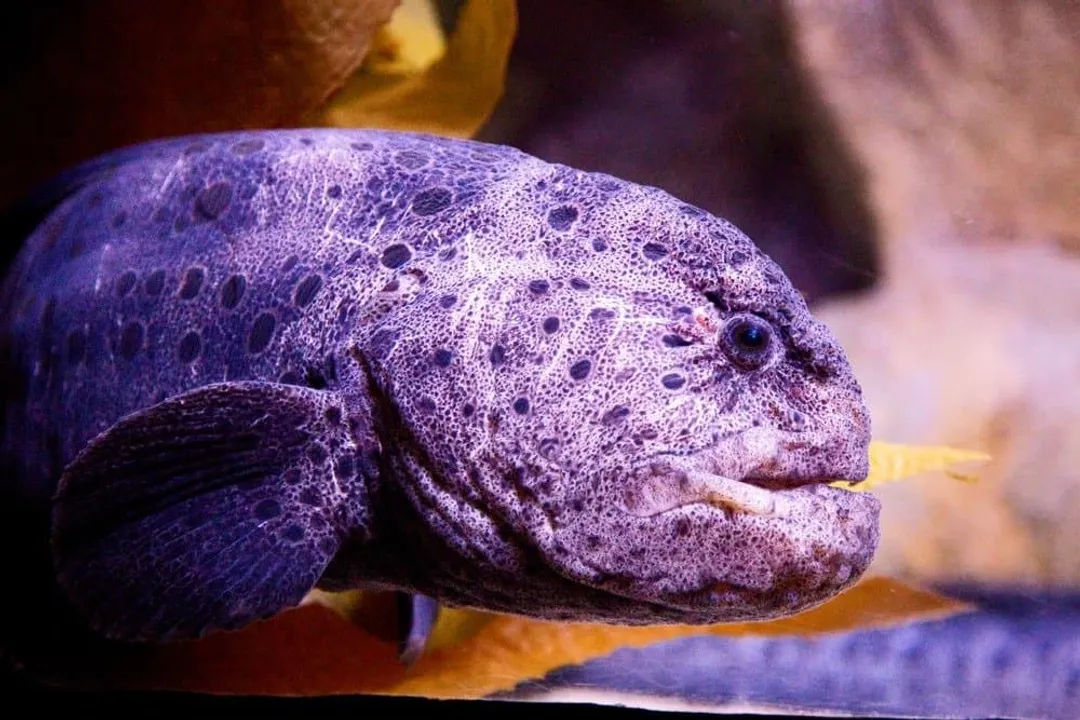
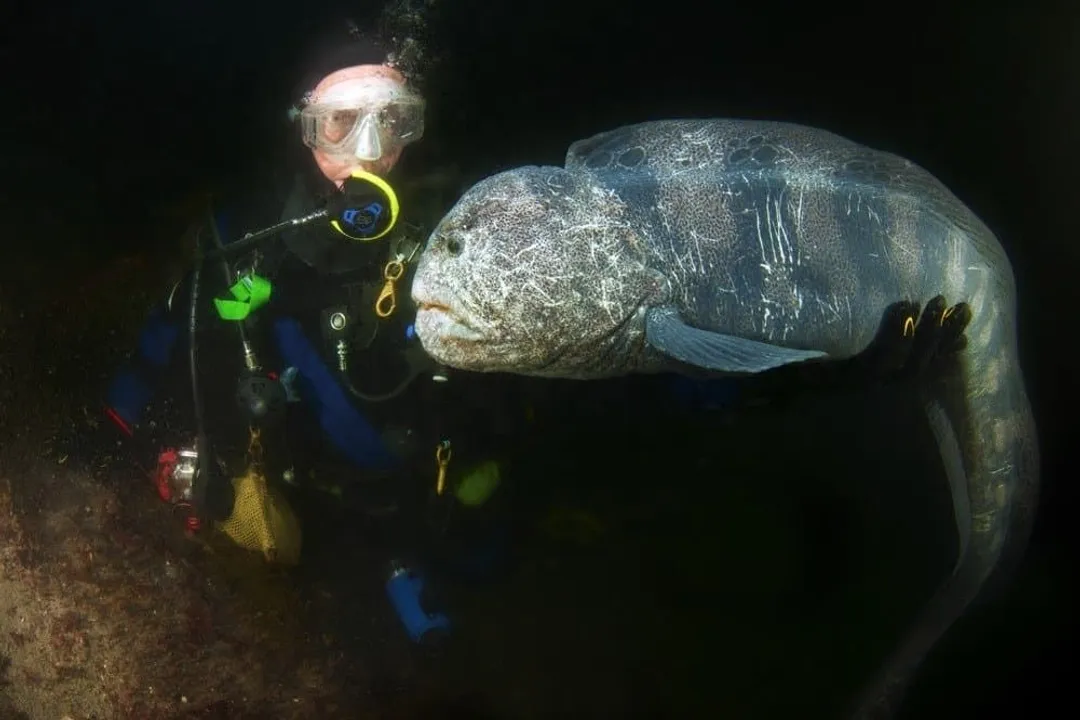
The elongated, almost serpentine creature of the North Pacific often draws immediate comparison to a true eel, yet the Wolf Eel (Anarrhichthys ocellatus) occupies a far more distinct corner of the fish world. Its imposing presence, characterized by a massive head and powerful jaws, belies a surprisingly reserved and somewhat misunderstood existence in the cold, rocky bottoms it calls home. [1][6][7] Divers frequently report these fish showing distinct personalities, sometimes becoming quite bold when approached, leading to their common name, which also references the prominent canine teeth found in adults. [7][8] To truly appreciate this fish, one must look past the superficial resemblance to eels and examine its unique biological history and specialized adaptations.
# Unique Lineage
The Wolf Eel holds a singular status within its taxonomic classification. It is the only species in the entire genus Anarrhichthys. [1][10] This means its closest relatives are not other wolf eels, but rather the pricklebacks, as the Wolf Eel belongs to the family Stichaeidae. [1] This family grouping places it among fishes that generally occupy shallow, nearshore habitats, often wedged into crevices among seaweeds and rocks. [1]
When considering its placement, it is helpful to contrast it with species it is frequently mistaken for, such as the deep-sea eelpout (Zoarces americanus). While both possess elongated bodies, the eelpout belongs to the family Zoarcidae. [1] The very existence of A. ocellatus as a monotypic genus—the sole representative of its genus—suggests a divergence event in its history that set it apart from other Stichaeids, leading to a highly specialized form that has persisted across millennia. [1] This isolation within its genus, while sharing a broader family structure, presents an interesting evolutionary puzzle. Many species that become the sole survivors of their genus often exhibit traits that developed rapidly in response to unique pressures or long periods of geographic isolation, leading to specialized morphology that is unmatched by its surviving cousins. [1] The Wolf Eel’s impressive size and robust build stand in sharp contrast to many of the smaller, more slender pricklebacks.
# Form and Function
The physical description of the Wolf Eel immediately communicates its adaptation to a life spent maneuvering through complex, hard-substrate environments. Adults typically display a mottled coloration, ranging from grayish-brown to reddish or yellowish, often with dark spots or bands that provide excellent camouflage against kelp, rocks, and sponges. [1][2][5] The species name ocellatus itself refers to an eyespot, though this marking is often more pronounced in juveniles. [4]
Perhaps the most defining evolutionary feature, directly observable today, is the mouth structure. Wolf Eels possess formidable dentition, featuring large, blunt canine teeth at the front of both jaws, suitable for crushing hard-shelled prey. [1][7] Behind these prominent teeth are strong molars, which are essential for processing the tough exoskeletons of crabs and the shells of mollusks they consume. [1][5] This powerful biting capability is a direct result of selective pressures favoring individuals capable of exploiting calorie-rich but well-defended food sources.
Their body shape is muscular and robust, tapering towards the tail, which is not a true eel tail but rather a rounded caudal fin merged with the dorsal and anal fins. [1][10] This configuration provides excellent maneuverability for navigating tight spaces and holding position against currents common in their rocky reef habitats. [5] Their skin lacks scales, covered instead by a thick layer of mucous that aids in protection and reduces drag. [1] A mature specimen can reach lengths of over eight feet, though they are more commonly observed in the three-to-six-foot range. [1][5]
| Characteristic | Description | Evolutionary Advantage |
|---|---|---|
| Jaws/Teeth | Massive, strong jaws with prominent canines and molars. [1][7] | Specialized predation on hard-shelled benthic invertebrates (crabs, clams). [1][5] |
| Body Shape | Long, muscular, tapering body; fins fused at the rear. [1][10] | Ability to wedge into crevices and maintain position in complex reef structures. [5] |
| Coloration | Mottled browns, reds, and yellows with spots/bands. [1][2] | Effective camouflage in kelp forests and rocky bottoms. [5] |
| Skin | Scaleless, thick mucous layer. [1] | Protection against abrasion in rough environments. |
# Habitat Niche
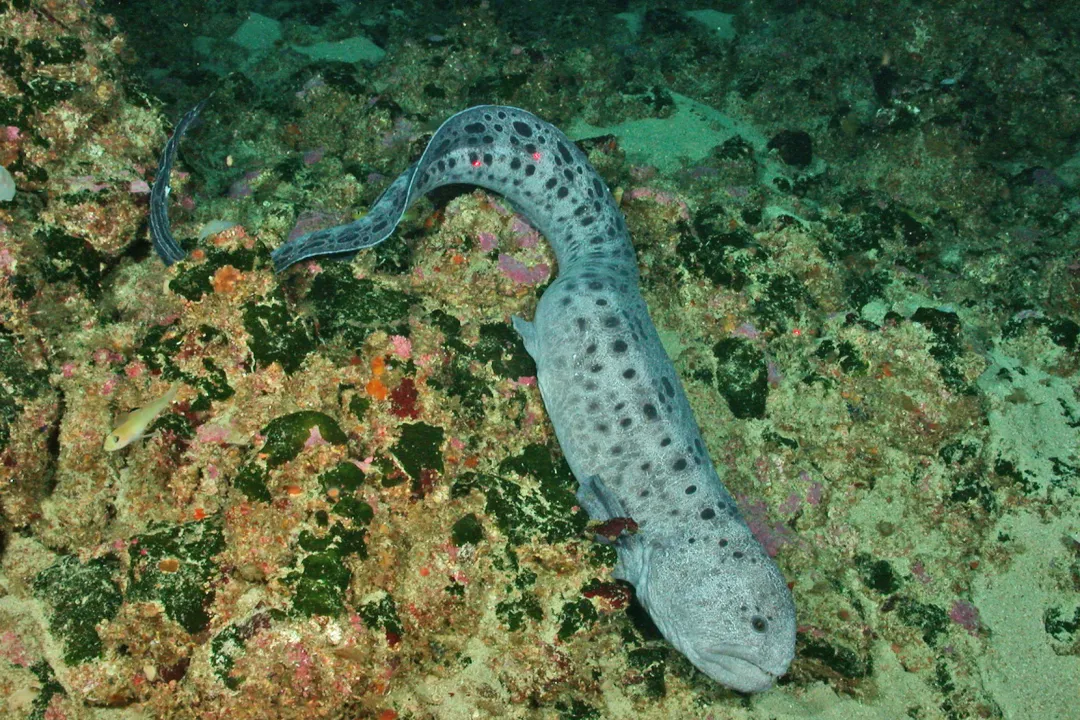
The favored environment of the Wolf Eel is intrinsically linked to its morphology. They are generally found in cold, coastal waters across the North Pacific, ranging from the Kuril Islands and Sea of Okhotsk down to Baja California. [1][5][10] They prefer rocky reefs, ledges, and areas with abundant crevices or overhangs, often at depths extending down to nearly 2,000 feet, although they are most frequently encountered in shallower waters, sometimes even visible to snorkelers. [1][2][5][6]
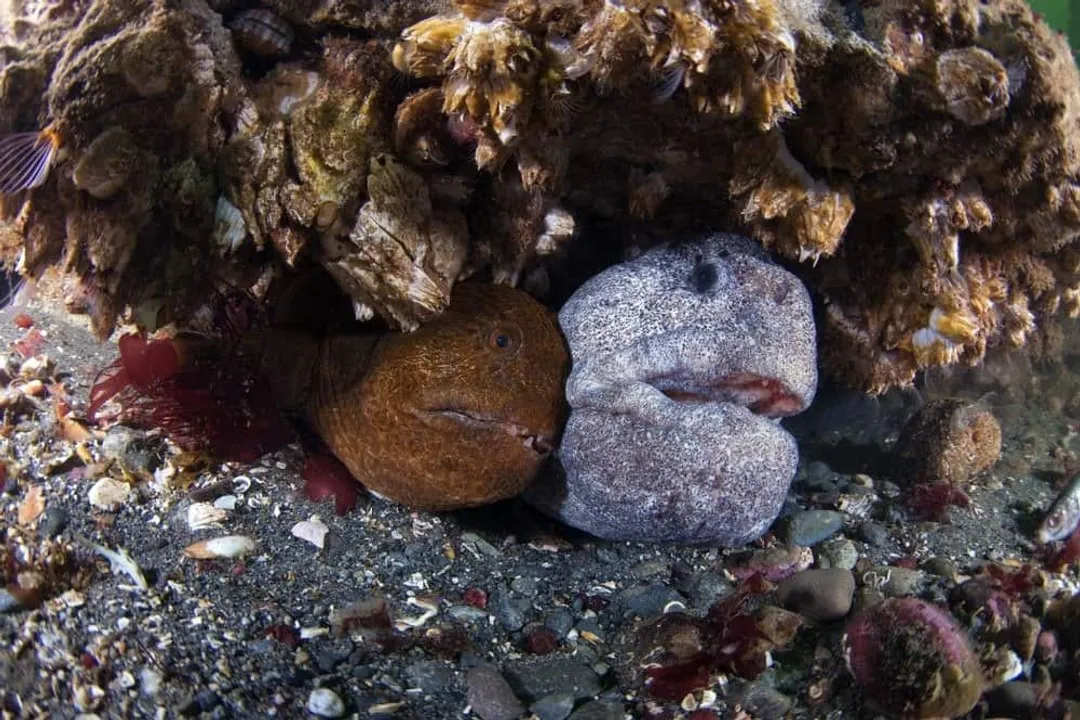
The need for secure shelter is paramount, particularly for the adults who establish territories. They are relatively sedentary, often occupying the same lair for extended periods, sometimes for years. [6][9] This reliance on physical structure for survival suggests that evolutionary changes favoring strong territoriality and the ability to defend a specific, high-quality shelter—one with good sightlines for foraging but immediate access to protection—would have been strongly selected for. [6] The presence of established dens, often lined with the shells of their meals, serves as a physical marker of this long-term site fidelity. [9]
# Reproductive Strategy
The life history traits of the Wolf Eel reveal a slow-maturing, long-lived strategy—a pattern often seen in large, stable-environment predators. They are known to live for a significant time; while estimates vary, some reports suggest lifespans reaching up to 21 years. [1][5][6] Sexual maturity is achieved late, perhaps around seven to nine years of age. [5]
Reproduction in this species involves strong parental care, which is a significant investment of energy and time. The female deposits large, sticky egg masses, often numbering in the thousands, inside a secure den. [1][5] Following fertilization, one parent—typically the male, though sometimes the female—assumes the role of guarding the eggs until they hatch. [1][5] This guarding period can last for several months, requiring the parent to remain vigilant and forgo substantial feeding opportunities. [5]
This commitment to extended parental care and long life is fascinating when juxtaposed with their evolutionary lineage. While many of their prickleback relatives might employ shorter life cycles or less intensive care, the Wolf Eel has evolved a strategy demanding high individual survival over many years to see its few reproductive efforts through to success. [1][5] This slow reproductive turnover is a key factor influencing their conservation status today. A species that takes almost a decade to reproduce and invests months in a single clutch is inherently more vulnerable to population decline from external pressures than a fish that matures quickly and spawns constantly. [6] The long-term survival of the species rests on the successful hatching of these few, heavily guarded batches.
# Conservation Context
Despite their formidable appearance, Wolf Eels face considerable challenges, leading them to be listed as a species of concern in many parts of their range. [5] In Washington State, for instance, they are listed as a priority species under the Oregon Conservation Strategy, indicating a need for focused management efforts. [5][10]
The very characteristics that define their successful evolutionary niche—long life and late maturation—become their primary vulnerability. They are susceptible to commercial and recreational fishing, particularly when caught accidentally as bycatch. [5][6] Because they inhabit relatively shallow, accessible rocky reefs and are site-faithful to their dens, they are easily targeted or encountered. [6][9]
The inability to rapidly replace lost adults means that even moderate fishing pressure can cause significant, long-lasting damage to local populations. If a major den site is abandoned or destroyed, the lack of young fish ready to mature and take over the territory compounds the impact. [5] This fragility highlights an important ecological consideration: evolutionary success in a stable, resource-rich environment does not always translate to resilience against novel, human-induced disturbances like modern fishing techniques. The Wolf Eel’s highly evolved, specialized lifestyle—mastery of the rocky habitat with few biological "backup plans"—means recovery is slow when that habitat or its established population structure is compromised.
# Understanding Behavior
Observing Wolf Eels in their natural setting reveals a social dynamic that often surprises those expecting a solitary, aggressive monster. While they are known to fiercely defend their chosen den, especially during the egg-guarding phase, they are generally not aggressive hunters of large, active prey, preferring to ambush or scavenge. [7] They are often described by divers as curious and engaging, sometimes showing an almost recognizable deference to the presence of a diver near their home. [6][7]
They are generally solitary outside of the breeding season, coming together only to mate. [1] Their large size and intimidating dental work are primarily defensive and for accessing difficult prey, not for active pursuit of fast-moving pelagic fish, which are not their main diet. [5] They are crucial components of the benthic ecosystem, acting as significant predators that help regulate populations of crustaceans and slow-moving mollusks. [5] This ecological role suggests that their survival is not just a matter of individual fish longevity, but also the maintenance of the complex rocky habitat they both rely upon and help shape through their feeding habits. Preserving the Wolf Eel, therefore, means preserving the entirety of the reef structure that supports their specialized evolutionary trajectory.
Related Questions
#Citations
Wolf eel - Wikipedia
Wolf-eel - Alaska Sealife Center
Wolf Eels—The Much-Loved, Little-Researched Fish of the Pacific
Wolf Eel - Deeeep.io Wiki
[PDF] WOLF-EEL (Anarrhichthys ocellatus) - Oregon Conservation Strategy
Wolf-eel | Animals - Monterey Bay Aquarium
Face to face with a wolf eel - BBC Earth
Wolf Eel Fish Facts - Anarrhichthys ocellatus - A-Z Animals
Wolf-Eels - Divers Alert Network
Wolf eel | Washington Department of Fish & Wildlife