Which characteristic of the caudal fin aids the White Bass in rapidly pursuing prey?
Answer
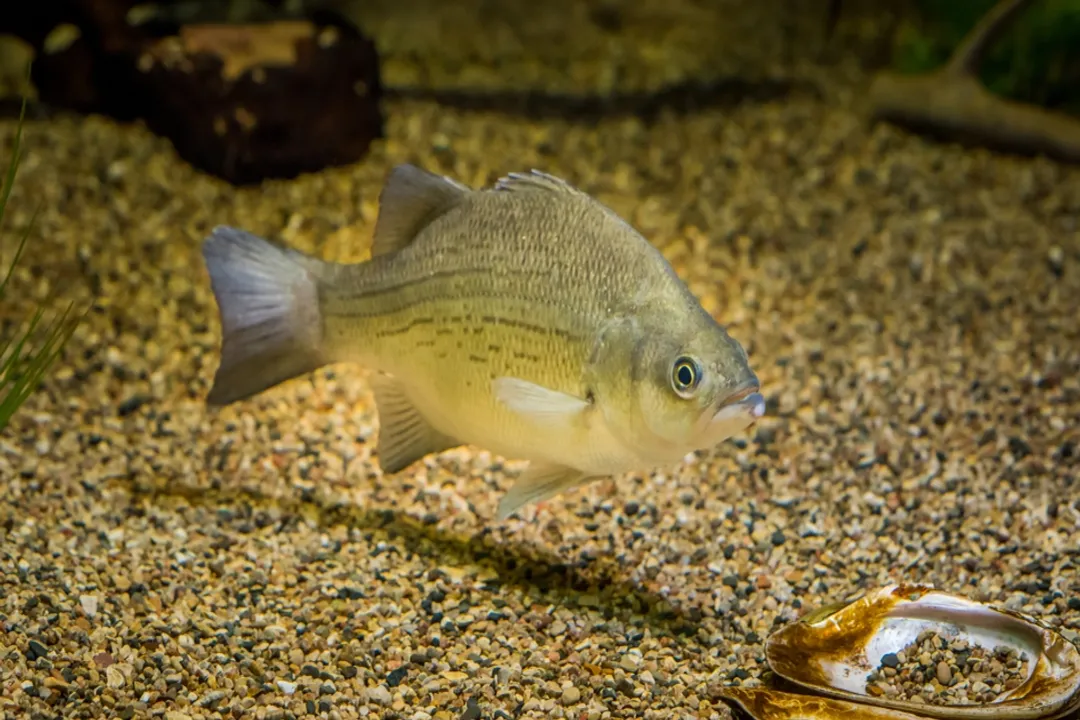
The caudal fin is distinctly forked, which is an adaptation aiding in rapid acceleration.
The shape of the tail fin, or caudal fin, is directly correlated with the swimming mechanics required by a species. For the White Bass, which relies on quick bursts of speed to catch schooling prey in open water, the caudal fin is described as distinctly forked. This bifurcated structure allows for efficient movement and rapid acceleration, enabling the fish to quickly close the gap between itself and its target baitfish or minnows.
Related Questions
What characterizes the deep, laterally compressed body profile of the White Bass (Morone chrysops)?How do the horizontal stripes of the White Bass compare to those found on the Striped Bass?What is the count of spiny rays found in the anal fin of the White Bass?What specific detail about the White Bass operculum aids in distinguishing it from some related species?How does the extension of the lower lateral line on the White Bass distinguish it from the White Perch?What type of scales are characteristic of the White Bass, aligning with its open-water schooling nature?What function does the bright, silvery white coloration of the White Bass sides serve in its ecological niche?Which prey items confirm the piscivorous diet of the White Bass, based on their mouth structure?What structural feature related to the tongue often distinguishes a Wiper hybrid from a true White Bass?How does the coloration intensity of the White Bass react to inhabiting environments with turbid water conditions?Which characteristic of the caudal fin aids the White Bass in rapidly pursuing prey?