How does the coloration intensity of the White Bass react to inhabiting environments with turbid water conditions?
Answer
Fish from turbid environments often appear paler or more silver compared to those in clear waters.
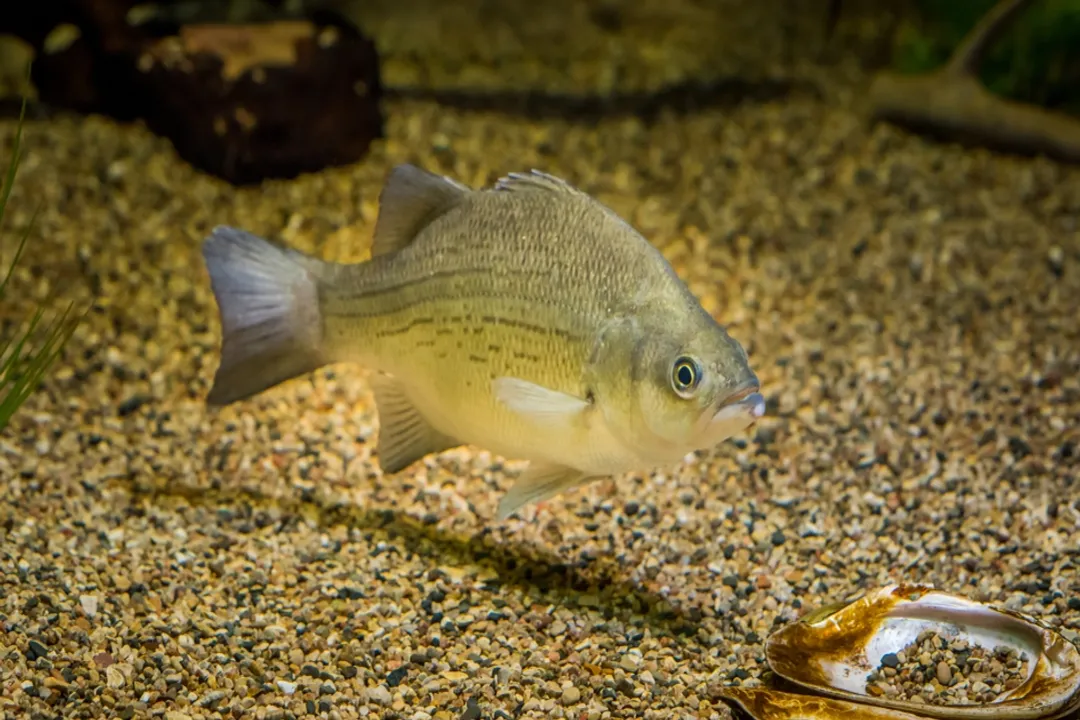
The White Bass exhibits physiological adaptability in its hue, controlled by chromatophores in the skin, in response to ambient light conditions dictated by water clarity. When these fish reside in very clear waters, their overall coloration tends to be deeper and more intensely pigmented. Conversely, when they are found in turbid or muddy environments where light penetration is significantly diffused or reduced, their coloration tends to mute, causing them to appear paler overall or exhibiting a more pronounced silvery tone across their flanks.
Related Questions
What characterizes the deep, laterally compressed body profile of the White Bass (Morone chrysops)?How do the horizontal stripes of the White Bass compare to those found on the Striped Bass?What is the count of spiny rays found in the anal fin of the White Bass?What specific detail about the White Bass operculum aids in distinguishing it from some related species?How does the extension of the lower lateral line on the White Bass distinguish it from the White Perch?What type of scales are characteristic of the White Bass, aligning with its open-water schooling nature?What function does the bright, silvery white coloration of the White Bass sides serve in its ecological niche?Which prey items confirm the piscivorous diet of the White Bass, based on their mouth structure?What structural feature related to the tongue often distinguishes a Wiper hybrid from a true White Bass?How does the coloration intensity of the White Bass react to inhabiting environments with turbid water conditions?Which characteristic of the caudal fin aids the White Bass in rapidly pursuing prey?