Which breed was intentionally crossed with original Vizsla stock to achieve the heavier coat of the Wirehaired Vizsla in the 1930s?
Answer
German Wirehaired Pointer
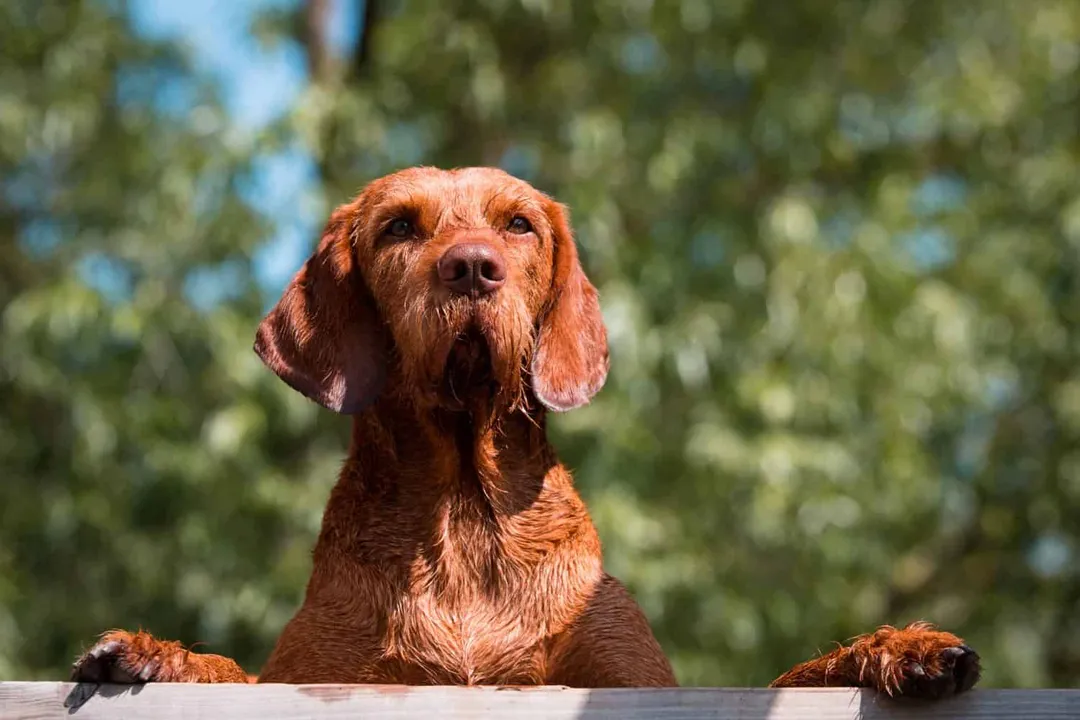
The development of the Wirehaired Vizsla was a deliberate act of artificial selection occurring around the 1930s, aiming to enhance hardiness for colder European working conditions. Breeders achieved this by introducing genetic material from other breeds known for robust coats. The specific infusion used to impart the defining wiry texture, pronounced eyebrows, and beard was the German Wirehaired Pointer, thereby creating a distinct variety within the existing Vizsla lineage while maintaining the shared *Canis lupus familiaris* classification.
Related Questions
What is the broadest taxonomic classification applied to the Wirehaired Vizsla?Which defining characteristics place the Wirehaired Vizsla within the Phylum Chordata?What traits are characteristic of the Class Mammalia designation for the Wirehaired Vizsla?What critical functional adaptation is reflected by the Wirehaired Vizsla's placement in the Order Carnivora?Which shared characteristics define the Family Canidae group, which includes the Wirehaired Vizsla?What specific biological rank confirms the domestication status of the Wirehaired Vizsla relative to the ancestral wolf?Which breed was intentionally crossed with original Vizsla stock to achieve the heavier coat of the Wirehaired Vizsla in the 1930s?How is the hard, dense coat of the Wirehaired Vizsla specifically described in contrast to its smooth-coated relative?By which functional grouping do organizations like the AKC generally classify the Wirehaired Vizsla?What historical gap exists regarding the precise evolutionary path of the wirehaired coat trait?