Wirehaired Vizsla Scientific Classification
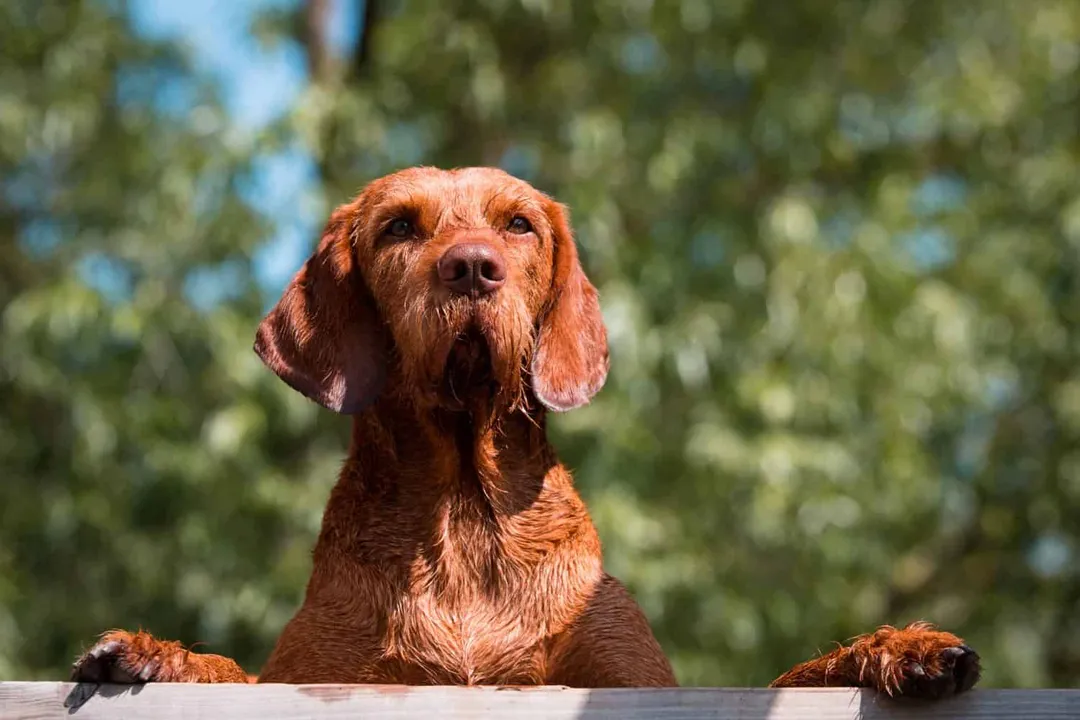
The Wirehaired Vizsla, known in Hungarian as Drótszőrű magyar vizsla or sometimes referred to as the Hungarian Wirehaired Pointer, occupies a very specific position within the vast organization of life on Earth. While breed clubs and kennel organizations focus on its distinct coat, historical development from the Smooth-Haired Vizsla, and its sporting capabilities—such as retrieving game in fields, woods, and water [1][3]—its scientific classification provides the absolute foundation for understanding its biological identity. This hierarchical system, from the broadest grouping down to the specific designation for this Hungarian breed, tells a story of its origins and fundamental nature, even as its coat texture defines its modern utility. [2][4][5]
# Foundational Groupings
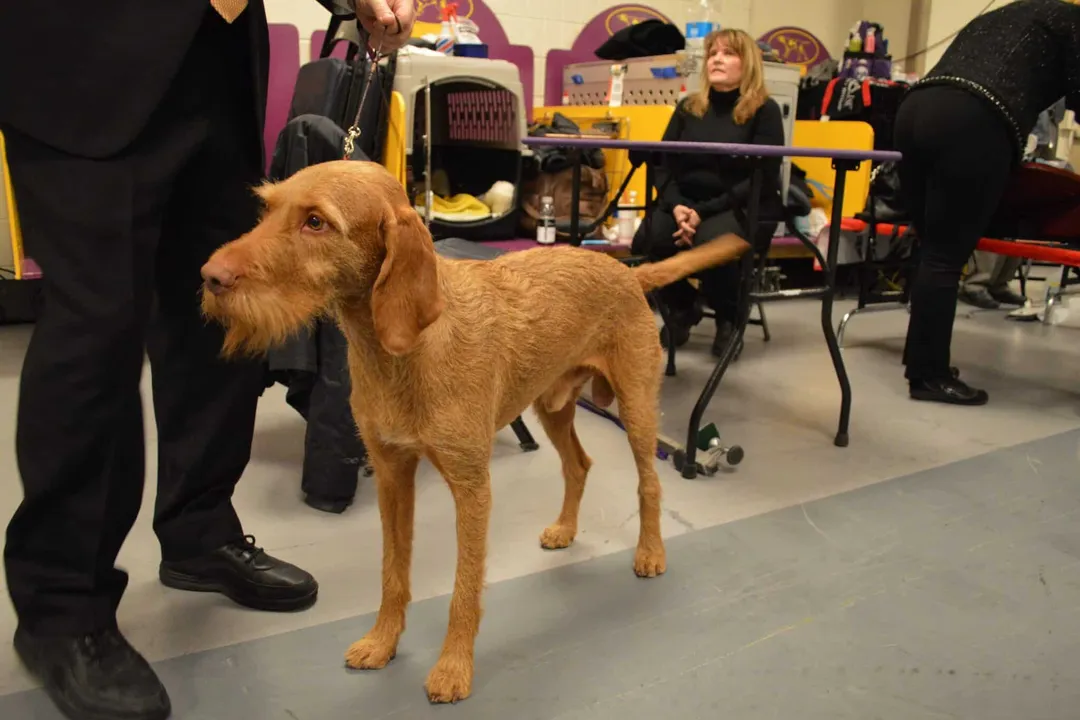
To start at the broadest level, the Wirehaired Vizsla is placed within the Kingdom: Animalia. [2][4] This classification immediately groups the dog with all other living, multicellular, eukaryotic organisms that are motile and heterotrophic, meaning they must consume other organisms for energy. While this category is massive, it serves as the essential starting point, confirming that the Wirehaired Vizsla is a living, breathing creature distinct from flora or fungi. [2][4]
Moving inward, the next step down places the dog in the Phylum: Chordata. [2][4] Animals in this phylum share a set of defining characteristics present at some stage of their life cycle, most famously including a notochord, a dorsal hollow nerve cord, pharyngeal slits, and a post-anal tail. [2][4] As a member of Chordata, the Wirehaired Vizsla is related to vertebrates like fish, birds, and reptiles, setting the stage for its complex skeletal and nervous systems which allow it to be such an intelligent and trainable hunting companion. [1][7]
The subsequent rank is the Class: Mammalia. [2][4] This is where traits become much more specific to the dog’s physical being. Mammals are characterized by the presence of mammary glands (for nursing their young), hair or fur, and three middle ear bones. [2][4] The Wirehaired Vizsla, with its dense, wiry coat providing protection and its requirement for nurturing its litter size of usually five to ten puppies, fits perfectly within this framework. [4][9] Furthermore, as a mammal, it is warm-blooded, a trait that would have been beneficial to its ancestors working in cold weather or icy water during hunts in Hungary. [3]
# The Hunter’s Taxonomy
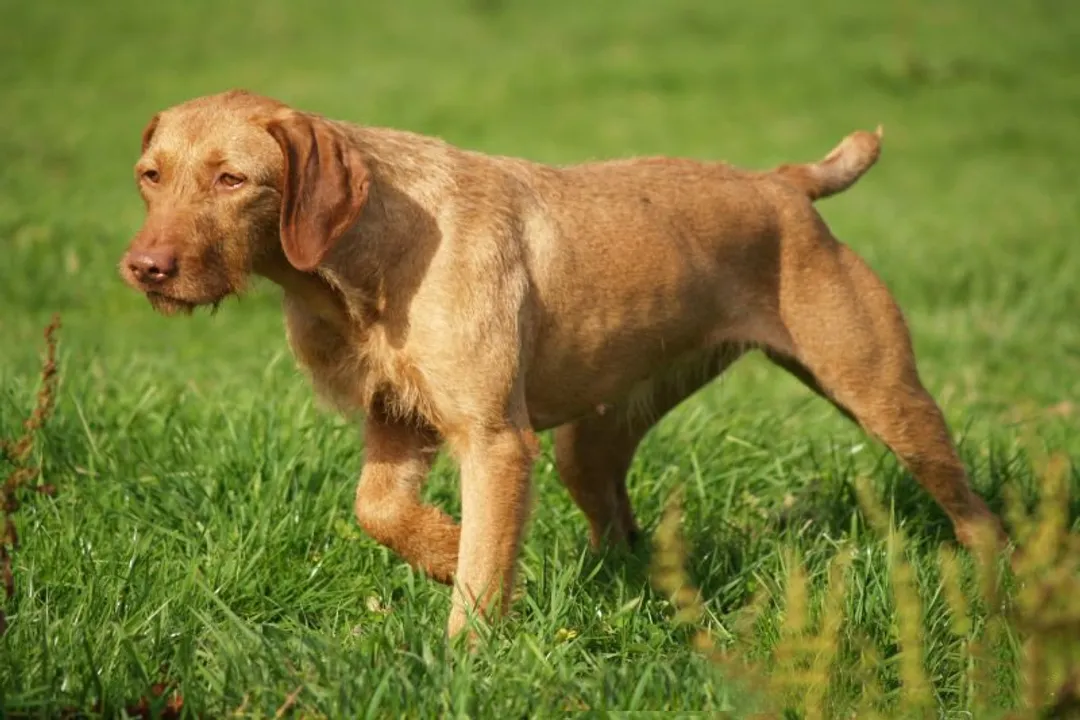
The Wirehaired Vizsla's classification narrows further into the Order: Carnivora. [2][4] This designation is critical because it reflects the dog's innate function and physical structure, even in its domestic state. Members of Carnivora are primarily adapted for consuming meat, possessing specialized teeth for shearing flesh. [8] The breed’s history is rooted entirely in this capacity, developed as a versatile hunting dog capable of pointing and retrieving fowl and upland game. [1] Its strong prey drive, which makes it excel in the field, is a direct, inherited trait from its placement within this order. [4][7] This order includes not only the dog’s immediate canine relatives but also bears, seals, and weasels, illustrating a shared evolutionary path based on specialized predatory adaptations. [8]
This Order leads directly to the Family: Canidae. [2][4] Canidae encompasses the dogs, wolves, foxes, and jackals. [4] Within this family, the characteristics shared are those emphasizing cooperative social structures, keen senses of smell, and stamina for the chase—all qualities prized in the Vizsla line. [1] Canids typically possess characteristic dentition, having 42 teeth designed for capturing prey, though domestic dogs have adapted these tools to their varied modern diets. [8]
The immediate relationship to wild canids is solidified at the next step, the Genus: Canis. [2][4] This genus includes the gray wolf (Canis lupus), the coyote, and the golden jackal. [4] The Wirehaired Vizsla shares this genus with its wild ancestors, highlighting a shared foundational morphology and behavior that breeders have shaped over centuries. [8] The fact that the breed is so often described as loyal, people-oriented, and possessing a high drive speaks to the social pack structure inherent to the Canis genus. [1][7]
# Domestication Confirmed
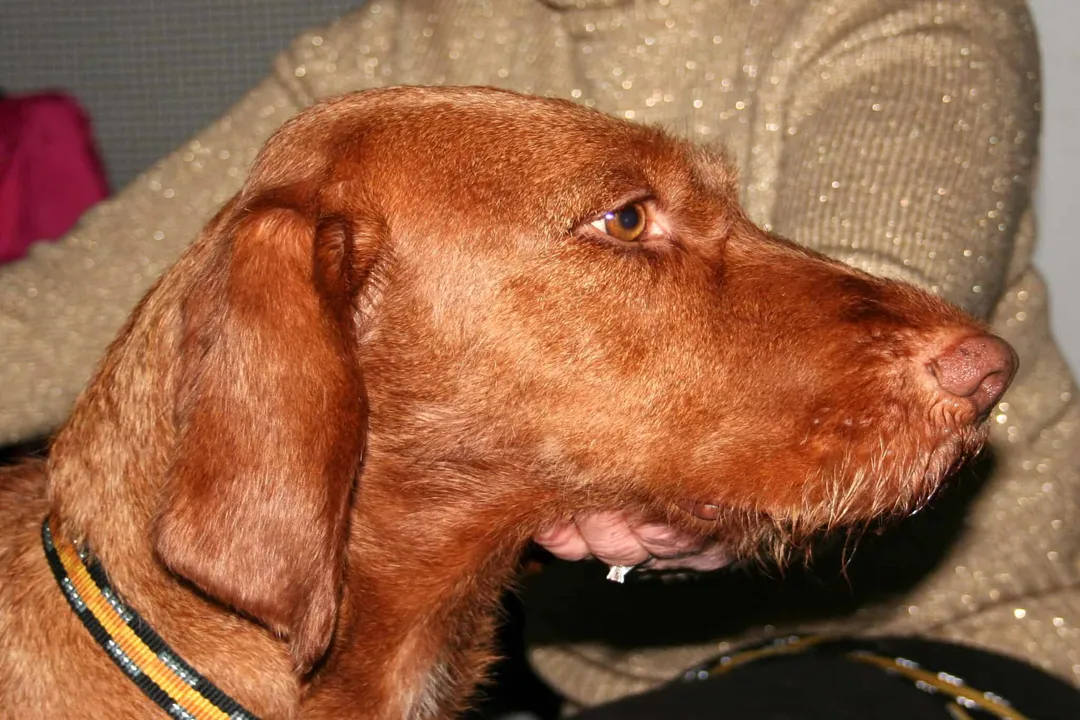
The classification reaches the species level with Canis lupus. [2][4] The key distinction here is the placement under lupus, linking the Wirehaired Vizsla directly back to the ancestral wolf population. [4][8] However, the sources clarify that the Wirehaired Vizsla is not a wild animal; it is firmly situated within the Subspecies: Canis lupus familiaris. [2][4] This final biological step confirms domestication. The domestic dog is recognized as having diverged from wolves, differing in behavior, appearance, and vocalization, driven by thousands of years of association with humanity. [8] The Wirehaired Vizsla’s eagerness to please and rapid learning ability in training, contrasting with the self-willed nature sometimes seen in their wilder cousins, is a hallmark of this familiaris subspecies status. [1][5][9]
The fact that kennel clubs assign the Wirehaired Vizsla to the Sporting Group, reflecting its purpose-bred utility for hunting, shows how human selection builds upon this fixed scientific foundation. [5][7]
Here is a snapshot of the established scientific hierarchy:
| Rank | Classification | Citation Support |
|---|---|---|
| Kingdom | Animalia | , [2][4] |
| Phylum | Chordata | , [2][4] |
| Class | Mammalia | , [2][4] |
| Order | Carnivora | , , [2][4][8] |
| Family | Canidae | , , [2][4][8] |
| Genus | Canis | , [2][4] |
| Species | Canis lupus | , [2][4] |
| Subspecies | Canis lupus familiaris | , [2][4] |
It is interesting to consider the deep roots implied by its Order: Carnivora. [2] The historical purpose of this breed—to hunt, track, point, and retrieve—is not merely a learned skill but an expression of its biological imperative as a carnivore within the Canidae family. When a Wirehaired Vizsla needs over two hours of vigorous exercise daily, as many owners observe, this is not just a lifestyle preference; it is the manifestation of genetics optimized for sustained, high-energy pursuit inherited from the same ancestry that shaped wolves and foxes. [4][5][7] The dog's need for a job or intense mental stimulation stems directly from being selected from a lineage built for problem-solving in the field. [5]
# Distinguishing the Variety
A crucial point in understanding the Wirehaired Vizsla’s classification is recognizing what it is not. The scientific designation Canis lupus familiaris applies equally to its smooth-coated relative, the Hungarian or Magyar Vizsla. [1] Yet, breed recognition acknowledges a significant divergence in form, leading to the creation of two distinct breeds. [3]
The Wirehaired Vizsla was intentionally developed in the 1930s by crossing the original Vizsla stock with breeds like the German Wirehaired Pointer, specifically aiming for a heavier coat and more substantial frame suitable for colder European working conditions. [3][4] This deliberate genetic alteration—the development of the wiry coat, pronounced eyebrows, and beard—is an excellent example of human-directed artificial selection acting within the established biological subspecies framework. [4][7] Despite these clear external and functional differences—the smooth coat being described as short and dense, while the wirehaired has a hard, dense, wiry coat with a waterproof undercoat [1]—the scientific world maintains their shared species and subspecies status because the genetic differences are limited to traits like coat texture, rather than achieving reproductive isolation or substantial morphological shifts that would warrant a separate species designation. [8] A practical consequence for prospective owners looking at this fine line in the taxonomy is that while the coat difference is the primary marker for breed status, it does not change the fundamental need for intense engagement tied to their Sporting group heritage. [5]
One observation worth noting is the contrast between pedigree documentation and biological uncertainty. While breed registries document lineage, allowing breeders to confirm parental health screenings like OFA evaluations for hip dysplasia, [1] the historical records for the development of the wirehaired coat were largely lost during World War II. [4][7] This means that while the current dog fits neatly into C. l. familiaris, the precise evolutionary path of the coat trait relies on recorded history and assumption regarding which specific Pointer or Setter infusions were responsible for its defining texture. [3] For a breed so defined by a specific genetic expression (the wirehair), the gap in its creation history remains a slight counterpoint to the absolute certainty of its modern biological placement.
# Purpose and Placement
Within the human-defined organization of breeds, the Wirehaired Vizsla is generally placed in the Sporting Group by organizations like the AKC. [5][9] This grouping is functional, not strictly taxonomic, but it underscores why its Carnivora traits were preserved and enhanced. [7] As a medium-sized dog, weighing generally between 40–65 pounds for males and 40–55 pounds for females, it maintains a build that allows it to be versatile, working in fields and water without being overly cumbersome. [2][4][9] Its status as a purebred requires adherence to standards that maintain this functional capability, ensuring the dog’s structure matches its historical hunting role. [2]
Understanding the scientific classification of the Wirehaired Vizsla confirms that beneath the distinctive wiry exterior is the ancient biology of the wolf's domestic descendant—a creature whose high energy, strong drive, and keen senses are genetically programmed within the Canis lupus familiaris lineage, demanding an environment that respects its fundamental Carnivora ancestry. [8] This deep biological understanding helps potential owners appreciate that while grooming might be easy (a quick wipe down often suffices between baths [4][7]), the needs stemming from its Canidae heritage—rigorous exercise and devoted companionship—are non-negotiable for this friendly and intelligent breed. [1][5]
Related Questions
#Citations
Wirehaired Vizsla - Wikipedia
Wirehaired Vizsla Dog Breed Complete Guide - A-Z Animals
Wirehaired Vizsla - Discover Animals
Vizsla - Scientific Classification, Appearance, Food Habits and Health
Wirehaired Vizsla - Dog Breeds - American Kennel Club
Wirehaired Vizsla Facts - Dog Breeds - Wisdom Panel
All about Wirehaired Vizsla breed - Animalia
Wirehaired Vizsla Dimensions & Drawings
Wirehaired Vizsla Dog breed: characteristics, history, Appearance