Where does the Scaly-foot Gastropod house its essential symbiotic bacteria?
Answer
In its enlarged gill structure
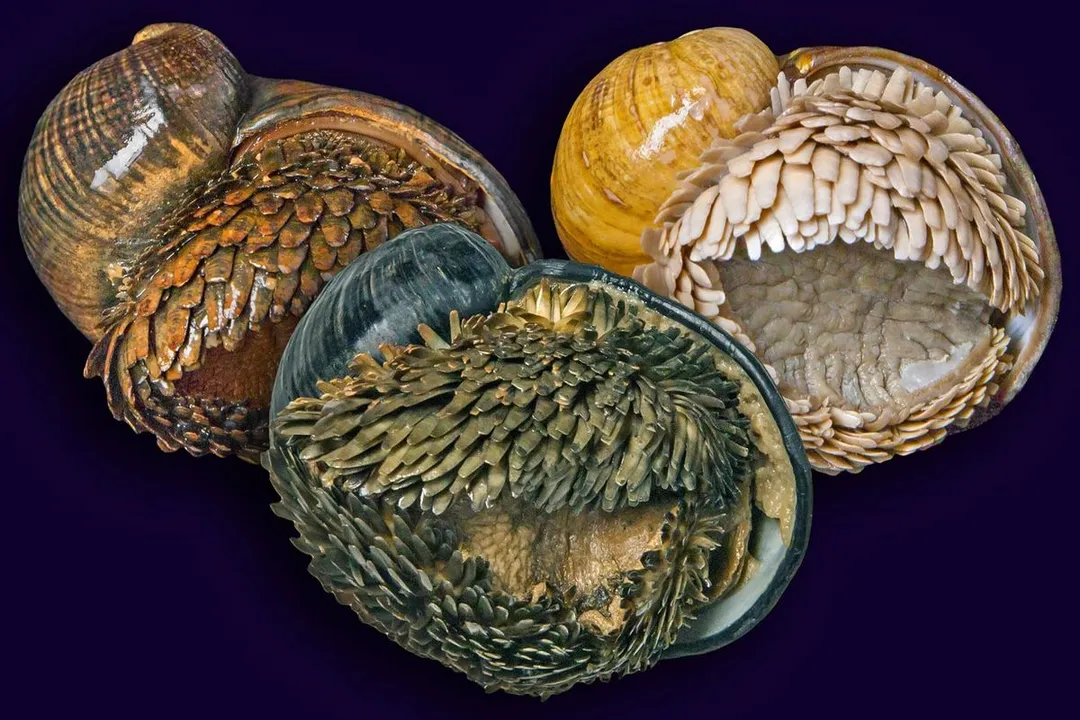
The symbiotic bacteria necessary for the survival of the Scaly-foot Gastropod are primarily hosted within its enlarged gill structure. This anatomical placement allows the bacteria to effectively absorb hydrogen sulfide and other necessary chemicals from the vent fluids as water passes over the gills, facilitating the chemosynthetic process that powers the snail's metabolic needs.
#Videos
The Insane Biology Of The Volcano Snail - YouTube
Related Questions
What is the scientific name of the creature commonly called the Volcano Snail?What specific materials form the unique outer scales of the Scaly-foot Gastropod?How does the Scaly-foot Gastropod produce energy in its sunless habitat?In which geological feature has the species Chrysomallon squamiferum been documented?Why is hermaphroditism an evolutionary advantage for the Scaly-foot Gastropod?Which internal organ is notably oversized in the Scaly-foot Gastropod?What causes the immediate collapse of a Scaly-foot Gastropod community?Where does the Scaly-foot Gastropod house its essential symbiotic bacteria?What primary predator does the Scaly-foot Gastropod armor protect against?How does the snail acquire materials for its iron-based scales?