Volcano Snail Locations
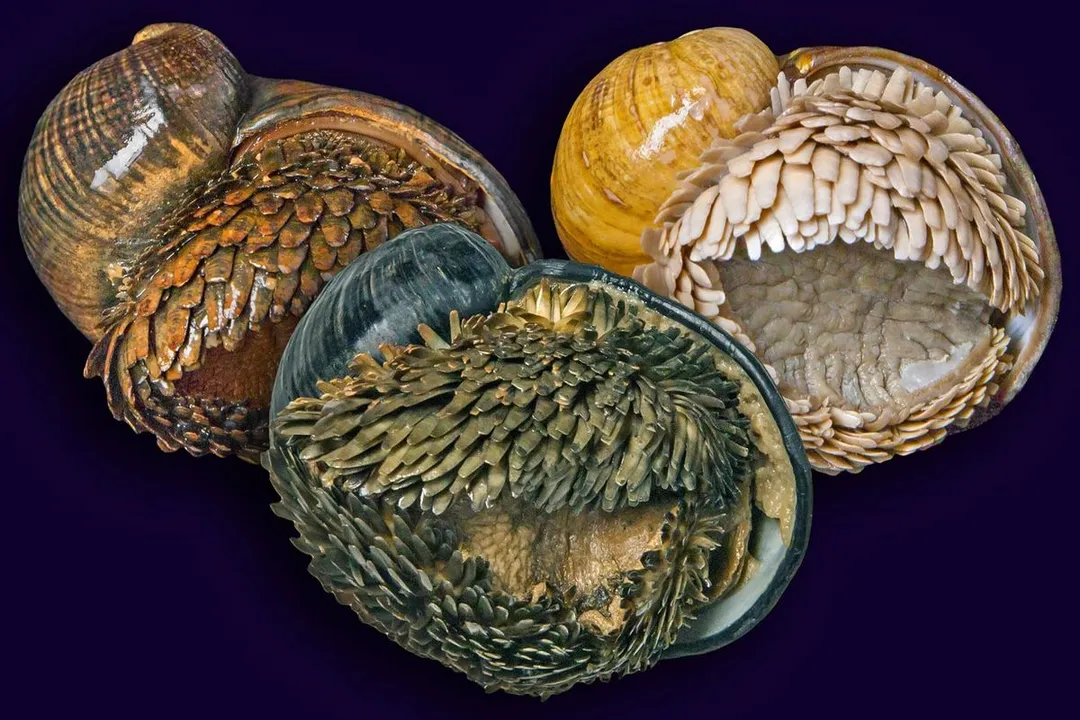
The creature known by several striking names—the Volcano Snail, the Scaly-foot Gastropod, or scientifically as Chrysomallon squamiferum—is a biological anomaly whose location is as extreme as its appearance suggests. This mollusk does not dwell in sunlit coral reefs or shallow tide pools; instead, its entire existence is tethered to the crushing darkness and scalding heat of deep-sea hydrothermal vents. [2][8] To find a specimen, one must descend thousands of meters beneath the ocean surface to regions where volcanic activity spews superheated, chemically rich water from the seafloor. [9]
# Deep Vent Habitats
The term "volcano snail" is immediately evocative, pointing directly to its primary geographic requirement: proximity to deep-sea volcanism. [8] These environments are characterized by hydrothermal vents, which are essentially fissures in the seafloor where geothermally heated water, heavily laden with minerals and dissolved gases, erupts. [2][9] The snails cluster around these plumes, often observed right near the opening or along the chimney structures that form as the minerals precipitate in the cold surrounding seawater. [4]
The conditions at these locations are profoundly hostile by surface standards. Water temperatures near the vent openings can reach hundreds of degrees Celsius, describing the habitat as near "scalding deep-sea volcanoes". [9] Yet, the snail thrives where the mixing occurs—in the interface zone where the superheated vent fluid meets the near-freezing ambient deep-sea water. [9] This specific thermal gradient is critical, as the snail's survival mechanisms are finely tuned to this precise, sharp temperature contrast. [9] Furthermore, these abyssal depths mean the habitat is perpetually dark, subjected to immense hydrostatic pressure, and chemically extreme due to the vent effluent. [1][9]
# Geographical Findings
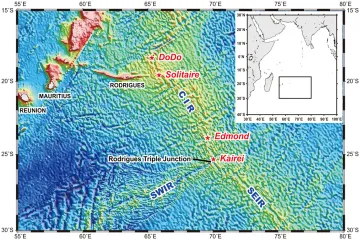
While hydrothermal vents are scattered across the world's oceans, the known populations of the Scaly-foot Gastropod are geographically specific, though the extent of their distribution is still under investigation. [1][5] The species Chrysomallon squamiferum has been documented across several vent fields in the Indian Ocean. [1] A key area for this species is the Southwest Indian Ridge, a seismically active underwater mountain range. [1]
The presence of C. squamiferum is linked to the specific chemistry emitted by these vents, which is rich in sulfur compounds. [9] This dependency means that the snail's location is dictated not just by depth or temperature, but by the availability of chemosynthetic bacteria that form the base of its local food web. [9] In essence, you are locating a snail where a specific, albeit extreme, underground plumbing system meets the ocean floor. [1] Considering the vastness of the deep ocean, tracking down these localized oases of life requires sophisticated submersible technology capable of navigating these rugged, pressurized landscapes. [5]
If we were to map the known distribution based on current discovery reports, we would see clusters along tectonic boundaries where new crust is being formed and venting fluids are released, which is precisely what the Southwest Indian Ridge represents. [1] It suggests that other, yet-to-be-discovered populations might exist along similar mid-ocean ridges globally, provided the vent chemistry is suitable. A terrestrial animal needing a specific type of spring water to survive offers a loose analogy; here, the snail needs a specific type of geothermally driven, sulfur-rich plume. [9]
# Armor Construction
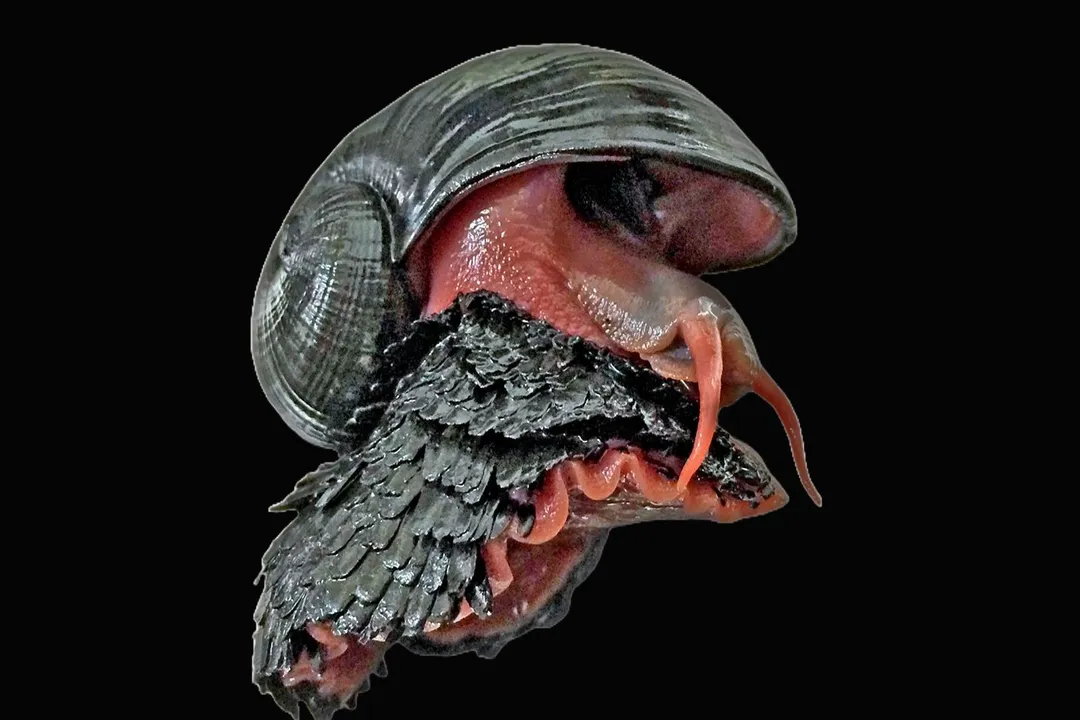
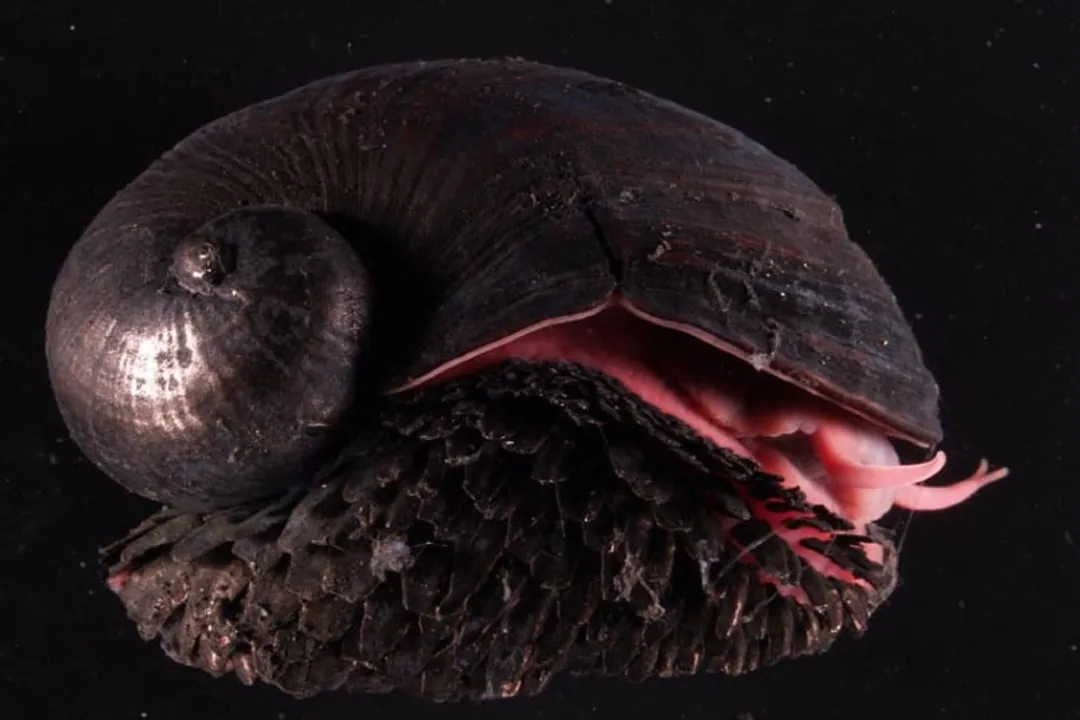
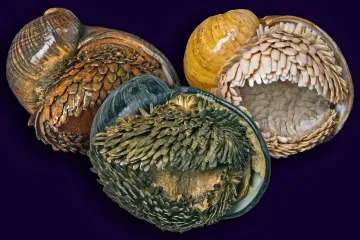
The environment itself dictates one of the snail's most famous adaptations: its unique armor, which is integral to surviving in its location. [5] The Scaly-foot Gastropod possesses a shell and foot covering composed of materials unlike any other known animal structure. [5] The scales protecting its soft body are partly composed of iron sulfides, specifically pyrite (or marcasite). [1][5]
This biological armor is built by incorporating iron elements directly from the vent fluid environment into its structure. [5] The snail essentially mines its location for construction materials. The iron sulfide layers provide protection against crushing from predators, such as deep-sea crabs, and likely offer some resistance against the corrosive, mineral-rich water constantly bathing the organism. [5] The combination of an organic inner layer and the hard, mineralized outer scales forms a composite material. [5]
This reliance on specific minerals—iron sulfides—further restricts the snail's inhabitable range. It cannot simply move to a nearby, cooler, non-venting patch of the abyssal plain; it must remain where the mineral deposition rate is sufficient to maintain and grow its specialized integument. [1][5] This creates tiny, isolated biological islands on the seafloor, where the snail population is trapped by its specialized nutritional and structural needs derived directly from the vent effluent. [9]
# A Life Independent of Sunlight
One fascinating aspect related to the snail's location is its energy source, which completely bypasses photosynthesis. [9] Since the snail lives thousands of meters down, sunlight is nonexistent, making traditional food chains impossible. [9] Instead, the ecosystem around the vents is powered by chemosynthesis. [9]
The Scaly-foot Gastropod, similar to other vent organisms, hosts symbiotic bacteria within its body, primarily in its enlarged gill structure. [9] These bacteria absorb the hydrogen sulfide and other chemicals spewing from the vents and convert them into energy, effectively feeding the snail. [9] The fact that the snail "never eats" in the conventional way highlights how deeply its existence is rooted in the unique chemistry of its location. [9] The chemical composition of the vent fluid—specifically the concentration of sulfur compounds—is the actual food source, channeled through a biological intermediary. [9]
To put this into perspective, consider an explorer finding a thriving community deep underground powered solely by geothermal heat and sulfur, completely cut off from surface solar energy. The snail's location is an entire, self-contained ecosystem fueled by planetary geology rather than stellar radiation. This makes the specific chemistry of the vent fluid as much a locator of the snail as its geographic coordinates. [9] If a vent field chemistry shifts—perhaps due to a localized change in the underlying magma chamber—the entire biological community tied to it, including the snail, would face immediate collapse, illustrating the fragility of these unique locations. [1]
# Comparative Isolation
When comparing the Volcano Snail's location to other known deep-sea fauna, its specialized niche becomes clearer. While many deep-sea creatures inhabit the abyssal plains or feed on marine snow drifting down from above, the Scaly-foot Gastropod is strictly vent-endemic. [1][2] This isolation is a key factor in its evolutionary trajectory, leading to unique traits like its iron-based armor and hermaphroditism. [9]
Imagine a scenario where a terrestrial snail required water flowing from a geyser rich in dissolved iron to build its shell. If that geyser stopped flowing, the snail population would die out, unable to find alternative building material nearby. The deep-sea vent community is akin to this, only magnified by the extreme pressure and chemical gradient. [9] While the deep ocean is vast, the habitable "patches" around active vents are minuscule islands in an otherwise barren, cold, and dark expanse. [4] This geographic fragmentation can lead to distinct genetic variations between vent fields, even those that are geographically close, simply because the intervening deep seafloor is uninhabitable for this species. This phenomenon, common in deep-sea vent biology, means that a population found on the Southwest Indian Ridge might be genetically distinct from one hypothetically found on a vent field in the East Pacific Rise, despite both being C. squamiferum. [1]
# Anatomical Features Linked to Location
The snail's unusual anatomy is a direct architectural response to its environment. Beyond the iron shell, the snail possesses a remarkably large heart. [9] While the exact physiological reason for the oversized heart in relation to its habitat isn't fully detailed in the available sources, an inference can be drawn regarding circulation in such extreme conditions. [9] Pumping fluid through a system constantly battling temperature extremes and potentially dealing with high viscosity due to mineral saturation might require greater cardiac power than that seen in less stressed mollusks. [9] The giant heart, coupled with its armor, paints a picture of an organism heavily invested in defense and circulatory maintenance within its high-stress location. [9]
The hermaphroditic nature is another biological feature tied to survival in a sparsely populated, fragmented habitat. [9] In environments where mates are rare, being able to reproduce with any other individual encountered—rather than requiring a male and female pair—significantly increases the chances of successful propagation for the species across the scattered vent locations. [9] This reproductive strategy maximizes the odds of colonization when new vents become active or when individuals disperse across the cold, unproductive abyssal plains between active sites.
# Summary of Habitat Requirements
To successfully locate the Volcano Snail, one must target an area defined by a confluence of geological and chemical factors:
- Depth: Extreme abyssal depths, often several thousand meters. [1][9]
- Geology: Active tectonic spreading centers or volcanic zones where hydrothermal circulation occurs. [2][8]
- Chemistry: Vents must emit fluids rich in sulfur compounds to support the necessary chemosynthetic base. [9]
- Geography: Known specific regions include the Southwest Indian Ridge. [1]
It is a creature defined by its location, a living testament to life’s capacity to inhabit the most chemically and thermally challenging niches on Earth, requiring a specialized iron-reinforced structure to cope with the very chemistry that feeds it. [5][9]
#Videos
The Insane Biology Of The Volcano Snail - YouTube
Related Questions
#Citations
Scaly-foot gastropod - Wikipedia
Did You Know? … About the Ocean's Most Hardcore Snail
Volcano Snail - Chrysomallon squamiferum - A-Z Animals
Chrysomallon squamiferum, commonly known as the volcano snail ...
Under Armour: the amazing new scaly-foot snail - Museum Wales
The Insane Biology Of The Volcano Snail - YouTube
Volcano snails, also known as scaly-foot snails or sea pangolins ...
Inside The World Of The Volcano Snail, Nature's Toughest Gastropod
Scaly-foot snail: The armor-plated hermaphrodite with a giant heart ...