What defines the unique shell composition of the scaly-foot gastropod?
Answer
Iron sulfides
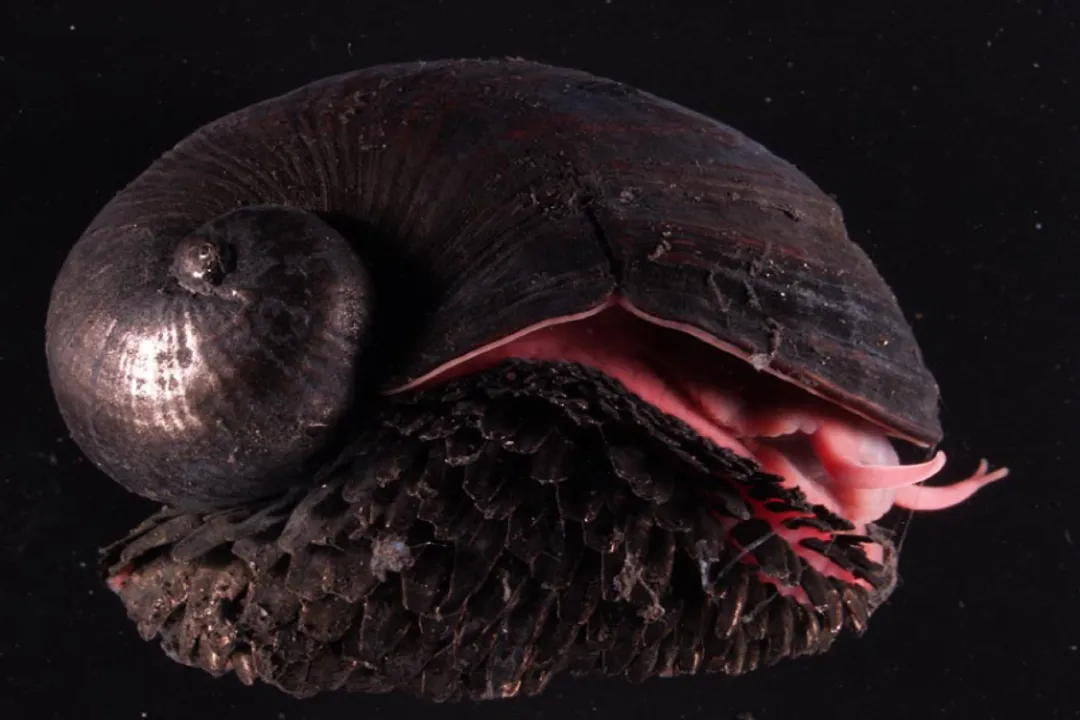
The shell of the scaly-foot gastropod, Chrysomallon squamiferum, is distinctly different from the vast majority of mollusks. While most mollusks build their shells out of calcium carbonate, this species utilizes iron-sulfur compounds. Specifically, the shell consists of three layers, with the outer layer armored with iron sulfides like pyrite and marcasite. This material is derived from the environment through a rare biological process known as iron-based biomineralization, allowing the snail to construct an incredibly durable, metallic-like protective layer that thrives under the specific chemical conditions found near deep-sea hydrothermal vents.
#Videos
The Insane Biology Of The Volcano Snail - YouTube
Related Questions
What defines the unique shell composition of the scaly-foot gastropod?Which specific minerals form the outer armor of Chrysomallon squamiferum?At what depth is the scaly-foot gastropod typically found?What energy source fuels the ecosystem around hydrothermal vents?What specific biological process is used to build the metal shell?How hot can hydrothermal vent fluids reach in the snail's habitat?What genomic feature aids the scaly-foot gastropod in detoxification?Why does the scaly-foot gastropod exhibit a slow growth rate?What does the scaly-foot gastropod primarily eat?What potential application exists for studying the scaly-foot gastropod?Which mineral, with the formula Fe3S4, is incorporated into the shell?