Volcano Snail Diet
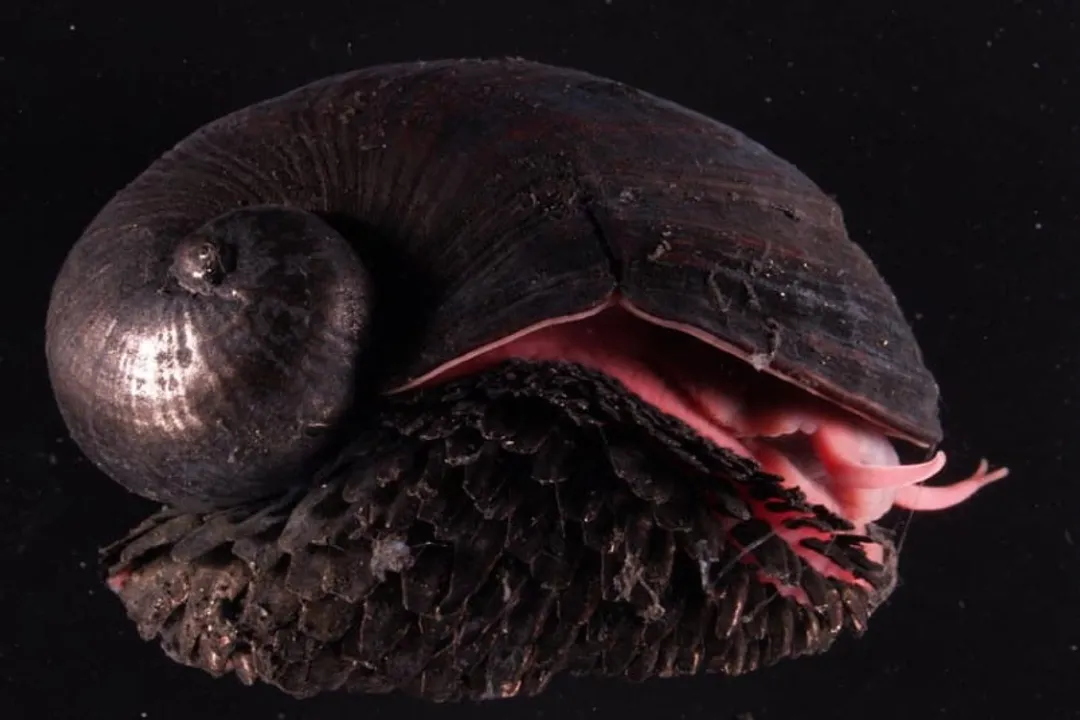
The journey to understanding the diet of the Chrysomallon squamiferum, better known as the Volcano Snail or Scaly-foot Gastropod, requires plunging into one of Earth’s most extreme, sunless habitats: deep-sea hydrothermal vents. Unlike most snails we picture clinging to garden leaves or grazing on algae, this creature exists miles beneath the ocean surface, surrounded by superheated, mineral-rich fluids. The concept of its “diet” doesn't involve chewing or filtering; instead, it’s a fascinating case study in total chemical outsourcing.
# Vent Ecosystem
The home of the Volcano Snail is anything but hospitable by surface standards. These organisms are vent-endemic, meaning they are found exclusively near these deep-sea fissures in the Indian Ocean, residing at depths between 2,400 and 2,900 meters. The water near the "black smokers" can reach temperatures exceeding (), though the snail itself prefers the cooler, diffuse flow zones, often around . Critically, this environment is characterized by high concentrations of toxic chemicals, particularly hydrogen sulfide, and very low oxygen availability. This extreme chemical soup dictates that traditional methods of gathering food—like scavenging detritus or grazing on photosynthetic material—are impossible. Sunlight, the basis for nearly all surface food webs, never reaches these depths.
# Symbiotic Reliance
This dependency on the environment’s unique chemistry leads directly to the snail’s primary nutritional strategy: symbiosis. After hatching from their larval stage, Volcano Snails are classified as obligate symbiotrophs. This means they require a partnership with other organisms to secure energy for survival. They house specialized bacteria, identified as thioautotrophic (sulfur-oxidizing) gammaproteobacteria, within a hugely specialized internal organ.
This relationship is not optional; it is the sole source of nutrition for the snail throughout its post-settlement life. The bacteria perform chemoautotrophy, or chemosynthesis. They take the raw, toxic chemicals spewing from the vents—most importantly, hydrogen sulfide—and convert them into usable organic carbon and energy, much like plants convert sunlight. In return for providing a safe, specialized home and supplying the necessary precursor chemicals (like oxygen and sulfide) to fuel the bacteria, the snail receives 100% of its required sustenance. The fact that these snails have depleted stable carbon isotope values () compared to photosynthetically derived carbon confirms that their food source is chemical, not solar.
# Reduced Digestion
The reliance on internal energy production has profoundly shaped the snail’s anatomy, especially its feeding apparatus. While most gastropods possess a muscular tongue-like structure called a radula for scraping food, the Volcano Snail’s radula and its supporting cartilage are notably small. In fact, the entire digestive system is simple and significantly reduced, taking up less than 10% of the body volume typically seen in other gastropods. This dramatic simplification is telling: the snail has functionally outsourced primary energy conversion entirely. Maintaining a complex set of teeth and churning digestive organs designed for processing external matter would be a metabolic waste when its internal microbes are handling the entire food supply.
The specialized housing for these crucial partners is the oesophageal gland, which is remarkably enlarged—estimated to be up to a thousand times the size found in related snail species. This structure is so large it occupies much of the ventral space within the mantle cavity. It is a testament to evolutionary trade-offs that the need to support this bacterial colony has driven major anatomical changes, including the snail's proportionally giant heart, which likely works overtime to pump oxygenated blood to this vital chemical factory in an oxygen-poor environment.
# Chemical Dependency
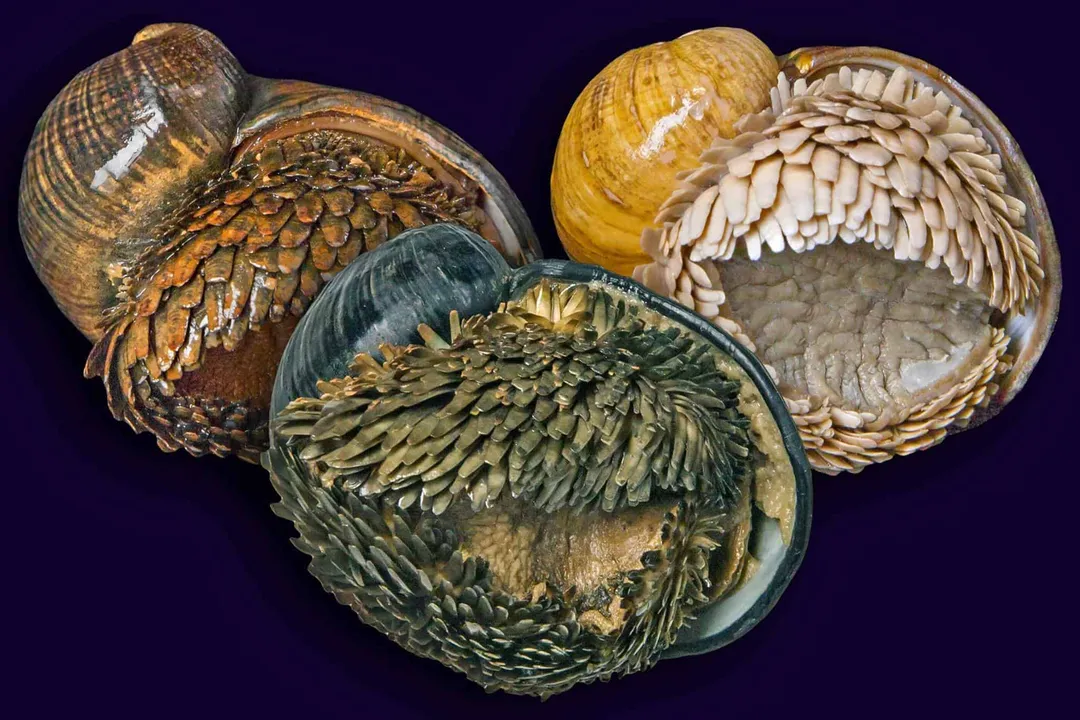
While the energy diet is supplied by bacteria utilizing sulfur compounds, the snail's famous external structure highlights an equally critical dependency on vent chemistry: iron and sulfides. The outer layer of its shell, and the protective sclerites covering its foot, are built using iron sulfides like greigite and pyrite.
This means the snail’s existence is chemically constrained in two distinct ways: it must live near the vent fluid to obtain the chemical reactants for its symbiotic bacteria to generate food, and it must also be able to access or sequester the dissolved minerals—the iron sulfides—to construct its unique armor. If one were to model the energy dynamics of this system, the carrying capacity for the C. squamiferum population is not merely determined by the general availability of organic matter, but rather by the precise flux rate of hydrogen sulfide and associated minerals emanating from the vent structure itself, a localized constraint rarely imposed on organisms relying on diffuse surface photosynthesis. It’s a perfect example of life finding a way by completely internalizing the ecosystem’s energy source and structural material, making it entirely independent of solar energy flowing through the water column. This entire strategy—energy derived from geochemical processes and armor derived from mineral precipitation—makes the Volcano Snail one of the most chemically specialized eaters, or non-eaters, in the world.
Related Questions
#Citations
Scaly-foot gastropod - Wikipedia
Volcano Snail - Chrysomallon squamiferum - A-Z Animals
Chrysomallon squamiferum | INFORMATION - Animal Diversity Web
Volcano snail - Their shells are made of iron and they live around ...
Scaly-foot snail - Facts, Diet, Habitat & Pictures on Animalia.bio
Meet The Volcano Snail– The Coolest Animal You've Never Heard Of