Volcano Snail Physical Characteristics
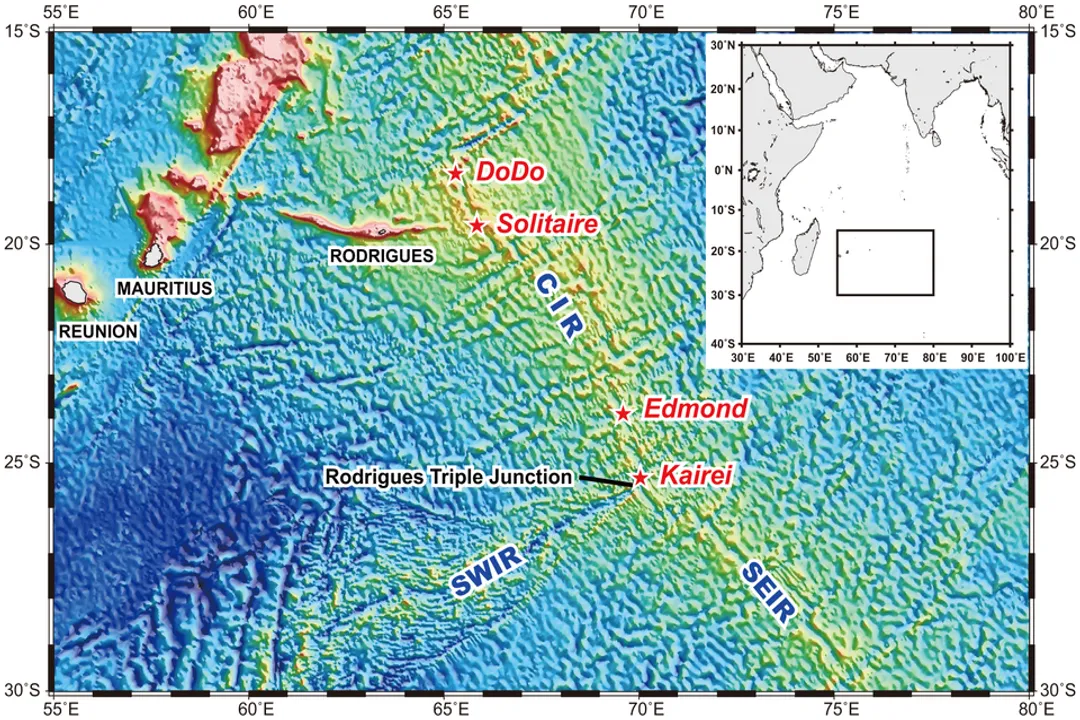
The volcano snail, scientifically named Chrysomallon squamiferum, presents one of the most compelling examples of biological engineering on Earth, defined entirely by the extreme habitat it inhabits: deep-sea hydrothermal vents in the Indian Ocean. [3] While its lifestyle centers on thriving near scalding waters, its physical characteristics—from its multi-layered, metal-infused shell to its oddly proportioned internal organs—are what truly set it apart from nearly every other known mollusk. [1][3] Known by several common monikers, including the scaly-foot gastropod or the sea pangolin, this creature appears more akin to a miniature, slow-moving medieval knight than a typical sea snail. [4]
# External Shell Armor
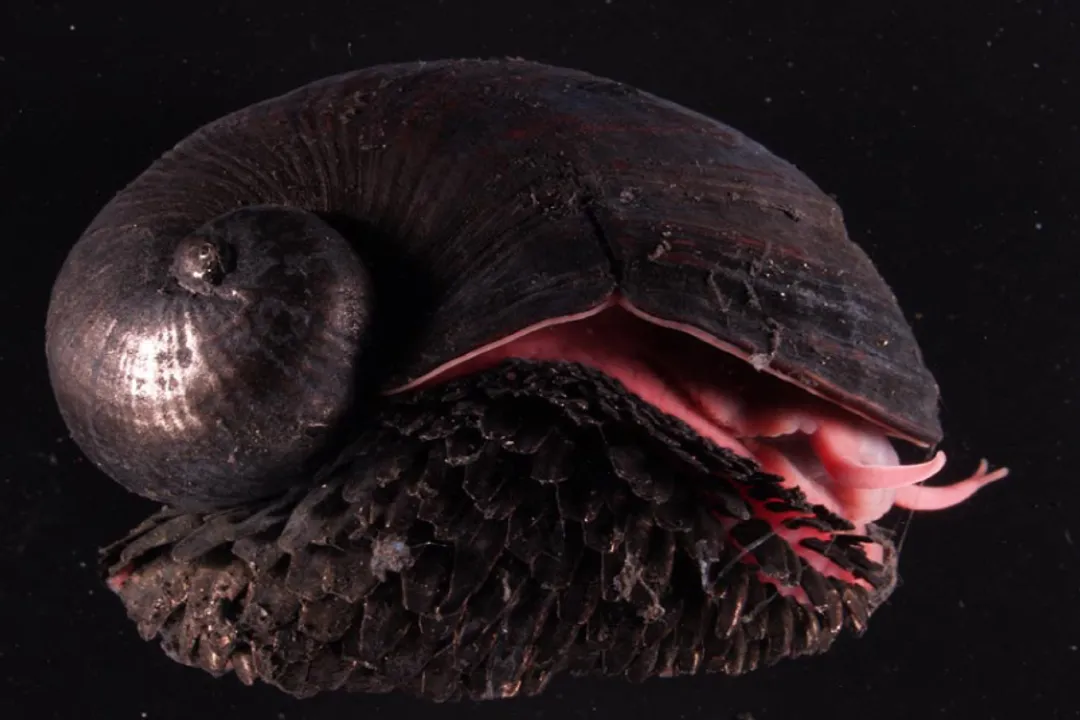
The most arresting physical feature of C. squamiferum is its shell, which is remarkable not only for its size relative to other deep-sea gastropods but also for its unique composition. [1] It is the sole known extant animal to utilize iron sulfide minerals in its skeletal structure. [1][3] This shell is not monolithic; rather, it is constructed of three distinct layers, each performing a specialized role in defense and insulation. [1][3]
The outermost layer is the one that captures the most attention. This layer is dark, approximately 30 micrometers thick, and is composed of iron sulfides, specifically incorporating minerals like greigite (). [1][3] This composition is what gives the snail its reputation for wearing "iron armor". [5] Below this metallic exterior lies the middle layer, which measures about 150 m and is the snail’s periostracum, an organic layer common to many other gastropods. [1][3] This organic material is thick and brown, and critically, it seems engineered to absorb mechanical strain, like the force from a predator’s attack, and to help dissipate heat. [1] Finally, the innermost layer, around 250 m thick, is made of aragonite, a familiar form of calcium carbonate, which presents a milky white appearance inside the shell. [1][3] It is interesting to consider the mechanics here: the soft organic layer seems dedicated to buffering impacts and thermal shock, allowing the hard, outer iron layer to fulfill its primary role as a mineralized shield. [1]
Shell dimensions vary, but an adult typically has a shell width averaging around 32 millimeters. [1][4] The overall shell shape is described as globose, with a spire that appears compressed. [1] The aperture—the opening where the snail emerges—is elliptical. [1] Like many older gastropods, the apex of the volcano snail’s shell can be quite fragile and shows signs of corrosion in adults. [1]
# Iron Foot Scales
The armor does not end at the shell; the foot of the snail, which is described as large and red in color, is further protected along its sides by hundreds of iron-mineralized structures called sclerites. [1][3][4] These sclerites are a unique feature, not homologous to the operculum (a trapdoor structure) or the sclerites found in other mollusks like chitons. [1]
Each sclerite is a complex composite, featuring a soft epithelial tissue core, overlaid by conchiolin (a complex protein), and capped with the outermost layer containing the iron sulfides, pyrite and greigite. [1] These sclerites are arranged in an imbricated fashion, overlapping one another much like roofing tiles, which contributes to the "scaly-foot" moniker. [1][4] While juvenile snails only possess a few rows of these scales, adults develop dense, asymmetrical coverings. [1][4]
A fascinating physical distinction arises based on geography. Snails from the Kairei vent field have black sclerites due to the presence of iron sulfide minerals, and these scales are even known to be ferrimagnetic. [1][4] However, the population found in the Solitaire vent field exhibits white sclerites because they lack the iron mineralization entirely. [1][4] This variation shows that while the presence of iron sulfide scales is a species-defining trait, the degree of mineralization can vary based on local chemical availability. The hypothesized purpose of these scales swings between protection against predators and acting as a physical mechanism to manage the toxic byproducts of their internal food production system. [1]
# Head and Sensory Features
Moving to the soft anatomy visible when the snail is extended, the volcano snail lacks several features common to other snails, reflecting its specialized, lightless existence two to three kilometers beneath the waves. [1][3] It possesses a thick snout that tapers to a blunt end, flanked by two smooth cephalic tentacles that are thick at the base and taper to fine points. [1]
A critical piece of physical information is what the snail lacks: it has no eyes. [1][4] Its perception of the world relies entirely on tactile input relayed through nerves in its tentacles, mantle, and foot muscles. [1][4] Furthermore, it lacks a specialized copulatory appendage, consistent with its status as a simultaneous hermaphrodite. [1][4] The foot itself is large, distinctly red, and cannot be completely retracted into the shell. [1]
# Internal Adaptations for Symbiosis
While the external armor is built to withstand high pressure and potential chemical assaults from the environment, the snail’s internal physical characteristics are adaptations built to support its unique method of sustenance: relying entirely on chemoautotrophic bacteria housed in its body. [1][7] Because they do not eat in the traditional sense, their digestive tract is relatively simple and reduced. [1] However, other systems are massively enlarged to support the internal bacterial colony within the esophageal gland. [1][5]
The most extreme internal deviation is the circulatory system. The heart of C. squamiferum is proportionally enormous, accounting for roughly 4% of its total body volume. [1] To put this into perspective, the human heart makes up about 1.3% of body volume. [1] This giant heart works in tandem with an equally enlarged respiratory organ—the ctenidium, or gill—which occupies about 15.5% of the body volume. [1] These structures have evolved to function in the low-oxygen, chemically rich vent fluids to ensure both the snail and its symbiotic bacteria receive the necessary oxygen and possibly hydrogen sulfide to power their chemical energy conversion. [1][5] The heart's main job is to pump blood through this large gill and then supply the highly vascularized esophageal gland where the endosymbionts reside, isolated from the immediate vent fluid. [1] This structural commitment to symbiosis means that the snail’s anatomy has been physically rewired around its internal microbial factory. [5]
| Feature | Measurement / Material | Key Adaptation Context |
|---|---|---|
| Shell Width (Average) | mm | Relatively large for a peltospirid [1] |
| Shell Layers | 3 (Iron Sulfide, Periostracum, Aragonite) | Composite defense against heat and crushing [1] |
| Sclerites (Scales) | mm (Adult) | Iron-mineralized dermal armor on the foot [1] |
| Heart Volume | of body volume | Necessary to oxygenate symbiont-supporting tissues [1] |
| Ctenidium (Gill) Volume | of body volume | Adaptation to low oxygen concentrations [1] |
| Eyes | Absent | Sensory reliance on tactile input [1][4] |
It is worth noting that the physical differences between populations—the dark, magnetic scales of Kairei versus the white, mechanically stronger scales of Solitaire—illustrate how minor geochemical variations in their immediate surroundings can dictate the precise mineral makeup of an organism’s armor. [1][4] The structure that is essentially an external storage unit for waste sulfides, the sclerite, also varies in its physical properties based on whether iron is available for its formation. [1] The existence of this creature forces us to look at biological structure not just as an evolved trait, but as a constant, material negotiation with the immediate chemical and physical stresses of the environment it calls home. The combination of an exoskeleton reinforced with metal derived from its environment and an internal system dedicated entirely to farming its own food source makes C. squamiferum a living testament to extreme physical adaptation.
#Videos
The Insane Biology Of The Volcano Snail - YouTube
Related Questions
#Citations
Scaly-foot gastropod - Wikipedia
Chrysomallon squamiferum | INFORMATION - Animal Diversity Web
The Insane Biology Of The Volcano Snail - YouTube
Volcano Snail: The Armored Snail From The Bottom Of The Ocean
Volcano snail - Their shells are made of iron and they live around ...
Did You Know? … About the Ocean's Most Hardcore Snail
Meet The Volcano Snail– The Coolest Animal You've Never Heard Of