Volcano Snail Facts
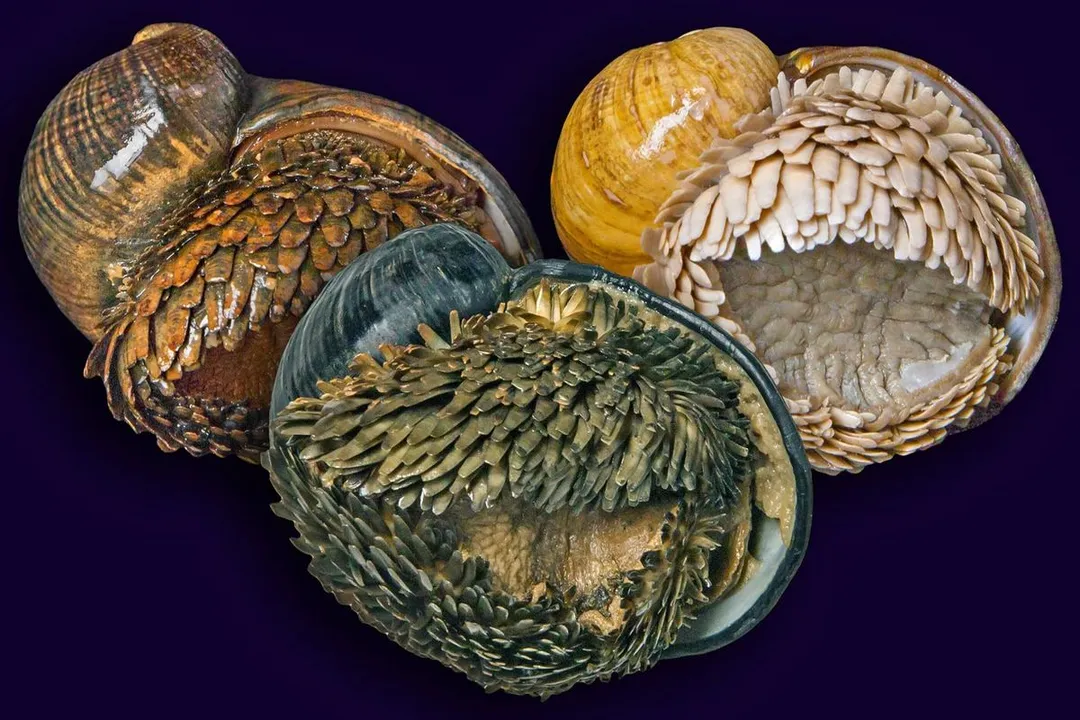
The creature known by several dramatic monikers—the Volcano Snail, the Scaly-foot Gastropod, or scientifically as Chrysomallon squamiferum—is one of the planet’s most bizarre and resilient mollusks. Living thousands of meters beneath the ocean surface, this snail thrives in environments that would instantly vaporize most other forms of life, a testament to specialized evolution in the planet’s harshest realms. Its fame stems largely from its incredible external defenses: a shell literally armored with iron compounds, making it unlike any other animal shell known.
# Vent Dweller
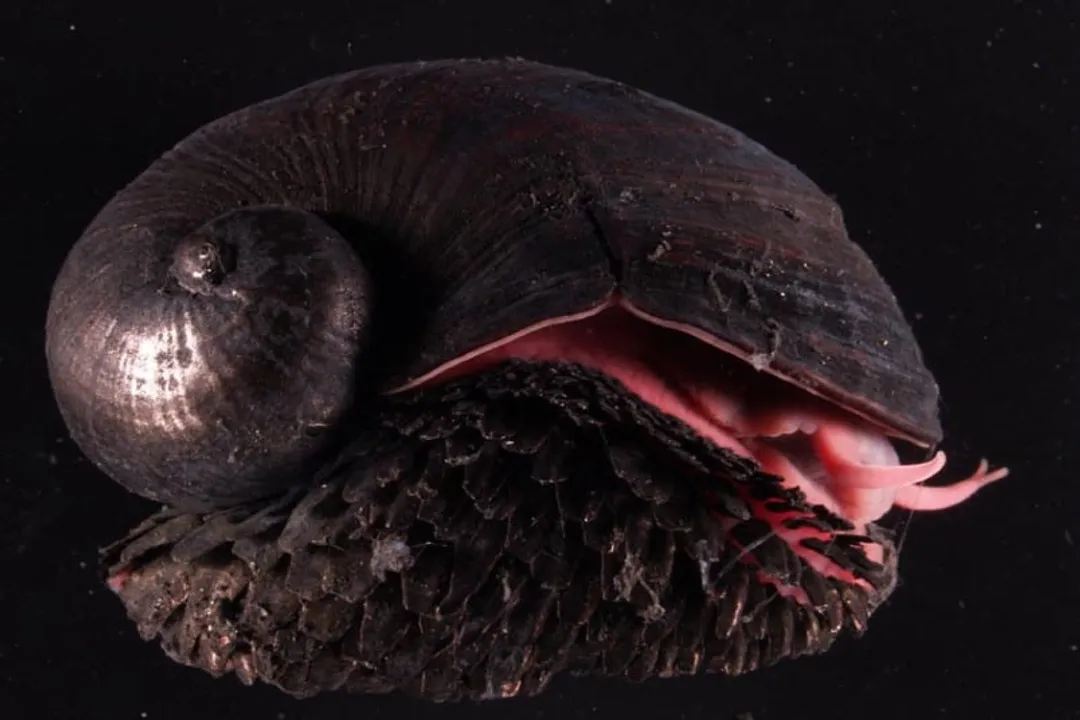
This snail makes its exclusive home near deep-sea hydrothermal vents, geological features where superheated, mineral-rich water spews from the seafloor. These vents create a surreal landscape of extremes. While the ambient deep-sea water hovers around a frigid , the fluid erupting from the "black smokers" can reach temperatures as high as . The Volcano Snail is found in the transition zones surrounding these plumes, where the temperature is survivable, though still hot. Geographically, these populations have been documented along the Mid-Atlantic Ridge, the Manus Basin, and in the Indian Ocean.
The very foundation of its habitat is built on chemosynthesis rather than photosynthesis, a fundamental difference from nearly all surface life. Instead of relying on sunlight, the ecosystem at these depths is powered by chemical energy derived from the vent fluids, creating a self-contained world far removed from the surface.
# Iron Shell
The most striking feature of C. squamiferum is its protective covering, which incorporates minerals derived directly from the surrounding vent fluid. Its shell is not simply strengthened; it is built from iron sulfides, including minerals like pyrite (fool's gold) and greigite. This process of incorporating geological metals into biological tissue is a remarkable example of biomining.
The shell structure is surprisingly complex, described as having three distinct layers. The outermost layer is the thickest, composed primarily of iron sulfides, providing the snail with its renowned armor plating. Beneath this lies a middle layer composed of organic material, acting as a buffer, and an innermost pearly layer made of aragonite, a form of calcium carbonate. This layered construction is a sophisticated biological engineering feat, allowing the organism to construct durable protection from raw materials sourced directly from the extreme environment. Furthermore, the foot—the muscular part the snail uses for locomotion—is also scaled, covered in these same iron sulfide compounds, giving the animal its common name, the Scaly-foot Gastropod.
Considering that most shelled creatures rely on calcium carbonate, which dissolves rapidly in the acidic water common around deep-sea vents, the snail’s adoption of iron sulfide offers superior resistance to chemical dissolution, suggesting a clear evolutionary advantage in this specific niche.
# Reproduction Diet
The internal biology of the Volcano Snail is as specialized as its exterior. For instance, these animals possess a remarkably large heart relative to their body size, which is likely necessary to manage circulation in the challenging deep-sea environment. Another key biological adaptation is their reproductive strategy: C. squamiferum are hermaphrodites, meaning each individual possesses both male and female reproductive organs.
Their method of sustenance is entirely tied to their location. Rather than consuming macroscopic food sources, the snails graze upon chemoautotrophic bacteria that grow in mats on the surfaces near the vents. These bacteria perform chemosynthesis, converting the chemicals released by the vents (like hydrogen sulfide) into the organic compounds that form the base of the snail's diet. While one description notes the snail "never eats", the prevailing scientific evidence indicates that they consume these bacteria, gaining necessary energy and nutrients from them. This dietary reliance on chemosynthetic bacteria means the snail’s survival is completely dependent on the continuous geological activity of the vents. Growth rates are naturally quite slow due to the limited energy availability in the deep sea.
# Status Risk
Because their habitat is so restricted—only found immediately adjacent to these scattered, isolated hydrothermal vent systems—the Volcano Snail has a naturally small range. This limited distribution, combined with the slow reproductive and growth rates inherent to deep-sea life, makes the species particularly susceptible to external threats. Due to these factors, the International Union for Conservation of Nature (IUCN) has classified Chrysomallon squamiferum as a Vulnerable species.
The rising interest in deep-sea mining, targeting the very minerals that create these unique habitats, poses a significant and immediate conservation concern. Any disturbance, such as dredging or sediment plumes created by exploratory activities near a vent field, could potentially destroy the entire local population of these highly specialized creatures before they are even fully studied. Given that these organisms are essentially biological iron foundries, their unique biology is of immense interest to materials scientists, adding another layer of complexity to discussions surrounding the regulation of these extreme frontiers. The fact that they construct their armor slowly, layer by layer, using environmental inputs suggests that once a vent field is depleted or damaged, the community will take an exceptionally long time—if ever—to recover its specialized fauna.
#Videos
The Insane Biology Of The Volcano Snail - YouTube
Related Questions
#Citations
Scaly-foot gastropod - Wikipedia
Volcano Snail - Chrysomallon squamiferum - A-Z Animals
The Insane Biology Of The Volcano Snail - YouTube
Chrysomallon squamiferum | INFORMATION - Animal Diversity Web
Did You Know? … About the Ocean's Most Hardcore Snail
Volcano snail - Their shells are made of iron and they live around ...
Volcano Snail: The Armored Snail From The Bottom Of The Ocean
Meet The Volcano Snail– The Coolest Animal You've Never Heard Of
Scaly-foot snail: The armor-plated hermaphrodite with a giant heart ...
Meet the Volcano Snail! Did you know the Scaly-foot gastropod (aka ...