What unusual feature concerning the frill openings did Xenoceratops possess compared to other contemporary centrosaurines?
Answer
It possessed parietal fenestrae (openings in the frill bone).
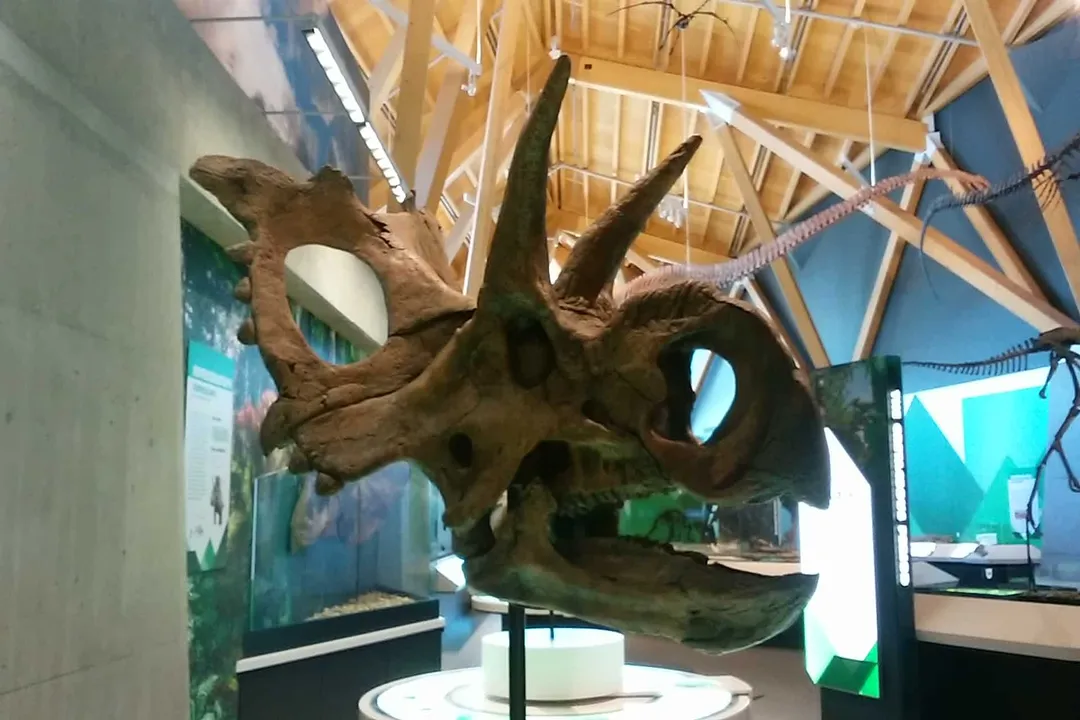
A key distinguishing anatomical trait for Xenoceratops involves the parietal fenestrae—the large openings typically found within the bony frill structure extending from the back of the skull. Unlike many other centrosaurines contemporary to it, Xenoceratops retained these parietal fenestrae, meaning the bone structure of its frill was not fully enclosed or lacking these openings. This feature provides researchers with clearer comparative morphology, allowing confident establishment of homology against later forms when examining the frill structure.
#Videos
History and Biology of Xenoceratops! Dino Times - YouTube
Related Questions
Approximately how old is the oldest definitive ceratopsid, Xenoceratops, discovered in North America?What specific subfamily within Ceratopsidae does phylogenetic analysis firmly place Xenoceratops within?What descriptive meaning is conveyed by the name Xenoceratops regarding its facial structure?What unique structural characteristic is noted on the rear margin of the Xenoceratops frill?How did the brow horns of Xenoceratops compare functionally and morphologically to its nasal horn?In which geological formation and stage is Xenoceratops firmly placed, establishing its age?What does the derived morphology of Xenoceratops suggest about the evolutionary pace of Centrosaurines?What unusual feature concerning the frill openings did Xenoceratops possess compared to other contemporary centrosaurines?What is the catalog designation given to the relatively complete holotype specimen of Xenoceratops?What was the estimated general size classification and length range for Xenoceratops in its environment?