Xenoceratops Evolution
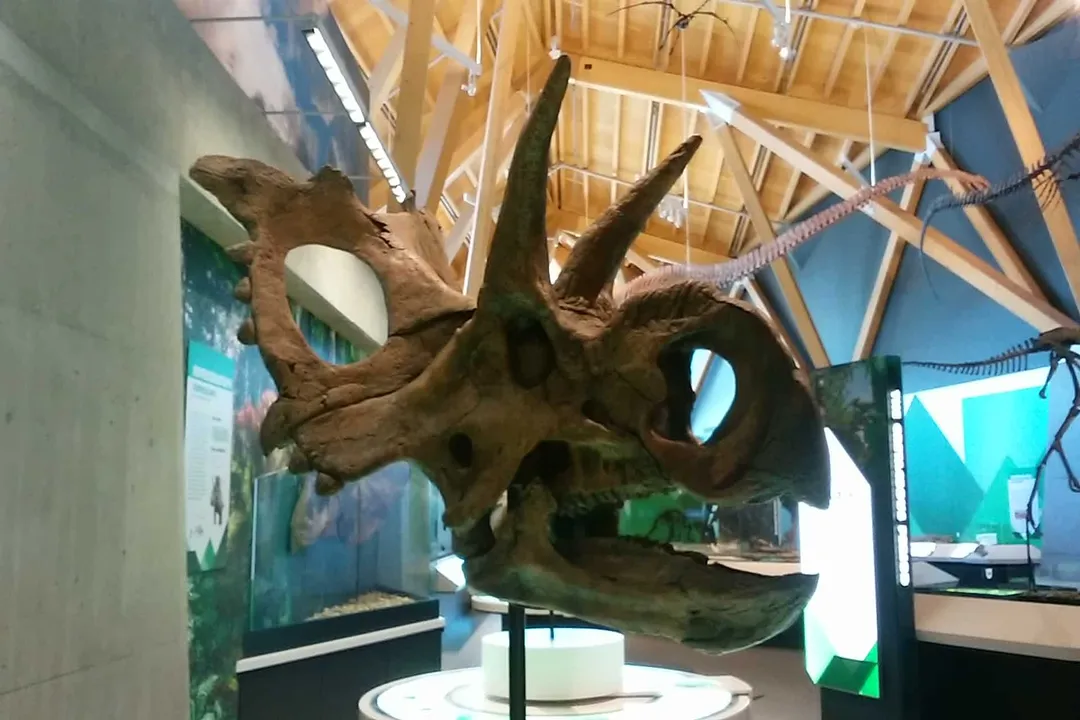
The discovery of Xenoceratops offered paleontologists a significant peek into the earliest stages of horned dinosaur evolution in North America, essentially reframing what was known about when this iconic family, the Ceratopsidae, established itself in the continent’s fossil record. This dinosaur earned its name, meaning "strange horned face," owing to its highly unusual cranial display compared to its later, more famous relatives. [2][10] The fossils themselves, including the holotype specimen TMP 1995.55.1, point to an animal that was already a fully recognized member of the specialized Ceratopsid group, rather than a transitional form. [1][7]
# Oldest Record
Xenoceratops is distinguished primarily by its age. It resides within the Milk River Formation of Alberta, Canada, placing it firmly in the Campanian stage of the Late Cretaceous period. [1][3][4] Crucially, its dating makes it the oldest known definitive ceratopsid discovered in North America, estimated to have roamed the landscape approximately 78 million years ago. [4][5] This finding pushed back the established timeline for the definitive appearance of large, recognizable ceratopsids in this geographical area by several million years. [4][5] Before this identification, the earliest known ceratopsids in the region were generally younger, meaning that Xenoceratops represents an ancestral branch that existed before the major diversification events seen later in the Cretaceous. [4]
# Strange Features
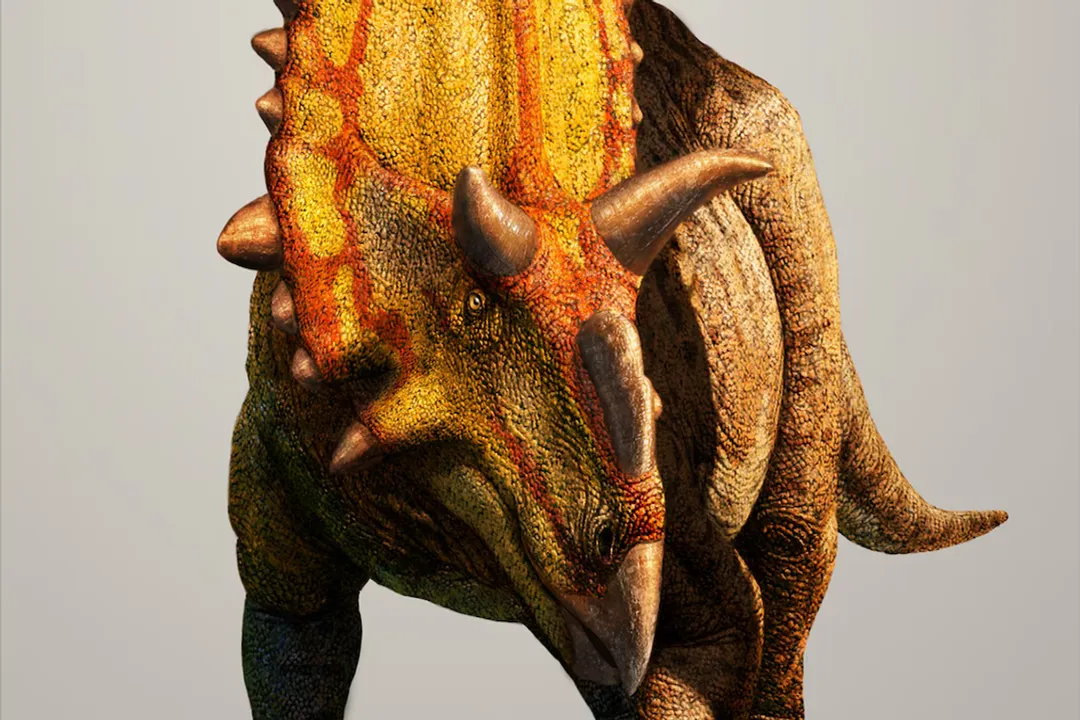
As a member of the Ceratopsidae family, Xenoceratops possessed the characteristic nasal horn and bony frill extending from the back of the skull, but its specific configuration was unique. [1][2] The most striking aspect is the prominence of the nasal horn, which was large and robust, while the brow horns, common in later forms like Triceratops, were either small or entirely absent. [5] The rear margin of the frill is where the "strange" nature truly manifests: it features prominent spikes or hooks protruding backward. [1] Furthermore, unlike many of its relatives, Xenoceratops possessed parietal fenestrae—the large openings in the frill bone—which are often fully enclosed or absent in other contemporary centrosaurines. [1] While exact weight measurements are speculative, its overall size suggests an animal reaching roughly 15 feet in length, making it a medium-to-large ceratopsian for its time. [2][3]

# Centrosaur Lineage
Phylogenetic analysis firmly places Xenoceratops within the Centrosaurinae subfamily of the Ceratopsidae. [1][5] This places it in the same broader grouping as later, well-known dinosaurs such as Styracosaurus and Pachyrhinosaurus. [1][5] Its close relationship to these groups suggests that the fundamental anatomical blueprint for the centrosaurine clade—characterized by a tendency toward a large nose horn and elaborate, sometimes hooked, frill ornamentation—was already well established relatively early in the Campanian. [5] When comparing the morphology, one can observe that the general structure supporting the nasal boss structure is more advanced than in earlier, more primitive ceratopsians, even if the resulting display was different from later centrosaurines. [7]
# Evolutionary Implications
The placement of Xenoceratops so early in the North American record provides a critical anchor point for understanding the evolution of the larger family. [4] It suggests that the initial migration or establishment of the Ceratopsidae lineage into the northern latitudes occurred earlier than previously modeled, allowing enough time for this specific, specialized centrosaurine form to evolve. [4] Considering that Xenoceratops already exhibits highly derived traits—a large nose horn and complex frill hooks—it implies that the morphological innovation that defined the centrosaurines was not a slow, gradual process following their arrival, but rather an explosive or rapid phase of adaptation occurring right at the beginning of their recorded history here. [7]
The data indicates that the Centrosaurinae were not a late-arriving group scrambling to catch up with the Chasmosaurinae; rather, they were already a morphologically distinct and specialized lineage present and thriving when the Milk River fauna was thriving. [5] If we chart the evolution of skull bossing, the development seen in Xenoceratops suggests that the reduction or modification of brow horns in favor of a stronger nasal display was an early branching event within this subfamily, establishing a pattern distinct from the parallel evolution seen in Chasmosaurines. [1]
# Fossil Context
Understanding the environment that shaped Xenoceratops helps contextualize its evolution. The Milk River Formation represents a coastal plain environment, likely marshy or deltaic, which was rich with other dinosaur species. [3] The presence of such a large herbivore in this ecosystem implies a substantial availability of plant life capable of supporting these massive animals. [3] Paleontologists studying the strata have noted that the preservation of the holotype specimen allows for unusually clear comparisons of features like the parietal fenestrae and the bosses that anchor the frill ornamentation. [7] This clarity on an early specimen is invaluable, as often the earliest representatives of a group are known only from fragmentary material. Having a relatively complete skull base means researchers can confidently establish the homology of its structures against later forms, improving the accuracy of the entire evolutionary tree for horned dinosaurs in the region. [1][4]
The fact that a specimen this well-defined appears so early suggests that the niche partitioning—where different ceratopsians adapted to use different resources or display structures—was already finely tuned in the Late Cretaceous ecosystem, even before the famous faunas of Dinosaur Park Formation appeared later on. [5] It serves as evidence that the evolutionary arms race involving large headgear was well underway long before the apex predators of the region developed their own counter-adaptations. [3]
#Videos
History and Biology of Xenoceratops! Dino Times - YouTube
Related Questions
#Citations
Xenoceratops - Wikipedia
Xenoceratops Animal Facts - A-Z Animals
Two-Ton "Alien" Horned Dinosaur Found—"Different From Every ...
Xenoceratops, Canada's Oldest Ceratopsid | David Evans Lab
Xenoceratops, New Horned Dinosaur from Canada | Paleontology
Xenoceratops Facts For Kids | AstroSafe Search - DIY.org
Canadian Science Publishing
Meet Xenoceratops: Canada's newest horned dinosaur - EurekAlert!
History and Biology of Xenoceratops! Dino Times - YouTube
"Alien" horned dinosaur discovered - CBS News