What two types of rays typically compose the dorsal and anal fins of wrasses?
Answer
Spiny rays mixed with soft rays
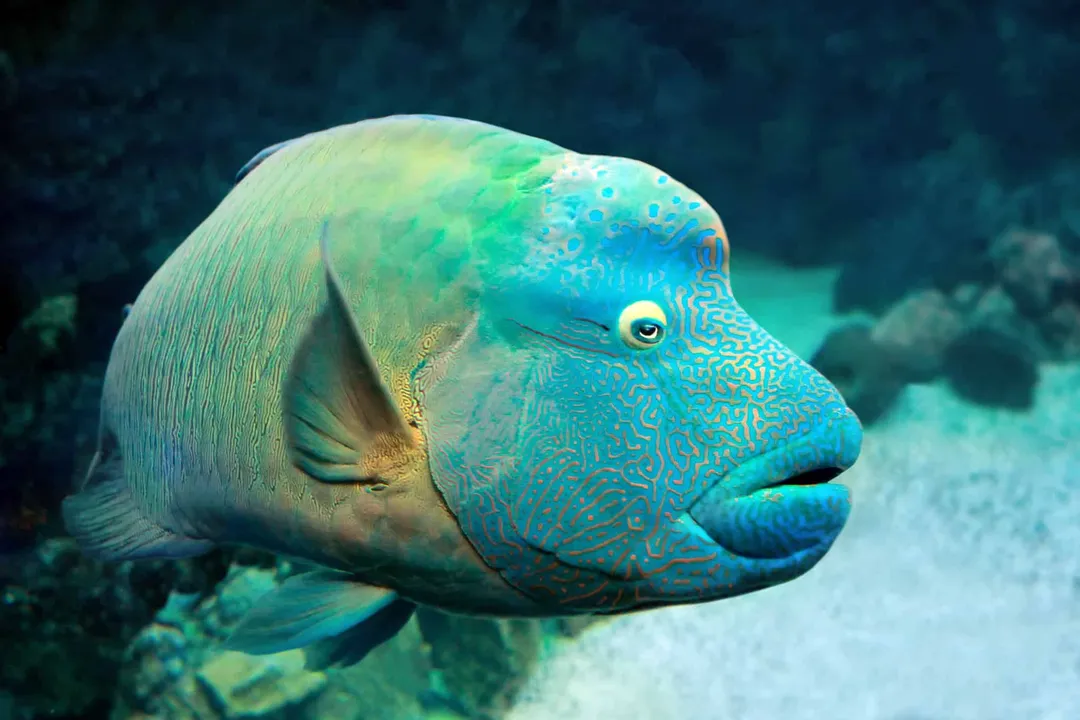
The morphology of the fins plays a crucial role in the stability and movement of wrasses within their environment. Specifically, the dorsal fin, which runs along the back, and the anal fin, located on the underside near the tail, are structured to incorporate both spiny rays and soft rays. The presence of the spiny rays provides essential structural support and rigidity, aiding the fish in maintaining stability, particularly when it needs to hold its position steady against strong ocean currents or during precise hovering movements near reef structures.
Related Questions
What characteristic defines the scales covering most wrasse bodies?What is the maximum recorded length for the enormous Humphead Wrasse?How do wrasses utilize their generally protrusible mouths?What coloration typically characterizes wrasses in the initial phase?What distinctive pattern marks the terminal phase male Bluehead Wrasse (*Thalassoma bifasciatum*)?What striking physical feature defines the massive Asian Sheepshead Wrasse (*Cheilinus undulatus*)?What two types of rays typically compose the dorsal and anal fins of wrasses?What dietary preference is suggested by a wrasse possessing exceptionally thick, fused teeth?What function do relatively large pectoral fins primarily serve for many wrasses?Color phases in wrasses are directly linked to which physiological/social process?