What coloration typically characterizes wrasses in the initial phase?
Answer
Dull shades of brown, yellow, or white
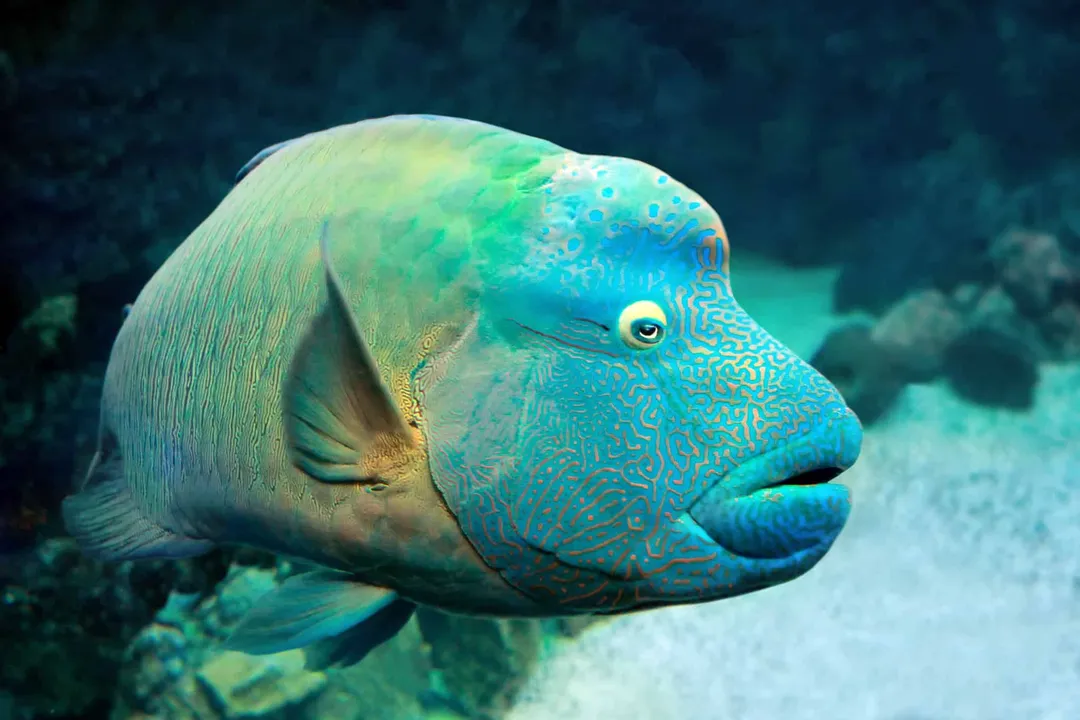
Wrasses exhibit complex color phases linked to their sequential hermaphroditism, dividing them primarily into the initial phase and the terminal phase. The initial phase encompasses all juveniles and sexually active females within the species. Physically, individuals in this stage typically display colors that are much duller compared to males. The text specifies that initial phase coloration often consists of muted shades, specifically brown, yellow, or white. This generally less conspicuous appearance contrasts sharply with the dramatic, intense chromatic shifts observed when a fish transitions into its terminal phase as a dominant male.
Related Questions
What characteristic defines the scales covering most wrasse bodies?What is the maximum recorded length for the enormous Humphead Wrasse?How do wrasses utilize their generally protrusible mouths?What coloration typically characterizes wrasses in the initial phase?What distinctive pattern marks the terminal phase male Bluehead Wrasse (*Thalassoma bifasciatum*)?What striking physical feature defines the massive Asian Sheepshead Wrasse (*Cheilinus undulatus*)?What two types of rays typically compose the dorsal and anal fins of wrasses?What dietary preference is suggested by a wrasse possessing exceptionally thick, fused teeth?What function do relatively large pectoral fins primarily serve for many wrasses?Color phases in wrasses are directly linked to which physiological/social process?