What structural features define the head of Xerus squirrels concerning visual acuity and auditory reception in open landscapes?
Answer
They possess large eyes relative to head size, paired with relatively small ears that lack prominent tufts
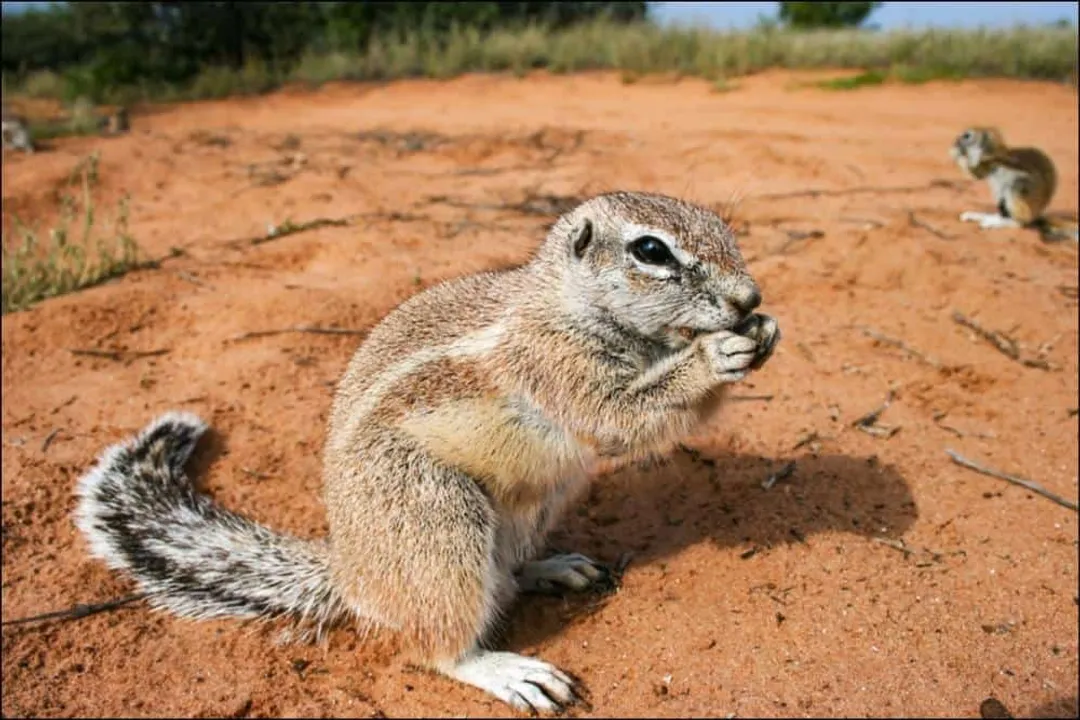
The head structure of the *Xerus* genus reflects its need for vigilance in exposed environments. Prey species that live on the ground must maintain a wide field of vision to detect threats approaching from the open landscape, which is facilitated by their possession of large eyes relative to their overall head size. Conversely, their ears are characterized as being relatively small and held close to the head, a feature potentially minimizing heat absorption or reducing injury during maintenance activities underground. Critically, these ears lack the distinct, tufted appearance seen in some other genera of African squirrels.
Related Questions
What visual feature distinguishes the Cape Ground Squirrel, Xerus inauris, from Xerus erythropus in the field?What primary function does the Xerus tail serve regarding thermoregulation when the squirrel is exposed to intense solar radiation?Which physical characteristic is noted regarding the sexual dimorphism observed in Xerus species?How are the forelimbs and claws of Xerus squirrels adapted specifically to support their subterranean architecture?What structural features define the head of Xerus squirrels concerning visual acuity and auditory reception in open landscapes?What is the typical weight range generally associated with the Unstriped Ground Squirrel, Xerus erythropus?What is the primary behavioral adaptation that leads *Xerus* squirrels to spend most of their active time on the ground rather than in trees?How is the relative proportion of the tail length compared to the body length typically described for Xerus species?What behavior, involving the tail, is used by *Xerus* squirrels for social communication among colony members?Why is observing subtle differences in overall coat tone considered a less reliable field marker than observing the lateral stripe for species differentiation?What survival strategy is directly underpinned by the physical adaptation of strong limbs and sharp claws in Xerus species?