What primary function does the Xerus tail serve regarding thermoregulation when the squirrel is exposed to intense solar radiation?
Answer
The squirrel holds the tail arched over its back, functioning as a natural parasol to shade the body
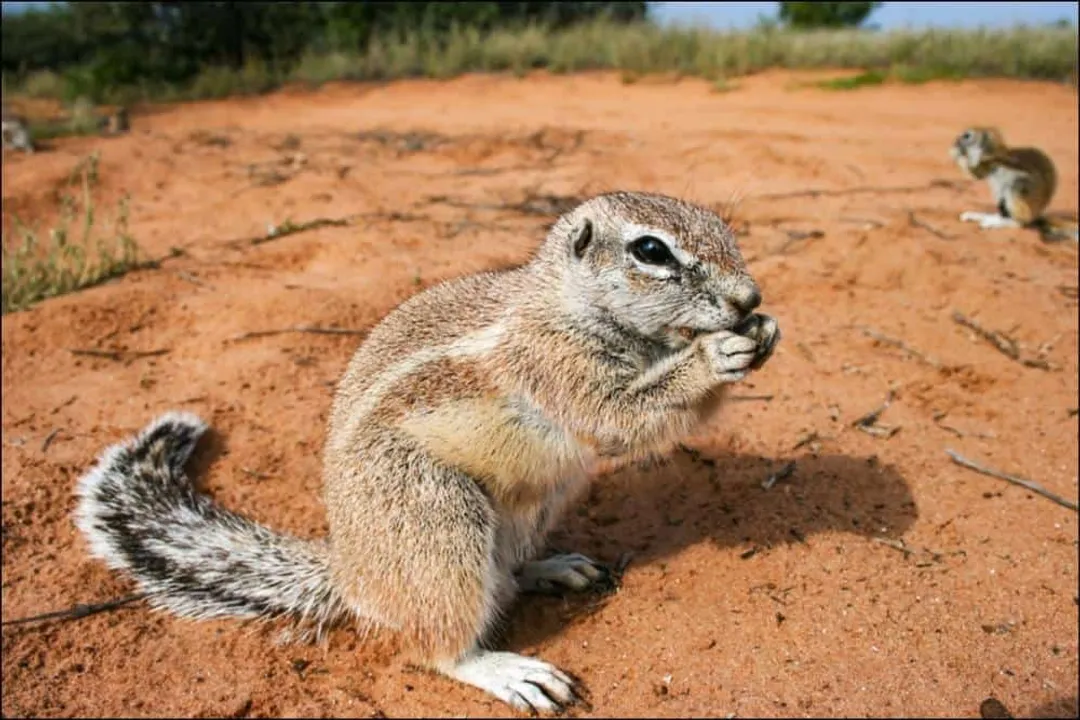
The tail of the *Xerus* species plays a crucial role in managing body temperature in high-temperature environments. When the animal is foraging or basking in open areas where shade is scarce, it exhibits the behavior of arching its substantial tail over its back. This posture creates a natural parasol effect, directly shading the dorsal surface of the body and minimizing the absorption of intense solar radiation. This behavior is a direct physical adaptation enabling thermoregulation under the hot sun, complementing their underground retreats. The tail also has secondary uses in balance and social communication, such as signaling danger.
Related Questions
What visual feature distinguishes the Cape Ground Squirrel, Xerus inauris, from Xerus erythropus in the field?What primary function does the Xerus tail serve regarding thermoregulation when the squirrel is exposed to intense solar radiation?Which physical characteristic is noted regarding the sexual dimorphism observed in Xerus species?How are the forelimbs and claws of Xerus squirrels adapted specifically to support their subterranean architecture?What structural features define the head of Xerus squirrels concerning visual acuity and auditory reception in open landscapes?What is the typical weight range generally associated with the Unstriped Ground Squirrel, Xerus erythropus?What is the primary behavioral adaptation that leads *Xerus* squirrels to spend most of their active time on the ground rather than in trees?How is the relative proportion of the tail length compared to the body length typically described for Xerus species?What behavior, involving the tail, is used by *Xerus* squirrels for social communication among colony members?Why is observing subtle differences in overall coat tone considered a less reliable field marker than observing the lateral stripe for species differentiation?What survival strategy is directly underpinned by the physical adaptation of strong limbs and sharp claws in Xerus species?