What behavior, involving the tail, is used by *Xerus* squirrels for social communication among colony members?
Answer
Rapid flicks or specific postures of the tail are used to alert colony members to danger or signal dominance
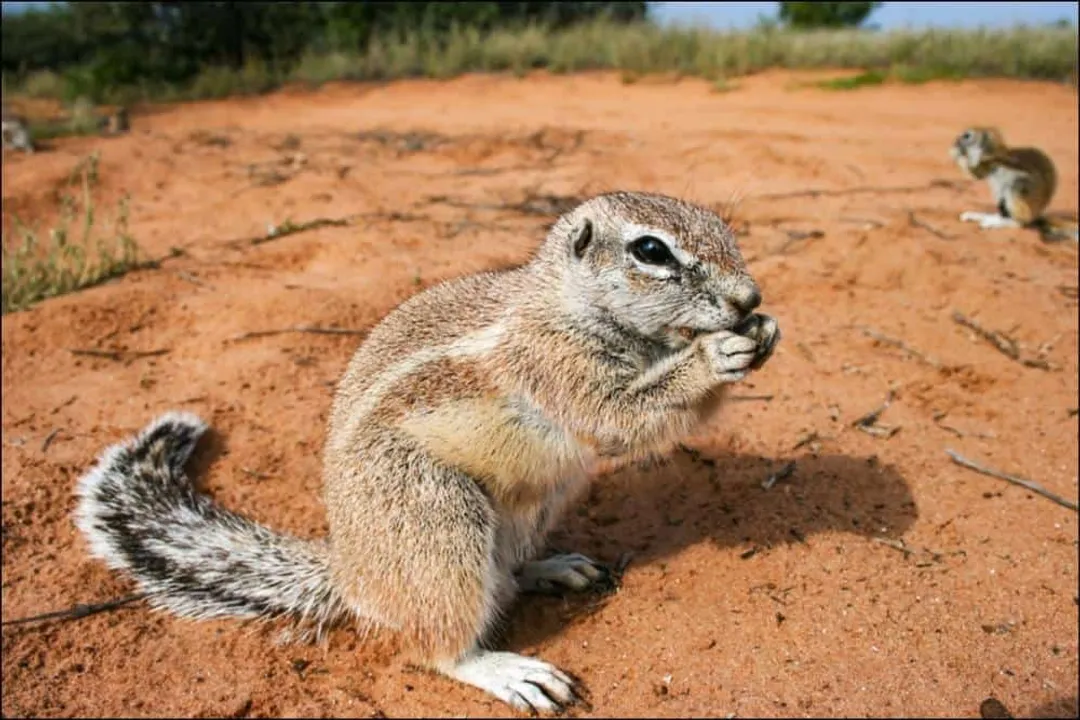
Beyond its critical role in thermoregulation and balance, the tail of the *Xerus* squirrel functions as a key tool for intraspecies communication within the colony structure. Social signaling is achieved through dynamic movements of this appendage. Specific rapid flicks or adopting distinct postures with the tail are employed as visual warnings to alert nearby colony members of potential dangers, or conversely, they can be used to communicate dominance during minor disputes over resources or territorial boundaries.
Related Questions
What visual feature distinguishes the Cape Ground Squirrel, Xerus inauris, from Xerus erythropus in the field?What primary function does the Xerus tail serve regarding thermoregulation when the squirrel is exposed to intense solar radiation?Which physical characteristic is noted regarding the sexual dimorphism observed in Xerus species?How are the forelimbs and claws of Xerus squirrels adapted specifically to support their subterranean architecture?What structural features define the head of Xerus squirrels concerning visual acuity and auditory reception in open landscapes?What is the typical weight range generally associated with the Unstriped Ground Squirrel, Xerus erythropus?What is the primary behavioral adaptation that leads *Xerus* squirrels to spend most of their active time on the ground rather than in trees?How is the relative proportion of the tail length compared to the body length typically described for Xerus species?What behavior, involving the tail, is used by *Xerus* squirrels for social communication among colony members?Why is observing subtle differences in overall coat tone considered a less reliable field marker than observing the lateral stripe for species differentiation?What survival strategy is directly underpinned by the physical adaptation of strong limbs and sharp claws in Xerus species?