What specific morphological trait concerning tusks historically separated the *Mammuthus* genus before genetic confirmation?
Answer
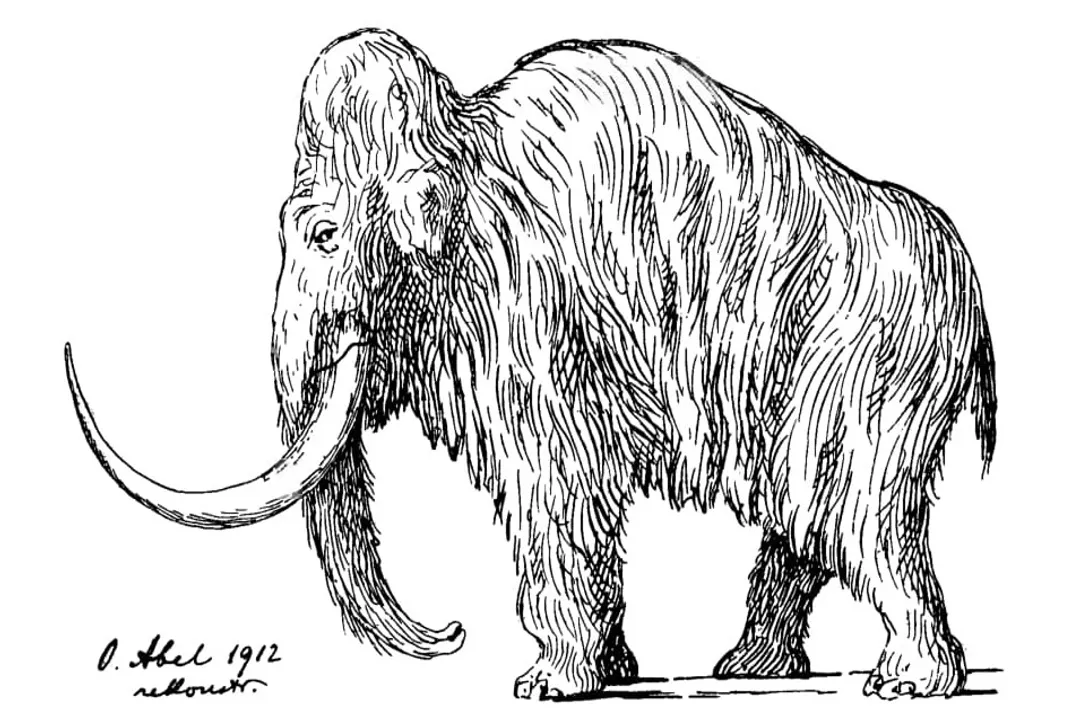
Tusks curved outward and then backward
Before the detailed confirmation provided by modern genetic analyses, paleontologists relied on distinct physical characteristics to classify ancient fauna. A notable morphological trait used historically to separate the *Mammuthus* genus, and often *M. primigenius* specifically, was the unique way its tusks were shaped. These tusks exhibited a distinctive curve: projecting outward initially and then curving backward. This morphology provided a visual differentiator when comparing remains against other proboscideans whose tusks might have been straighter or curved differently.
Related Questions
What is the scientific designation assigned to the Woolly Mammoth?What specialized feature defines membership in the Order Proboscidea for the Woolly Mammoth?What set of key characteristics defines the Woolly Mammoth's placement within Class Mammalia?What feature, characteristic of Phylum Chordata, implies the Woolly Mammoth possessed a backbone?Which modern elephant species is recognized as being genetically closest to the Woolly Mammoth (*Mammuthus*) genus?What critical function does the NCBI taxonomy ID 37349 serve when discussing ancient remains like the Woolly Mammoth?What characteristic defines the Woolly Mammoth's placement in the Kingdom Animalia at the highest level of organization?Which group of extinct and extant proboscideans is encompassed by the Family Elephantidae?According to evolutionary lines, which mammoth species is the Woolly Mammoth (*M. primigenius*) considered a direct descendant of?What specific morphological trait concerning tusks historically separated the *Mammuthus* genus before genetic confirmation?