What specific invertebrate found in the Aransas National Wildlife Refuge is crucial for the survival of the Texas wintering Whooping Crane flock?
Answer
Blue crabs
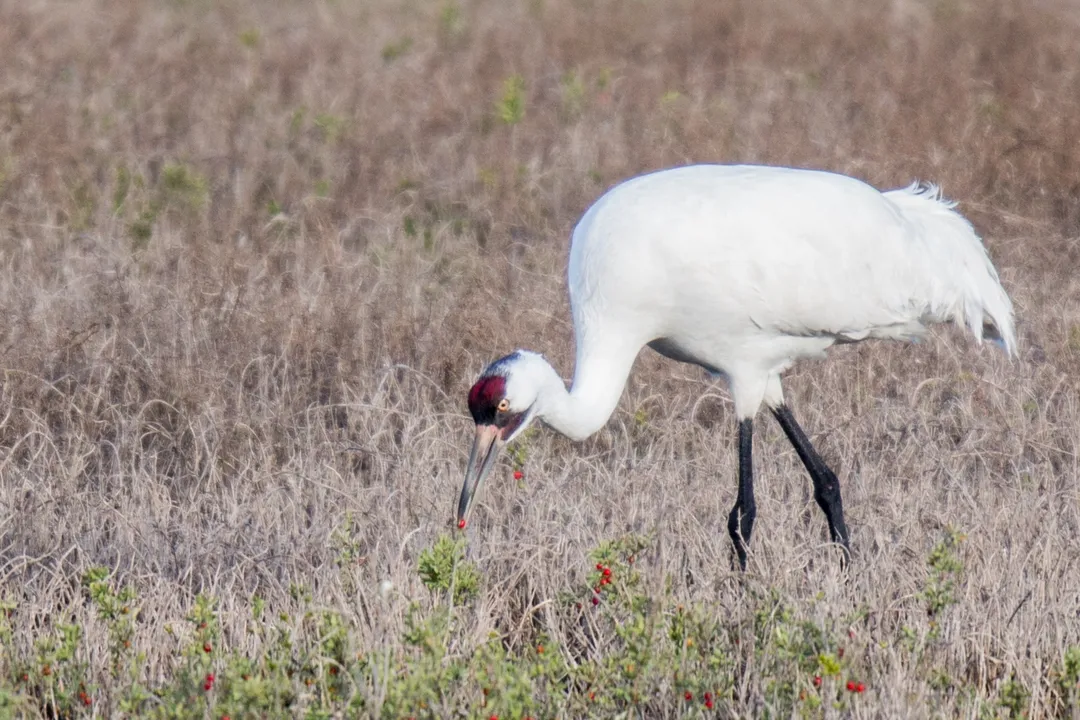
The Whooping Crane exhibits dietary flexibility, shifting its consumption based on seasonal availability, but the wintering grounds require a reliable, high-energy food source. For the critical migratory flock that winters along the Texas coast, the Aransas National Wildlife Refuge provides essential sustenance. These cranes rely heavily on consuming the local blue crabs found in the specific wetland conditions of that refuge. Any negative alteration to the Gulf Coast ecosystem, particularly changes in salinity caused by climate shifts or water diversion projects, directly threatens the availability of these blue crabs, thereby jeopardizing the survival of this segment of the population.
Related Questions
What physical characteristic of the Whooping Crane is only visible when the bird is in flight?What is the typical clutch size and successful fledging rate for Whooping Cranes, reflecting their K-selection strategy?What was the lowest recorded population count for the migratory Whooping Crane flock in 1941 at Aransas, Texas?How rare is the Whooping Crane when compared to the total number of crane species worldwide?What specific invertebrate found in the Aransas National Wildlife Refuge is crucial for the survival of the Texas wintering Whooping Crane flock?What combination of life history traits characterizes the Whooping Crane's evolutionary strategy based on K-selection?What is the approximate height range for the tallest bird in North America, the Whooping Crane?In what year was the Whooping Crane officially listed as endangered under the Endangered Species Act (ESA)?What ancestral breeding ground in northern Canada historically hosted the primary migratory flock of Whooping Cranes?What evolutionary risk is magnified for the Whooping Crane population due to the severe genetic bottleneck experienced by the 21 survivors?