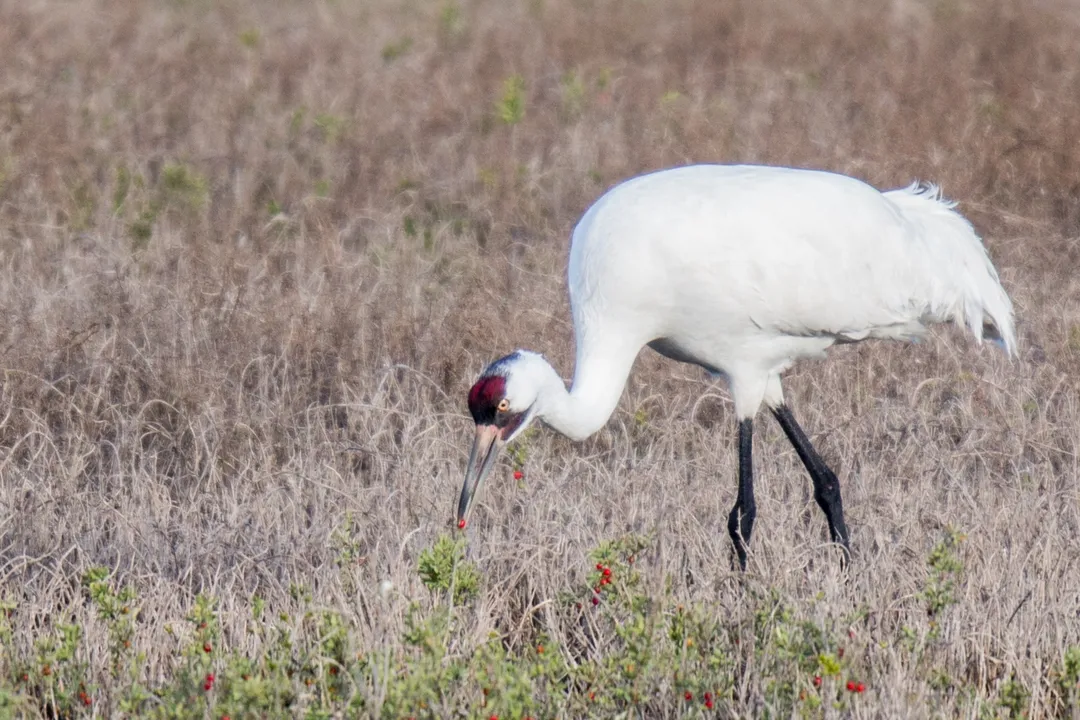
What evolutionary risk is magnified for the Whooping Crane population due to the severe genetic bottleneck experienced by the 21 survivors?
The population may lack the necessary genetic variation for rapid adaptation to novel diseases or sudden environmental shifts.
When a species crashes to such a low number as the 21 Whooping Cranes recorded in 1941, the resulting gene pool becomes exceptionally narrow, representing all the genetic material for the species' future. This dramatic reduction in genetic diversity severely limits the population's evolutionary potential moving forward. While conservation efforts are successful at increasing the sheer number of birds, the underlying genetic foundation remains constrained. This lack of variation means the population is highly susceptible to existential threats, such as the emergence of a new, highly virulent disease or a swift, extreme weather event impacting a vital stopover site, as the necessary protective adaptations might simply not exist within the surviving genes.