Are sarus cranes aggressive?
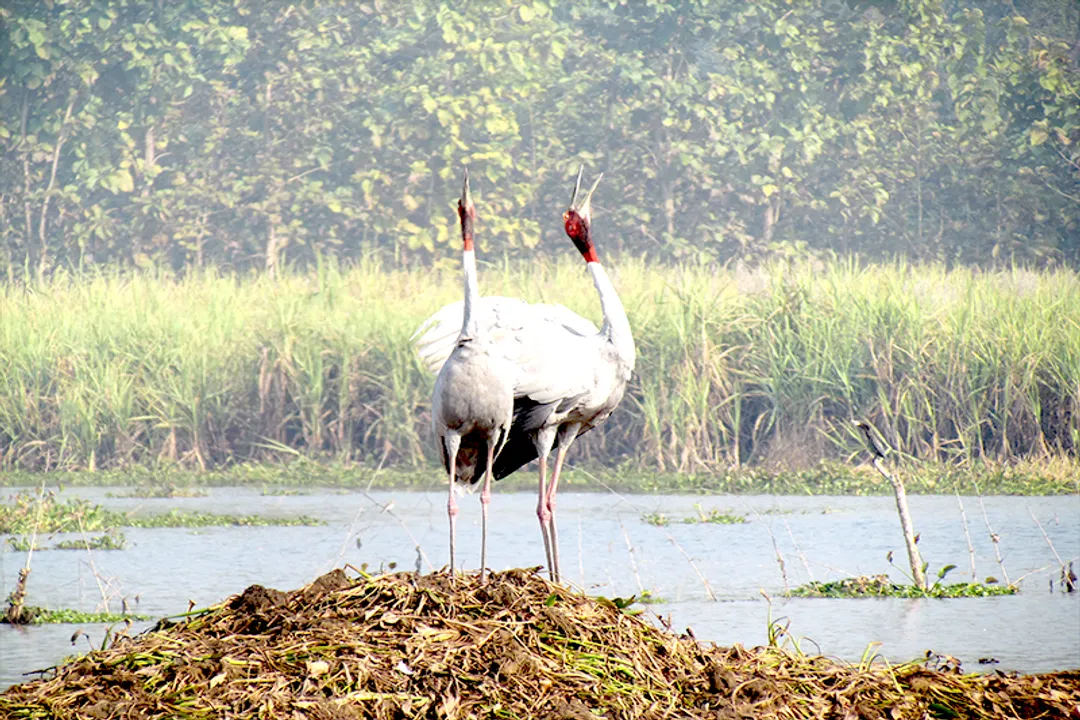
Sarus cranes, the world's tallest flying birds, command attention not just because of their imposing stature—which can reach nearly six feet high [2][3][4][5]—but also due to questions surrounding their temperament. While they are symbols of marital devotion in many Asian cultures, suggesting a gentle partnership, instances of spirited defense or outright aggression are also documented, making their overall disposition a subject worthy of closer examination. [4] The answer to whether they are aggressive isn't a simple yes or no; it is heavily dependent on context, season, and individual experience. [6]
# Physical Presence
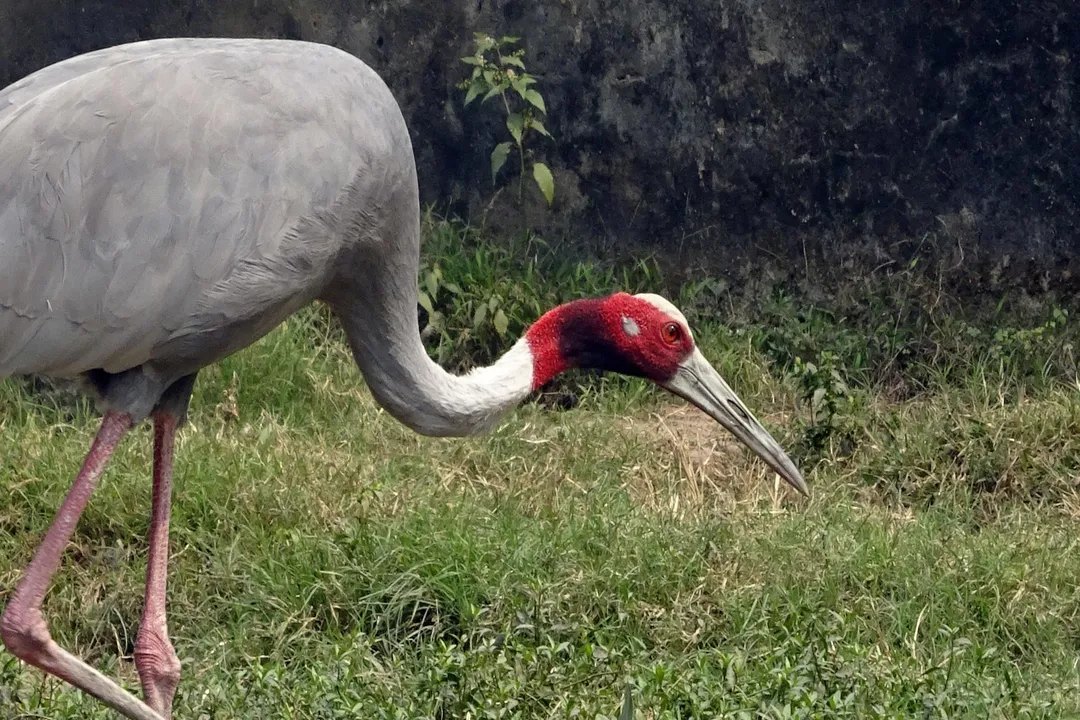
The sheer size of the Sarus crane provides immediate context for any potential confrontation. Standing almost as tall as a man, these elegant birds possess slate-gray plumage, strikingly red, featherless heads and necks in adults, and long, pale red legs. [2][3][5] Their size alone, coupled with a comparatively large beak, means that any defensive posture is visually amplified, potentially translating to an aggressive display in the eyes of an observer. [3] This imposing physical presentation means that even routine dominance displays can appear threatening to humans or other animals. [6]
They are generally considered the least social of the crane species. [5] In the non-breeding season, they may gather in small flocks within large wetland areas to feed and roost. [2][3] However, when the breeding season arrives, typically between June and September and dictated by the rainy season, these pairs isolate themselves and become fiercely protective of their nesting territory. [2][3][5]
# Territorial Defense
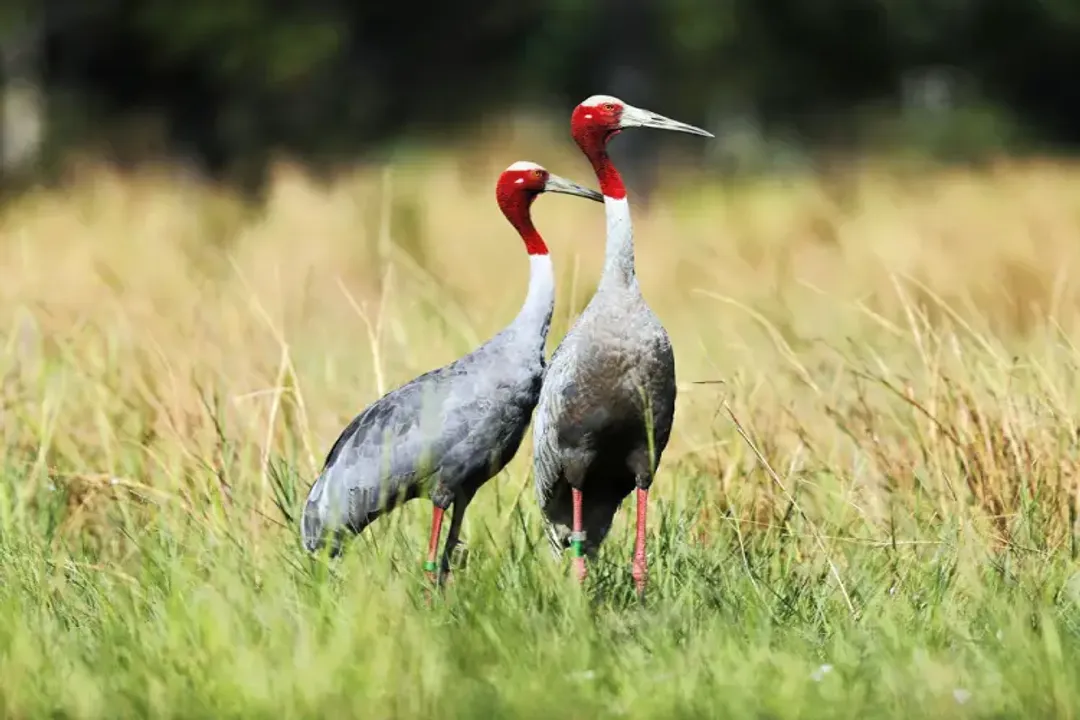
The primary driver for aggression in Sarus cranes appears to be the defense of their immediate space, especially when paired and nesting. [2][6] Mated pairs remain close to their water supply and will actively guard against any perceived intruder. [2] This territorial nature is not unique to the Sarus crane; as one observer noted after witnessing a male Red-crowned Crane slam against a fence in a threatening posture, cranes, in general, are highly territorial. [6]
Direct, high-intensity aggression has been observed against large animals that venture too close to a nest. In one recorded instance involving an Indian Sarus Crane, the bird actively attacked a Bluebull (Nilgai antelope) that strayed near its nest site, which contained a single egg. [7] The crane reportedly spread its huge wings and struck the bull from behind. [7] This single documented event shows a clear willingness to defend offspring and nesting sites against much larger mammals, utilizing its size and wingspan as weapons. [7]
In captive settings, this territoriality is often magnified when boundaries are poorly defined or when the birds feel overly crowded or exposed. [6] In enclosures, Sarus cranes have been noted waiting near viewing barriers, ready to strike visitors who approach too closely to the netting or window. [6] This behavior is linked to the feeling that their space has been invaded, prompting a swift attack. [6]
# Temperament Nuances
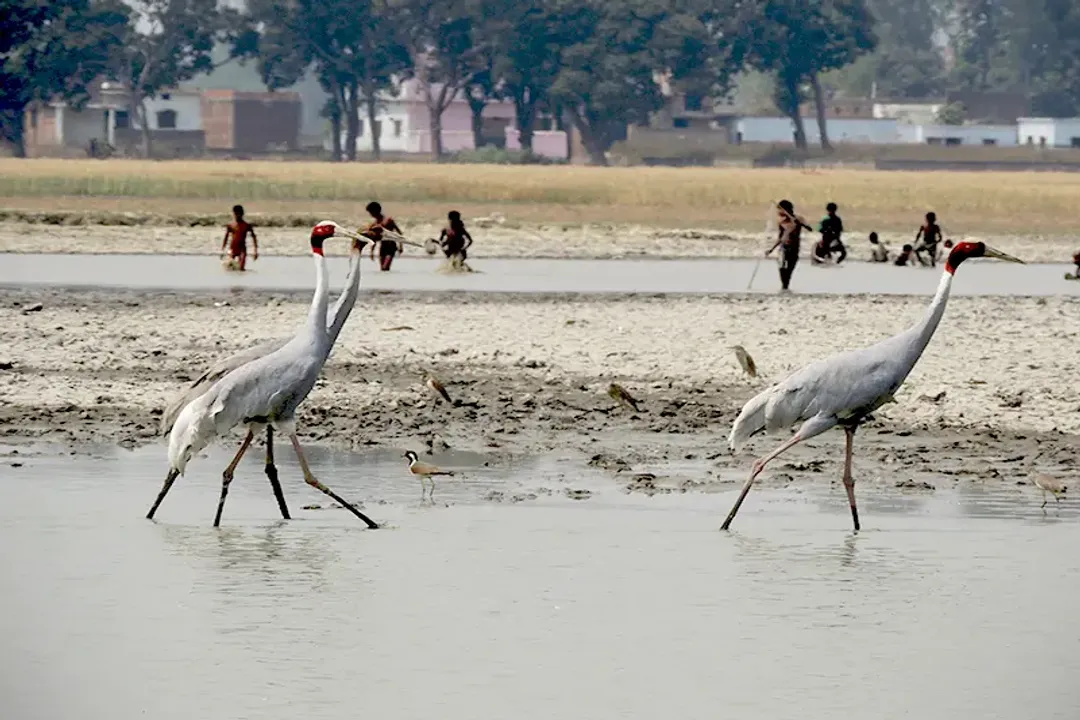
While territorial defense is well-documented, the general disposition of Sarus cranes varies significantly based on rearing history and individual personality. [6]
Experience shared within wildlife communities suggests that the level of human socialization plays a critical role:
- Parent-Reared Birds: Cranes raised by their parents, with a reasonable level of human activity nearby, generally develop a respectful distance from people and are considered easier to manage. [6]
- Hand-Reared (Imprinted) Males: These birds often become the most aggressive and fearless, viewing humans as peers or rivals. They may jump at people, use their legs to kick, and attempt to jab with their beaks, especially during the breeding season. [6] One forum user noted that an imprinted Sarus male would likely be quite dangerous and a terrible companion, despite the initial appeal of having a large bird around. [6]
- Hand-Reared (Imprinted) Females: These can sometimes become docile if kept alone, but this docility often vanishes if they take a mate, at which point they can become as aggressive as a male. [6]
It is interesting to contrast the Sarus crane's perceived temper with that of other species. Demoiselle cranes are often cited as the mildest in temperament, sometimes even living successfully in walkthrough exhibits where they can be fed by children. [6] Conversely, larger cranes, including the Sarus, White-naped, and Siberian, are generally characterized as being more aggressive. [6]
One anecdote from a zoo visit highlighted a stark difference: a visitor reported that a pair of large Sarus Cranes at one facility never acted aggressively toward them, offering no intimidation, which contrasted sharply with the behavior of smaller Red-crowned Cranes observed at another location. [6] This disparity strongly suggests that individual history and specific enclosure dynamics heavily influence how aggressive a Sarus crane appears to be on any given day. [6]
# Behavioral Displays Beyond Conflict
Aggression is not the only reason Sarus cranes engage in vigorous displays. They are renowned for their elaborate courtship dances, which involve bobbing and wing displays, often accompanied by loud, trumpeting calls. [2][4][5] These complex unison calls between mated pairs become more synchronized the longer the pair remains together. [5] Furthermore, dancing is not strictly limited to attracting a mate; the birds also use these physical displays to relieve tension or strengthen the existing pair bond. [4] In situations where they feel threatened but perhaps not ready for full physical conflict, these dances may serve as a form of intimidation to ward off intruders without escalating to injury. [4][6]
The sound production itself is remarkable. The Sarus crane’s trachea, or windpipe, has a unique modification: it coils into a chamber that helps amplify its loud trumpeting calls, which can travel for several miles. [4][5] This vocalization, combined with large, open wings, is a powerful tool for communication and establishing boundaries.
When assessing the potential for aggression, it is useful to consider that Sarus cranes can also be domineering in mixed-species settings when they choose to be. Due to their stature, they can easily assert dominance over other crane species, chasing away Siberian or European Cranes from foraging areas simply by taking a few stiff-legged steps toward them. [5] However, they occasionally call with other species, prioritizing the safety in numbers against predators over complete solitary foraging. [5]
When observing these magnificent birds, particularly in a wild or semi-wild setting, it’s prudent to acknowledge the very real potential for defensive action. The very tools they use for courtship—the wide wingspan and powerful stances—become the instruments of defense when a perceived threat nears their nest. [2][7] The difference between a courtship display and an aggressive defense can sometimes be minute, relying on subtle cues like the brightness of their red coloring during breeding season. [2][4]
# Practical Considerations for Proximity
For those who encounter Sarus cranes in the wild or managed reserves, understanding the triggers is the best defense. Given that they have adapted to human-altered environments, including agricultural areas like rice paddies, close encounters are possible. [2][3][5] The fact that they sometimes feed on crops has unfortunately led some farmers to view them as pests, which can lead to persecution. [3]
If you are in an area known to house nesting pairs, maintaining a substantial buffer zone is key. Since their aggression is context-specific—peaking during breeding season—avoiding areas with visible nests or young chicks is the most reliable action. [2][6] It's worth noting that if a crane couple has been unsuccessful in raising chicks, they might be more likely to split up, but even a pair that has successfully raised young remains highly motivated to protect future nesting sites. [3]
When interacting with large cranes, especially in zoo settings where they might be imprinted, remember that even a non-breeding bird can become defensive if startled or approached too quickly. [6] While Demoiselles might be known for their mildness, the Sarus crane is consistently mentioned alongside the White-naped crane as being one of the more aggressive species, though individual temperament always factors in. [6]
Ultimately, the Sarus crane is not inherently malicious toward humans; rather, it is fiercely dedicated to its mate and its territory. [2][6] Their aggressive moments are overwhelmingly defensive reactions to perceived intrusions into their private sphere, whether that intrusion is a rival crane, a large antelope, or an overly curious visitor standing too close to an enclosure fence. [7][6] Recognizing their impressive power and respecting their spatial needs allows for the appreciation of these unique birds without becoming the target of their powerful defense mechanisms. [5]
Related Questions
#Citations
Sarus Crane - Visit the Virginia Zoo Animals Today!
Crane, Sarus - Safari West
Sarus Crane: Species in World Land Trust reserves
Sarus Crane | Birds Wiki - Fandom
Which Crane Species Are Nice In Temperment? - ZooChat
This is an Indian Saras Crane attacking a Bluebull from behind, the ...
Sarus Crane – Wereldtuinen Mondo Verde