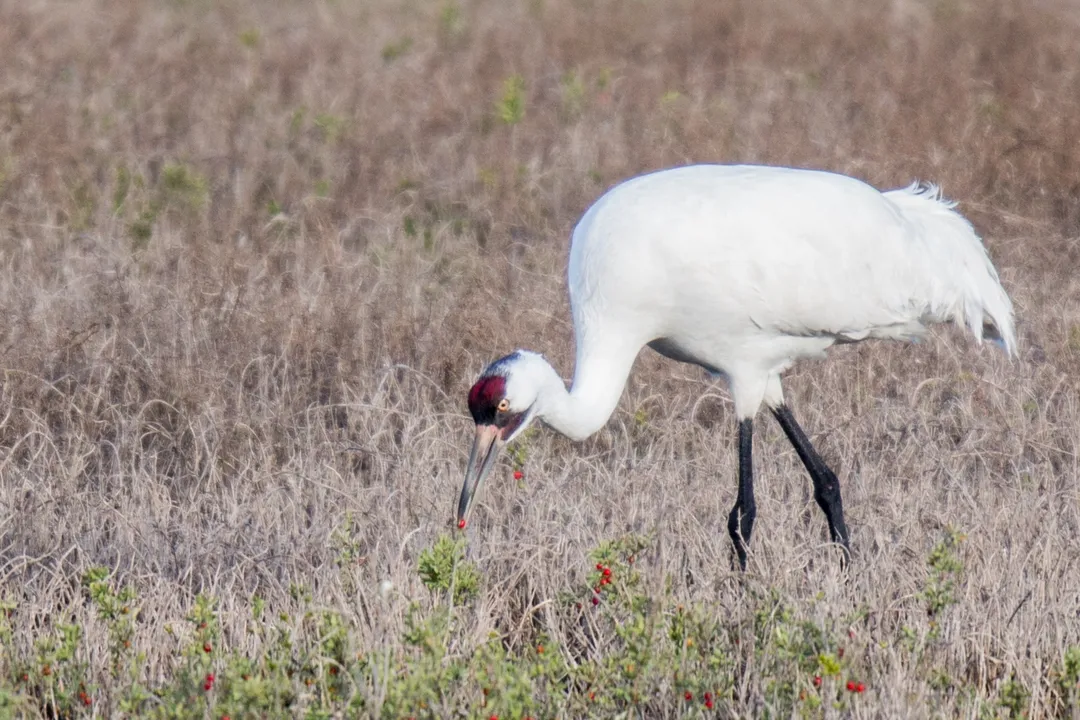
What combination of life history traits characterizes the Whooping Crane's evolutionary strategy based on K-selection?
Delayed maturity, low annual output, and high individual longevity.
The Whooping Crane's life history is a direct reflection of K-selection, an evolutionary approach favored in stable, predictable environments where high numbers are less important than the survival of the few offspring produced. Key components of this strategy include a significant delay before reaching sexual maturity, typically between four and seven years of age. Furthermore, they have a very low annual reproductive output, usually producing only one fledgling per pair per year. This low rate of replacement is balanced by a long lifespan, with individuals frequently living past 22 years in the wild, allowing them many chances to reproduce successfully over their lifetime, provided they survive environmental stability.