What is special about sarus cranes?
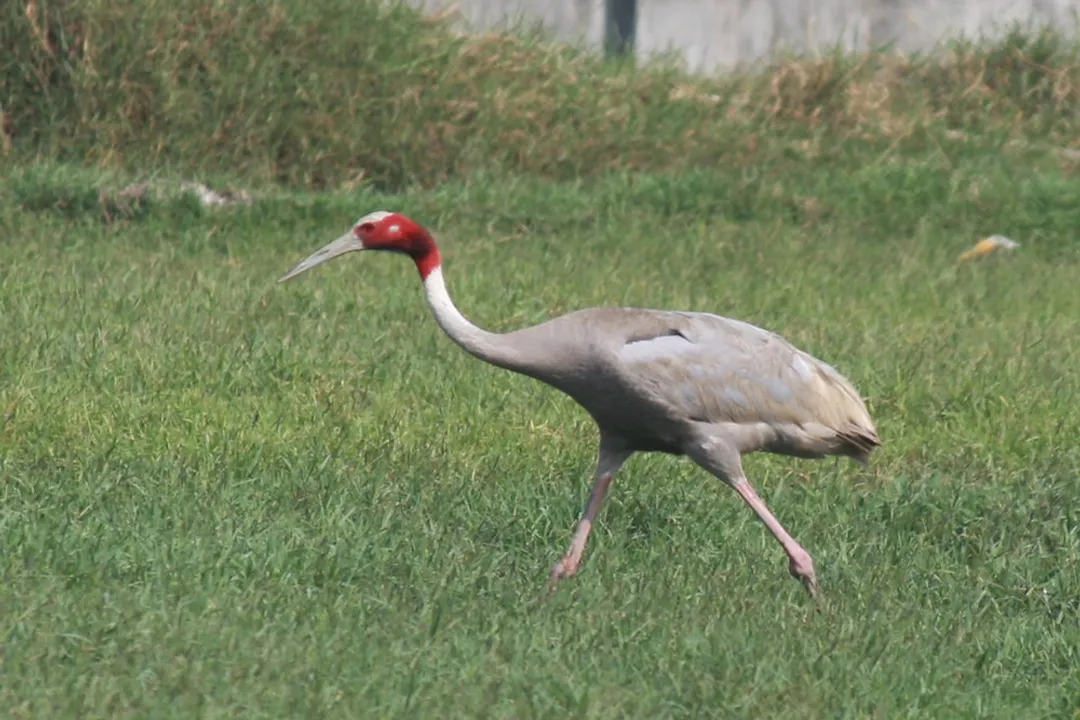
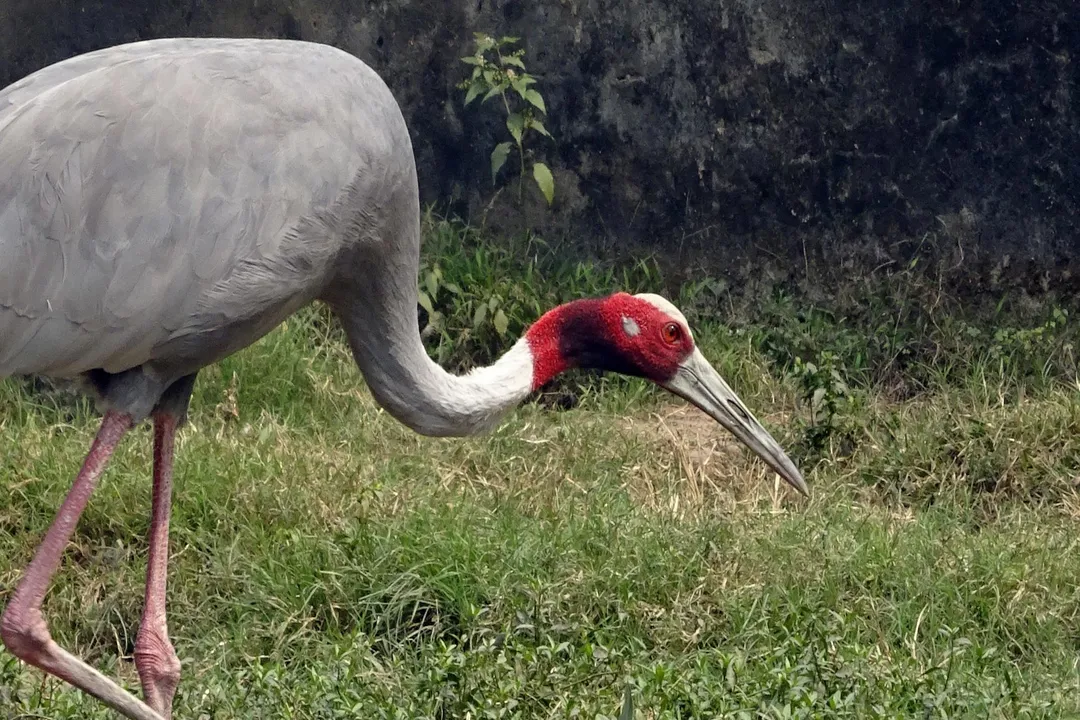
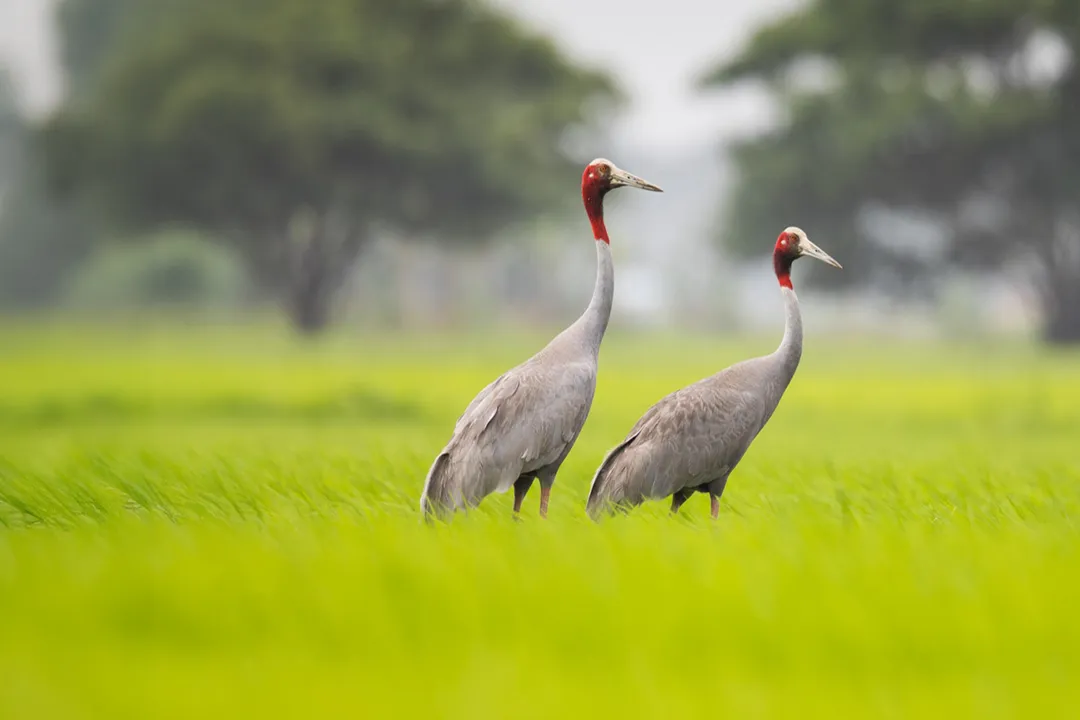
The Sarus Crane commands attention simply by existing; it is recognized across its native lands as the world’s tallest flying bird. [1][3][9] This magnificent creature, often described with terms like elegance and grace, possesses a stature that immediately sets it apart from other avian species. [8] Standing nearly six feet tall in some instances, its sheer size is matched by a striking appearance dominated by distinct coloration. [1][3][9] Its body is largely covered in soft gray plumage, which provides a muted backdrop for the vibrant red skin that covers its head and the upper portion of its neck. [1][2][7] This high-contrast pattern, combined with long legs and an equally long neck, gives the Sarus Crane an unmistakable profile as it strides through wetlands. [3][4]
# Stature Color
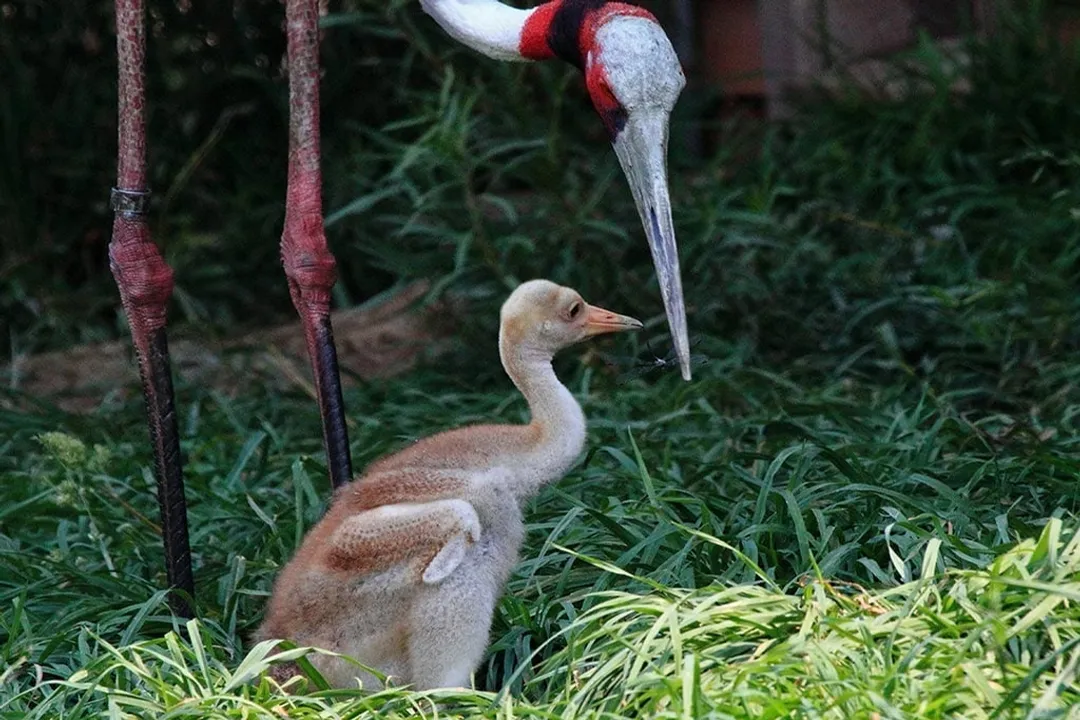
The measurements associated with this species place it firmly in the category of giants among birds capable of flight. [1][9] While exact height can vary, sources indicate they can reach heights of up to $5.9$ feet or about $1.8$ meters. [1] Another common measurement puts their standing height around $5$ feet. [3] This impressive height is a defining characteristic, establishing the Sarus Crane as the tallest flying bird known. [1][9]
The visual appeal stems largely from the distinct color segmentation. The main body is a uniform gray. [2][6] Contrasting sharply with this is the bare skin of the head and upper neck, which is a vivid, almost startling red. [2][7] The lower section of the neck often features a contrasting patch of white, which completes its signature look. [1]
# Lifelong Pairing
One of the most enduring and touching aspects of Sarus Crane behavior is their remarkable commitment to one another. These birds form monogamous relationships that are maintained throughout their entire lives. [1][2][6] The strength of this pair bond is evident in their coordinated activities, particularly during the breeding season. [3][9]
This commitment is not merely theoretical; it dictates their entire social structure. They are known to stay with the same partner year after year, which is a rare trait in the animal kingdom. [6] This dedication likely contributes to the success of their breeding efforts, as established pairs have a proven history of cooperation. [1]
# Mating Dance
The establishment and reaffirmation of this lifelong bond are celebrated through elaborate and engaging behavioral displays. [8] When the time comes to court or reinforce their commitment, Sarus Cranes engage in a spectacular courtship ritual. [6][8] This display is quite energetic, involving a sequence of movements that appear both graceful and slightly comical. [5][8]
The ritual commonly includes a series of synchronized actions:
- Bowing deeply to one another. [5][6]
- Engaging in loud calling exchanges. [6]
- Sudden leaps or bounds into the air. [5]
- Running across the ground with wings slightly spread. [5]
These captivating behaviors serve to cement the connection between the partners, showcasing their fitness and synchronicity to each other. [6]
# Nesting Foraging
The Sarus Crane demonstrates significant architectural ambition when it comes to reproduction. They construct exceptionally large nests using available marsh vegetation. [3][4][7] These structures are typically placed in shallow water or marshy environments, offering a degree of protection for the eggs and subsequent chicks. [2][3][4]
To truly grasp the scale of these nests, one needs a point of comparison. While the birds themselves stand around five feet tall, their nests can measure up to 13 feet, or about 4 meters, in diameter. [1][3] To put that into perspective, this means a pair of cranes constructs a platform large enough to comfortably seat two adults without them touching the water below, a substantial feat of avian engineering relying solely on gathered plant matter. [1][3]
Their diet reflects a broad opportunistic approach to finding sustenance in their wetland homes. The Sarus Crane diet is varied, including aquatic vegetation, roots, and tubers. [3][7] They supplement this plant intake with animal protein, consuming insects, snails, small frogs, reptiles, and other small vertebrates they can forage or catch. [1][3][4] Grains also feature prominently in their meals when available. [3][4][7]

# Loud Calls
The presence of a Sarus Crane pair is rarely a quiet affair, thanks to their impressive vocal capabilities. [5] Their call is frequently described as a loud, resonating trumpet. [1][3][8]
This vocalization is deep and carries far across the landscape, serving as an essential component of their communication repertoire. [1] It is used for territorial defense, maintaining contact between mates, and possibly as part of the pair-bonding and courtship displays. [5][6] The sheer volume and distinct quality of the trumpet make it a signature sound of the habitats they occupy. [3]
# Range Status
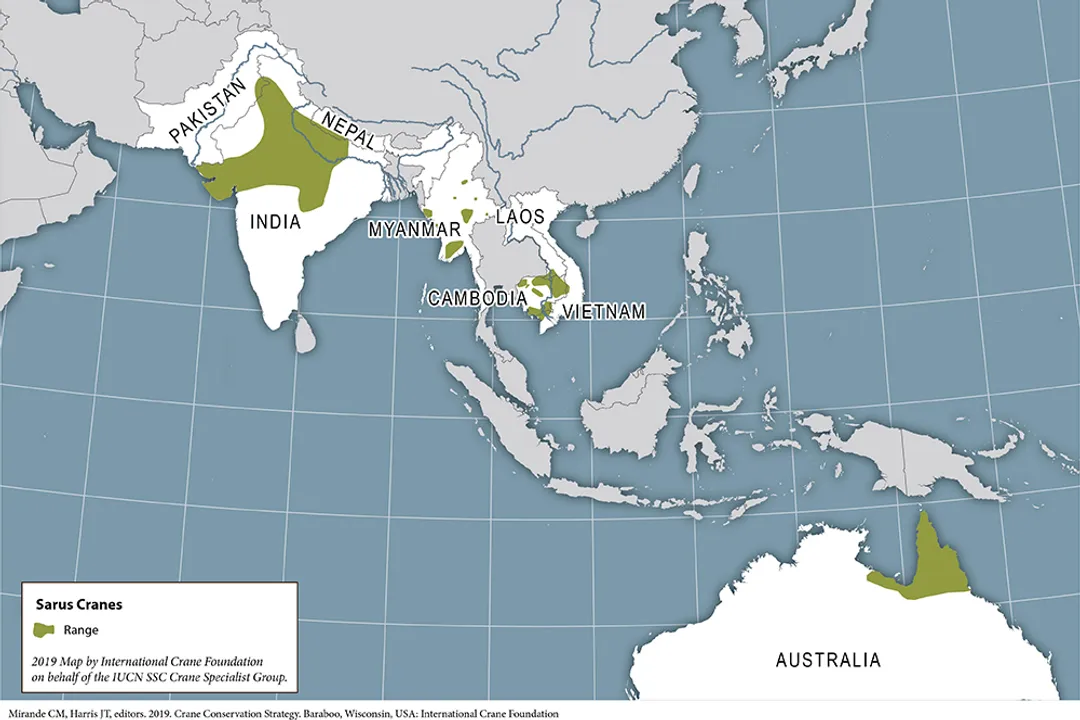
Historically, the Sarus Crane boasted a reasonably wide distribution across South and Southeast Asia. [9] Today, however, the primary strongholds for the species are concentrated in India and Nepal. [1][9] While populations once existed elsewhere, including Cambodia and Vietnam, their presence there has diminished significantly. [1]
This geographic shift underscores the pressures the species faces. The current concentration in India and Nepal means that habitat protection and management in these regions are critically important for the survival of the species globally. [9] Reflecting these ongoing threats from habitat loss and degradation, the International Union for Conservation of Nature (IUCN) lists the Sarus Crane as Vulnerable. [1][3] Observing the historical map versus the current one reveals a clear pattern of range contraction, suggesting that successful conservation strategies in their remaining core areas are not just beneficial but essential to prevent further decline. [9]

# Long Life
Beyond their physical grandeur and social dedication, Sarus Cranes possess impressive longevity. [6] While many birds have relatively short lifespans, these cranes can enjoy a surprisingly long existence in the wild. [1] Some individuals have been recorded living for over 50 years in captive settings, with life spans reaching as high as 80 years noted in some accounts. [1][6] This long life expectancy provides a large window for breeding success, making the survival of older, experienced birds especially important to the population's overall health.
Related Questions
#Citations
Sarus crane - Wikipedia
Sarus Crane - Home - Brights Zoo
Sarus Crane - International Crane Foundation
Sarus Crane - Denver Zoo Conservation Alliance
Sarus cranes are known for a lot of impressive traits, including ...
Sarus Crane | Saint Louis Zoo
Crane, Sarus - Safari West
Sarus cranes-Elegance, Grace and Intrigue rolled into one
Sarus Crane : the tallest flying bird