What specific disease is mentioned as potentially being prevented by incorporating dietary variety into the Yellow Tang regimen?
Answer
Marine White Spot Disease (Ich)
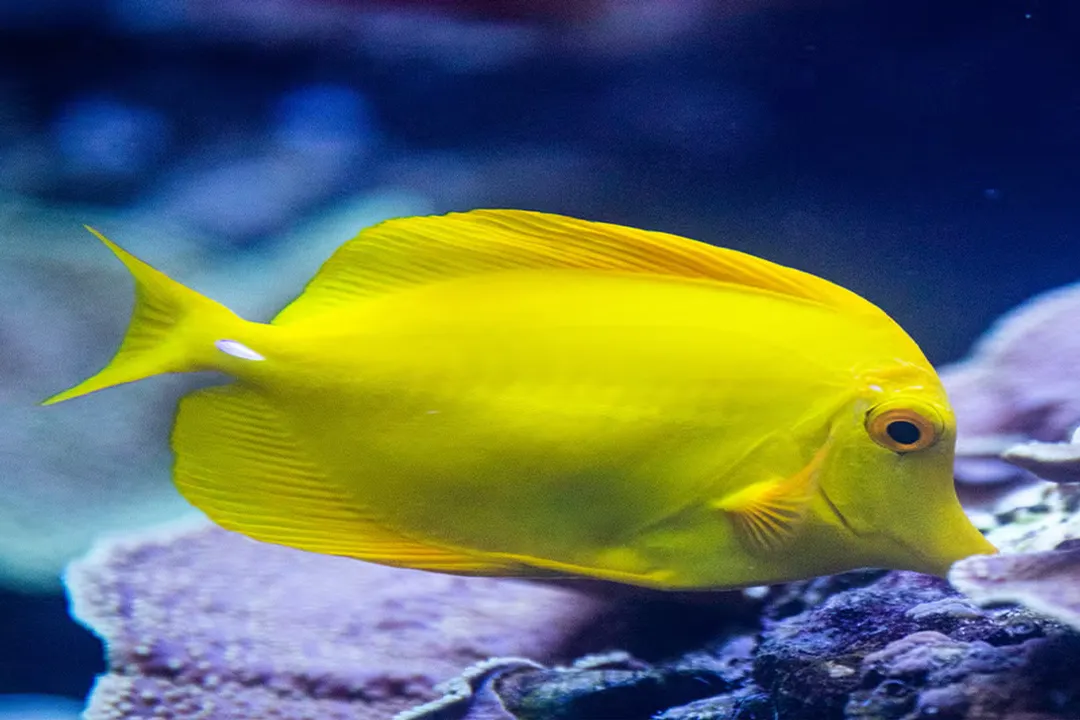
While algae forms the fundamental bulk of the required nutrition, relying solely on one type of food source, even if it is the correct type (like only Nori), can lead to long-term nutrient deficiencies within the fish. To ensure overall robust health and systemic support, it is imperative that keepers introduce variety into the feeding rotation. This supplementation helps shore up any potential gaps in the staple diet. Specifically, this practice is cited as essential for maintaining slime coat health and potentially preventing parasitic outbreaks such as Marine White Spot Disease, commonly known as Ich.
Related Questions
What type of nutrition is the digestive system of a Yellow Tang optimized for, given their herbivore classification?What staple dried seaweed is recommended for *Zebrasoma flavescens*, and what nutrient should it ideally be enriched with?How long should sheets of Nori secured with feeding clips be left available to simulate continuous grazing activity?If incorporating supplements, how frequently should frozen protein sources like Mysis shrimp be introduced to a Yellow Tang's diet?What specific disease is mentioned as potentially being prevented by incorporating dietary variety into the Yellow Tang regimen?What critical vegetable or Spirulina content must manufactured flake and pellet foods possess for herbivorous tangs?If a newly introduced Yellow Tang refuses prepared food, what practical first step might temporarily shock a starving fish into consuming plant matter?What positive activity demonstrates a reluctant Yellow Tang is in better condition than one that is listless?Why is the continuous, low-volume intake of algae essential for the well-being of a reef grazing Yellow Tang?What is a direct consequence if a Yellow Tang is allowed to go hungry for extended periods throughout the day?