How is the genus *Diomedea* generally characterized to separate it from *Thalassarche*?
Answer
Immense wingspans, often exceeding three meters
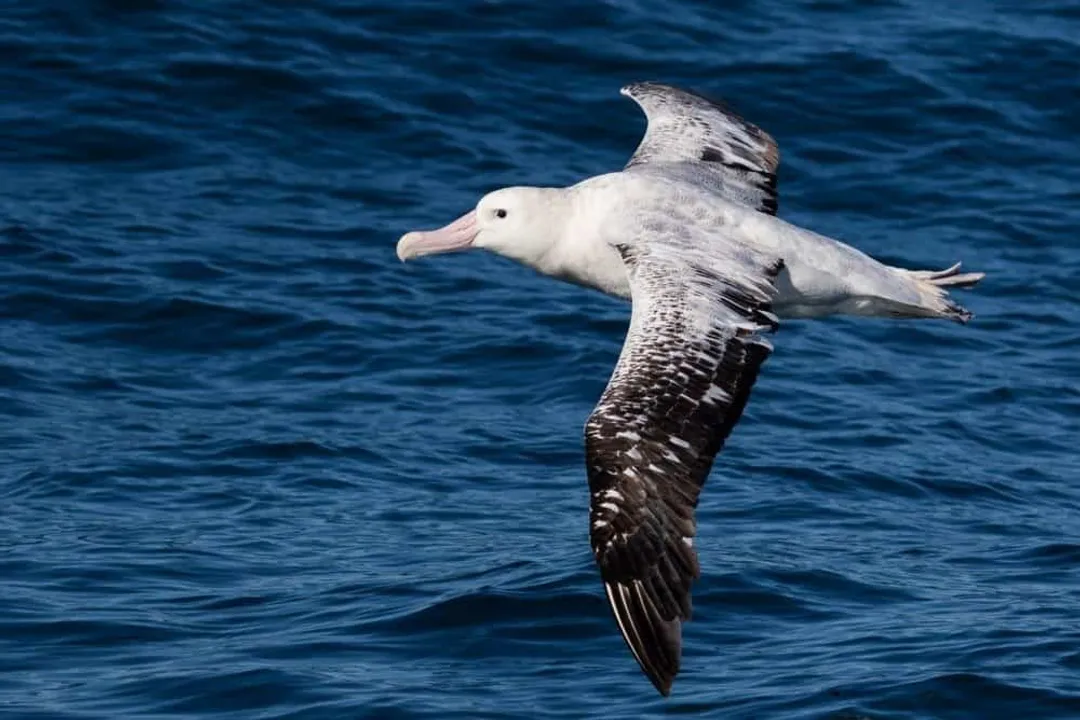
The genus *Diomedea* is specifically designated as the group containing the great albatrosses, and their defining characteristic separating them from smaller albatrosses, such as those in the genus *Thalassarche* (mollymawks), is their sheer scale. These birds possess immense wingspans that frequently surpass three meters in extent. This significant size differential, particularly regarding wing morphology optimized for long-distance soaring, forms a major criterion for inclusion in the *Diomedea* genus. Other genera, like *Phoebastria* (North Pacific albatrosses) or *Thalassarche*, do not typically reach these dimensions, marking the immense wingspan as the key distinction at the genus level.
Related Questions
What characteristics define the Class Aves grouping for the Wandering Albatross?What specific anatomical feature defines the Order Procellariiformes grouping?What physiological adaptation helps define Family Diomedeidae wingspans?How is the genus *Diomedea* generally characterized to separate it from *Thalassarche*?What meaning is encapsulated by the Latin derivation of the species name *exulans*?Which of these examples is cited as a recognized subspecies within *D. exulans* by Avibase?Which global authority is highlighted for documenting historical synonyms alongside the accepted binomial nomenclature?What is the estimated maximum longevity documented for individuals of *Diomedea exulans*?What reproductive trait and corresponding life history strategy define Family Diomedeidae?Which historical synonym mentioned might have previously been used for *D. exulans* but now refers to the Grey-headed Albatross?