What sound characteristic earned the domestic yak the name Bos grunniens given by Linnaeus?
Answer
Grunting throughout the year
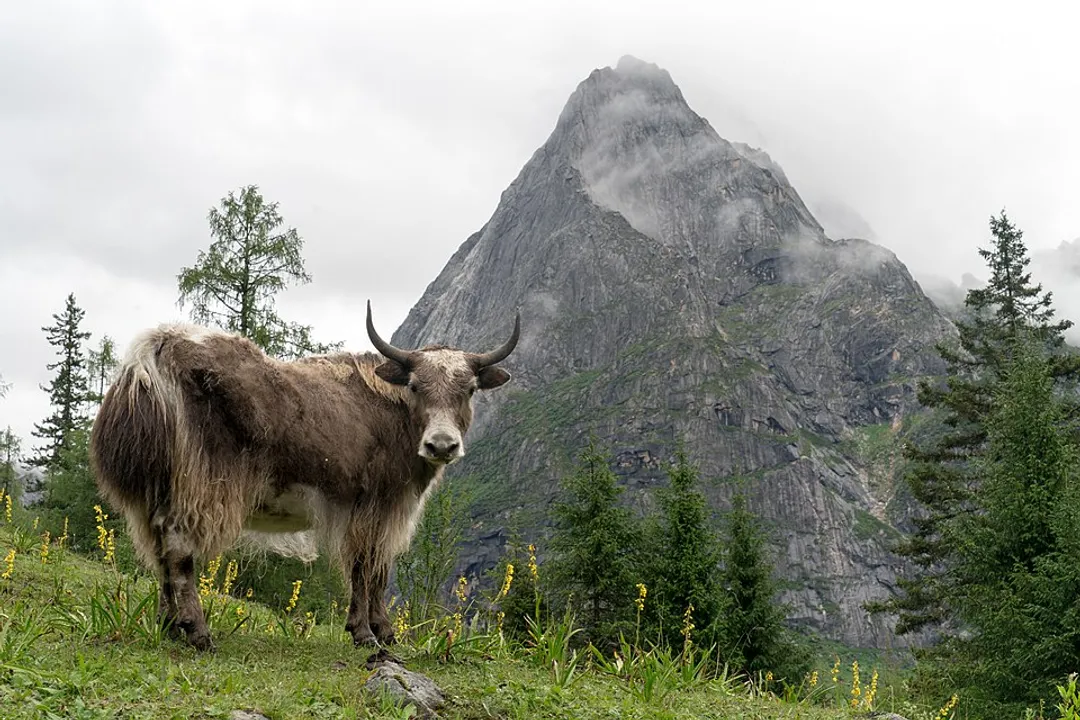
The scientific epithet *grunniens*, assigned by Linnaeus in 1766, translates directly to "grunting bull." This name was bestowed because domestic yaks are known to exhibit a characteristic grunting vocalization consistently throughout the entire year. This continuous auditory presence contrasts with the observation of the wild form and reflects the animal's consistent proximity to human settlements, which influenced the original scientific labeling.
Related Questions
What sound characteristic earned the domestic yak the name Bos grunniens given by Linnaeus?Why did Nikolay Przhevalsky designate the wild yak with the name Bos mutus, translating to "mute bull"?What closer evolutionary relationship do current genomic evidence and mitochondrial DNA analyses suggest yaks share?What is the IUCN conservation status listed for the wild yak, *B. mutus*, which is protected under CITES Appendix I?What is the taxonomic implication if genomic data confirming a closer link between yaks and bison proves accurate for the genus *Bos*?Which historical classification placed the yak in a separate genus or subgenus due to its physiological distance from lowland cattle?What specific profound physiological adaptations enable yaks to survive high altitudes where cattle suffer from altitude sickness?How does the Tibetan language classification of yaks based on sex contrast with generalized Western nomenclature?What is the significance of maintaining *Bos mutus* as the officially recognized entity for conservation status tracking, despite academic discussions about paraphyly?What evidence points toward the domestication of the wild yak occurring over 2,500 years ago on the Qinghai-Tibetan Plateau?