How does the Tibetan language classification of yaks based on sex contrast with generalized Western nomenclature?
Answer
Tibetan uses *g.yag* for male and *'bri* (dri) for female, unlike most languages defaulting to 'yak'
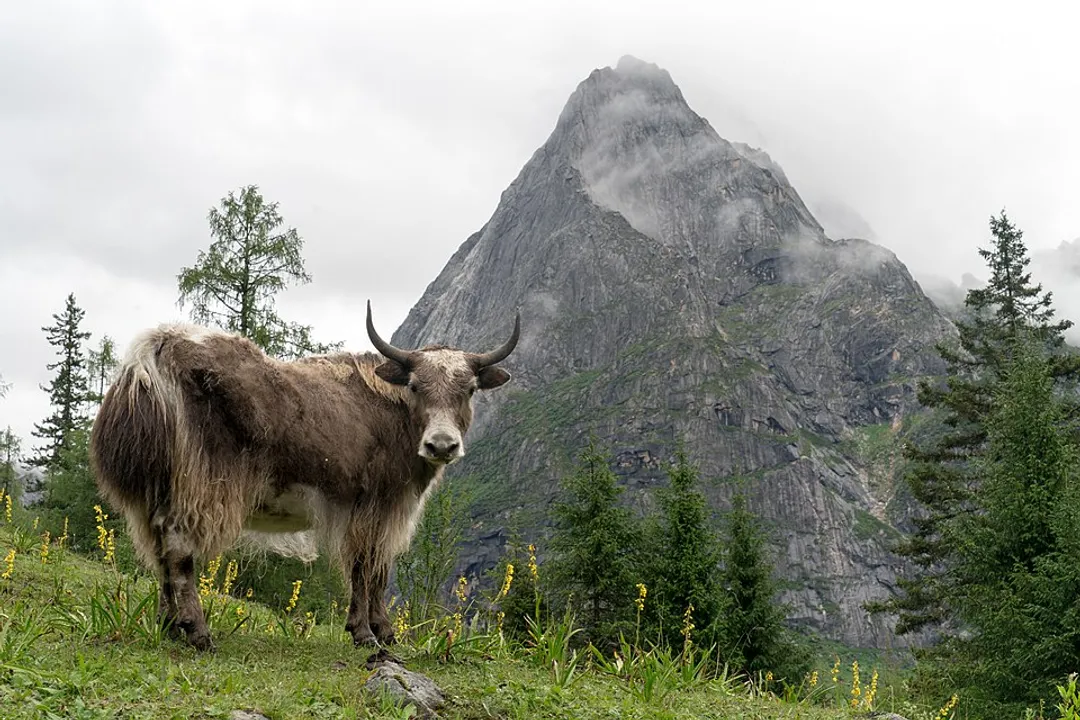
The Tibetan language demonstrates a specific cultural classification based on sex, which is often overlooked in broader linguistic contexts. In Tibetan, the term *g.yag* is used specifically to denote a male yak, whereas the female is referred to as *'bri* (dri). This contrasts sharply with most other languages, including English, where the general term 'yak' is applied to both sexes unless specific qualifiers like 'bull' or 'cow' are introduced. This divergence highlights how traditional cultural systems often create functional distinctions that differ from the purely biological categorization systems like Linnaean taxonomy.
Related Questions
What sound characteristic earned the domestic yak the name Bos grunniens given by Linnaeus?Why did Nikolay Przhevalsky designate the wild yak with the name Bos mutus, translating to "mute bull"?What closer evolutionary relationship do current genomic evidence and mitochondrial DNA analyses suggest yaks share?What is the IUCN conservation status listed for the wild yak, *B. mutus*, which is protected under CITES Appendix I?What is the taxonomic implication if genomic data confirming a closer link between yaks and bison proves accurate for the genus *Bos*?Which historical classification placed the yak in a separate genus or subgenus due to its physiological distance from lowland cattle?What specific profound physiological adaptations enable yaks to survive high altitudes where cattle suffer from altitude sickness?How does the Tibetan language classification of yaks based on sex contrast with generalized Western nomenclature?What is the significance of maintaining *Bos mutus* as the officially recognized entity for conservation status tracking, despite academic discussions about paraphyly?What evidence points toward the domestication of the wild yak occurring over 2,500 years ago on the Qinghai-Tibetan Plateau?