What sequence is observed when studying wild capuchin stone tool use traditions?
Answer
Selection, transportation to an anvil site, and forceful impact
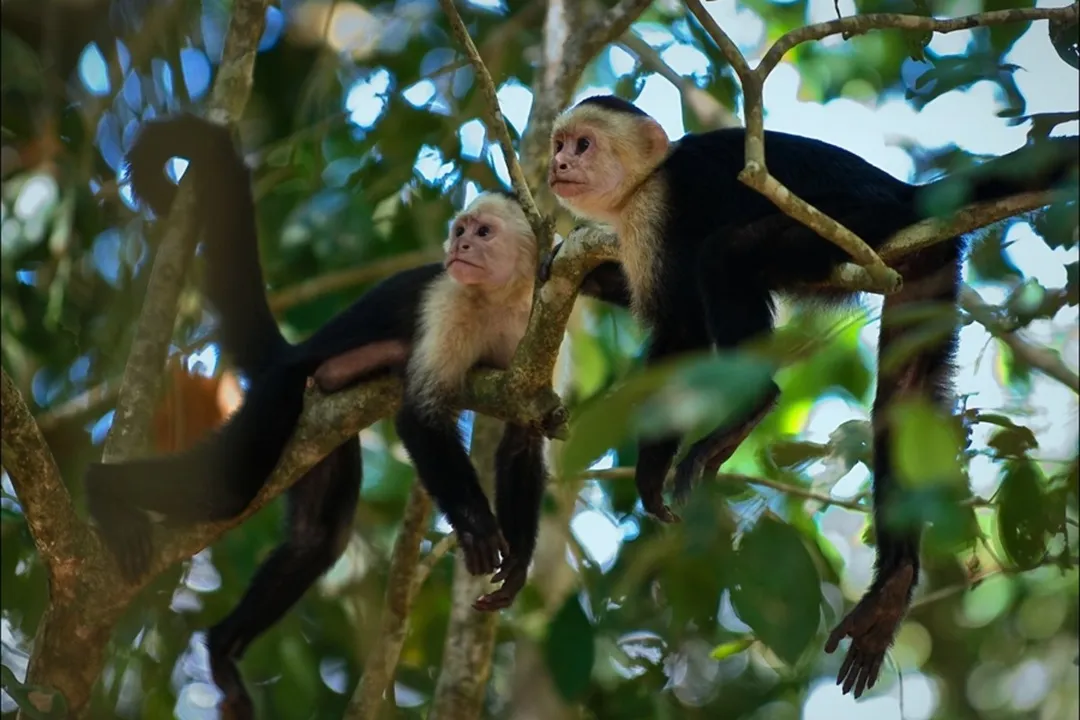
Direct observation of contemporary white-faced capuchin groups confirms that their stone tool usage is a deliberate, multi-step process rather than a random action. Researchers document the entire sequence of this 'Stone Age' behavior: first, the accurate selection of an appropriate stone deemed suitable for use as a hammer. Second, the animal must transport this hammer, sometimes over a distance, to a designated location recognized as a stable anvil site. The final step involves applying the necessary force through repeated, accurate impacts onto the target food item resting on the anvil to successfully gain access to the meal.
Related Questions
What specific stone tool technique do white-faced capuchins use stones for in the wild?What aspect of evolution is suggested to outpace anatomical evolution in capuchins?Approximately when did the *Sapajus* genus diverge from the *Cebus* genus?How did the *Cebus* lineage achieve ecological dominance despite their relatively small size?What mechanism allows behavioral variation like tool use traditions to spread non-genetically?What aspect of the white-faced capuchin's ecology is reflected in its palate and jaw structure?What regions describe the distribution of the white-faced capuchin?Selection pressure on which capability may become a primary driver of evolutionary success in capuchins?What sequence is observed when studying wild capuchin stone tool use traditions?What is the likely role of the sharp contrast between white fur and dark skin around the eyes?