White-Faced Capuchin Scientific Classification
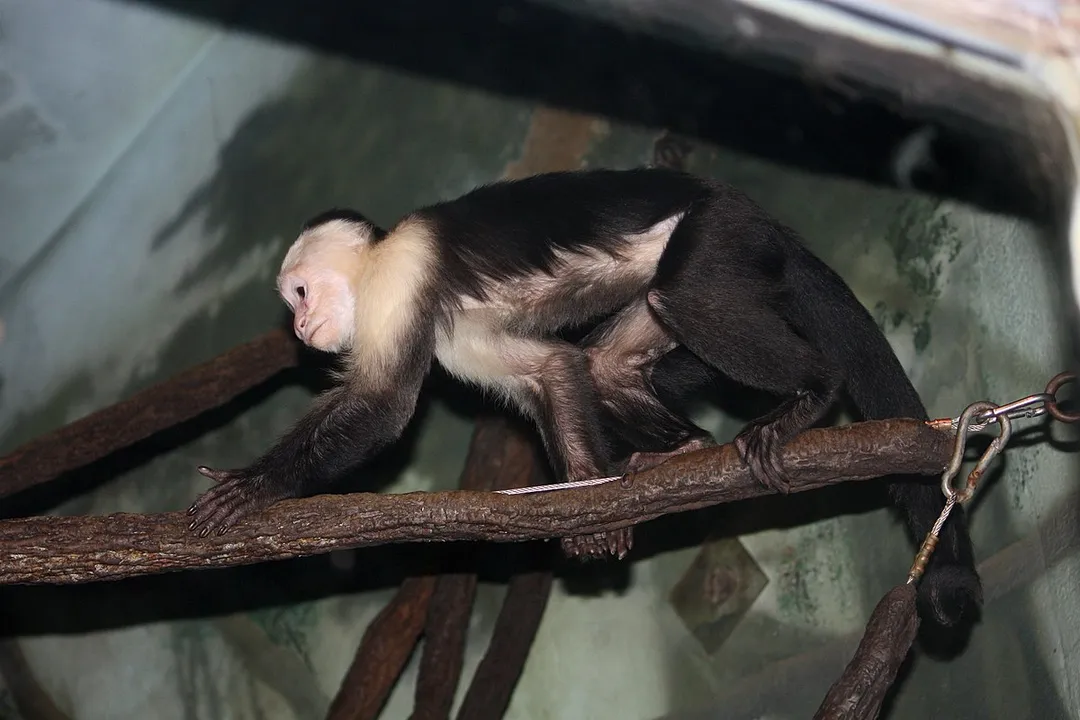
The precise scientific placement of the white-faced capuchin is a topic reflecting the ongoing refinement in primate taxonomy, particularly as researchers distinguish between closely related species sharing similar common names. Often, when people refer to the white-faced capuchin, they are thinking of Cebus capucinus, sometimes called the Colombian white-faced capuchin, or perhaps one of its close relatives like Cebus imitator or Cebus albifrons. [1][6][7] Understanding its Linnaean hierarchy is key to appreciating its evolutionary position among New World monkeys.
# Kingdom Animalia
At the most general level, the white-faced capuchin falls squarely within the animal kingdom, Animalia. [3] This classification immediately places it within the vast group of multicellular, heterotrophic organisms whose cells lack cell walls. This broad grouping is the starting point for all subsequent, more specific biological categorizations, grounding the monkey within the larger web of life on Earth. [4]
# Phylum Chordata
Moving down the classification ladder, the next significant grouping is the phylum Chordata. [3] Membership in this phylum signifies that the animal possesses, at some point in its life cycle, a notochord, a dorsal hollow nerve cord, pharyngeal slits, and a post-anal tail. [4] For a primate like the capuchin, which is a vertebrate, this classification is fundamental, placing it alongside fish, amphibians, reptiles, birds, and mammals. [2]
# Class Mammalia
The capuchin is clearly a member of the class Mammalia. [3] This means it shares defining characteristics with other mammals, such as possessing mammary glands to nurse its young, having hair or fur covering its body, and being warm-blooded, or endothermic. [4] The presence of three middle ear bones and a neocortex in the brain further solidifies its place within this highly successful vertebrate class. [2]
# Order Primates
The order Primates is where the capuchin begins to show characteristics familiar to humans, such as enhanced vision, opposable thumbs (though less pronounced than in some other groups), and complex social behaviors. [4] Within this order, the capuchins belong to the suborder Haplorrhini, which groups them with tarsiers, monkeys, apes, and humans, distinguishing them from the strepsirrhines like lemurs and lorises. [3]
# Suborder Differences
The New World monkeys, which include the capuchins, belong to the infraorder Platyrrhini, characterized by flat noses with nostrils pointing outward—a key difference from Old World monkeys. [4] The capuchins themselves are part of the family Cebidae, which groups them with squirrel monkeys and titi monkeys, separating them from the larger New World monkeys like spider monkeys and howler monkeys that belong to Atelidae. [2] It is a common point of interest that while the family Cebidae is well-established, there can be variations in how the classification tree is displayed across different taxonomic authorities, though the general grouping remains consistent. [3]
# Genus Level Grouping
The genus Cebus contains several species sometimes generalized under the "capuchin" umbrella, and this is where the scientific designation becomes more crucial for precise identification. [1][7] Historically, many capuchins were lumped into fewer species, but modern genetic analysis has helped split them into distinct units. [6] The general genus Cebus places them among the robust, intelligent monkeys famous for tool use and complex social structures. [8]
# Cebus capucinus Designation
The most commonly recognized species associated with the C. capucinus name is the Colombian white-faced capuchin or white-headed capuchin. [1] Its systematic classification follows this path:
- Kingdom: Animalia [2]
- Phylum: Chordata [2]
- Class: Mammalia [2]
- Order: Primates [2]
- Family: Cebidae [2]
- Genus: Cebus [2]
- Species: C. capucinus [2]
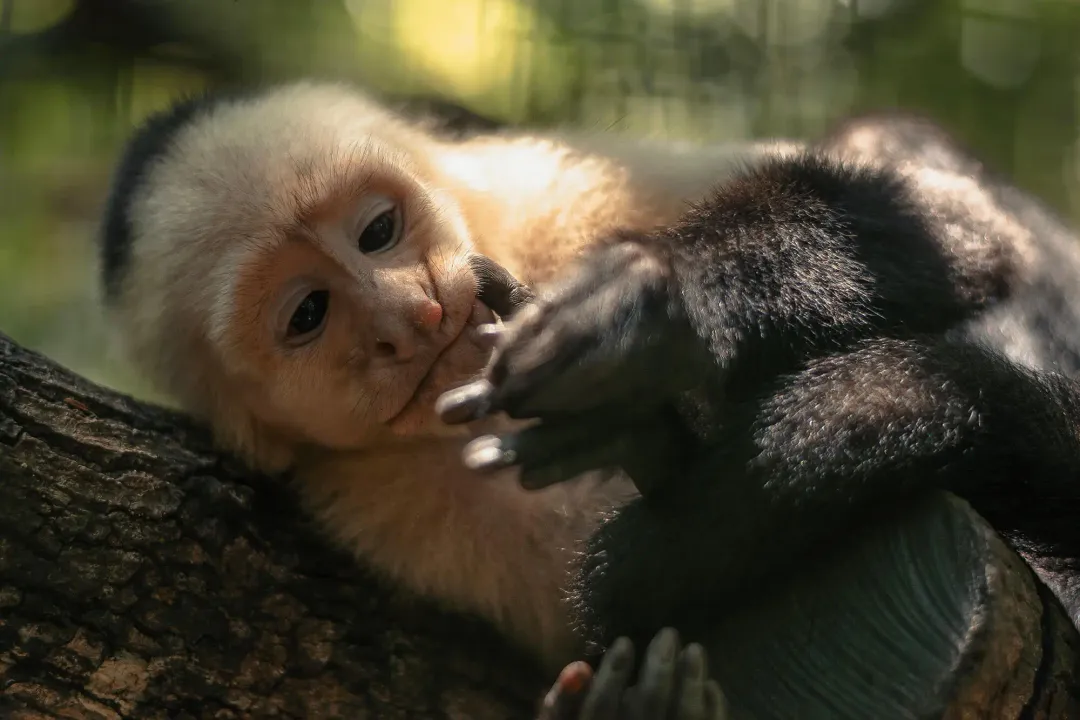
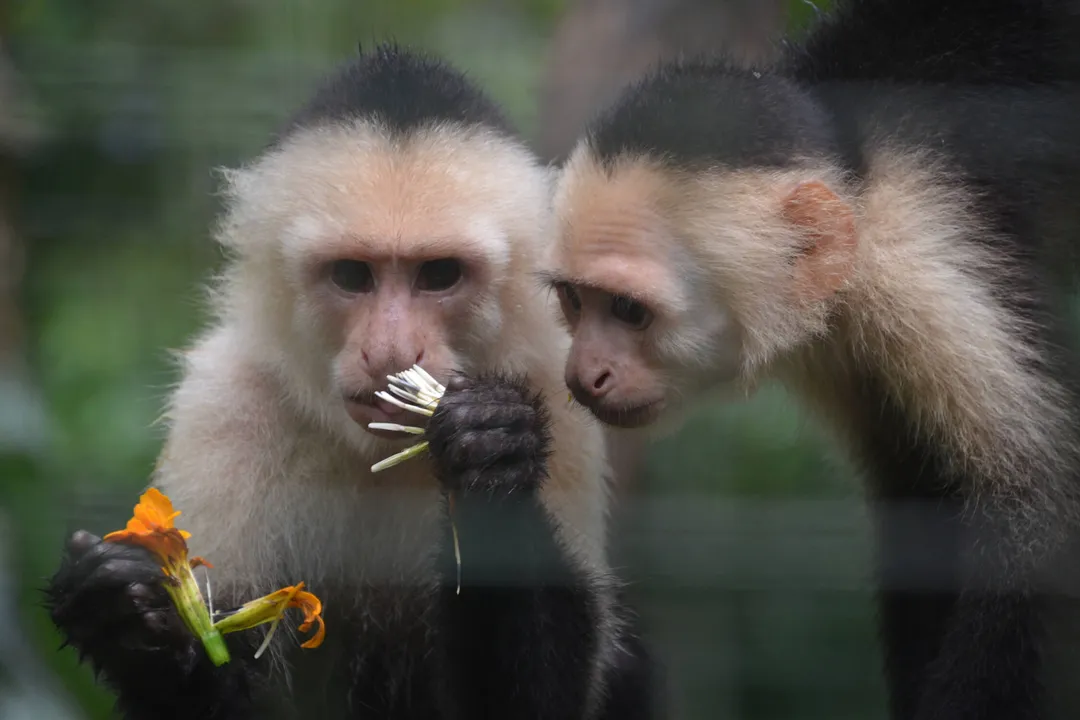
The IUCN Red List has assessed Cebus capucinus as Least Concern, noting its relatively widespread distribution across Central America and the northern parts of South America, though specific regional populations may face greater threats. [5] The descriptive name stems from the striking white fur covering the face, throat, and chest, contrasting sharply with the predominantly black body fur. [1]
# Distinguishing Related Species
The scientific classification is made more complex because the term "white-faced capuchin" is not exclusive to C. capucinus. For instance, Cebus imitator is recognized as a distinct species by some authorities, having only recently been fully separated in taxonomic literature. [6] Similarly, the Cebus albifrons group, often referred to as various species of white-fronted capuchins, also exhibits white facial markings, leading to potential historical misidentification or overlapping common usage. [7]
When comparing C. capucinus and C. imitator, one finds they are closely related, and historical records often conflate them. [6] C. imitator is generally found in the western part of Central America, whereas C. capucinus has a more easterly distribution, although the exact lines of demarcation are the subject of continuing study. [1][6] This close relationship is a powerful example of how morphological similarity can mask distinct evolutionary paths, making the scientific binomial essential for accurate communication about conservation and behavior. [6] If a field researcher documents a capuchin in a region traditionally ascribed to C. capucinus, they must confirm features like the extent of the white 'hood' or skull cap, as subtle differences in pelage pattern can distinguish the two species. [1]
| Taxonomic Rank | Cebus capucinus (Colombian White-Faced) | Cebus imitator (Panamanian White-Faced) |
|---|---|---|
| Family | Cebidae | Cebidae |
| Genus | Cebus | Cebus |
| Species | C. capucinus | C. imitator |
| Distribution Focus | Panama eastward, Colombia, Ecuador [1] | Western Panama, Costa Rica [6] |
| Conservation Status (General) | Least Concern [5] | Data Deficient/Near Threatened (Context Dependent) |
This table illustrates that even at the species level, precision is paramount, and the difference between two species in the same genus can hinge on geographic separation and subtle physical cues. [6]
# Subspecies and Internal Variation
The classification doesn't always end at the species level. For Cebus capucinus, there are recognized subspecies, which represent geographically distinct populations within the species that have developed minor, consistent morphological differences. [1] Recognizing these subspecies is important because a population in one area might face different localized pressures than another, even if they share the same overarching species status. [5]
For instance, the subspecies C. c. capucinus and C. c. imitator were historically considered forms within the same species, highlighting the fluid nature of scientific understanding. [6] While C. imitator is now frequently elevated to full species status, the concept of subspecies within C. capucinus itself—like C. c. nigriventris or C. c. brunneus—shows how classification maps small-scale evolution. [1] These subtle distinctions often relate to the exact shade of the mantle fur or the extent of the white coloration on the shoulders. [1]
Another point of taxonomic variation comes from the Cebus albifrons group, which can also exhibit pale coloration around the face. [7] While C. albifrons belongs to the same genus, its overall appearance, particularly the extent and color of the "face paint," differs significantly from C. capucinus to the trained eye, though a casual observer might group them together based only on the presence of light fur on the face. [7] This overlap in common descriptors underscores why scientific names are the only reliable identifier.
# Contextualizing the Family Cebidae
The placement within Cebidae is significant because it defines the capuchins as members of the more "primitive" or basal group of New World monkeys, alongside squirrel monkeys (Saimiri). [2] This grouping suggests shared ancestry that predates the divergence leading to the larger, prehensile-tailed monkeys of the Atelidae family. The members of Cebidae tend to be smaller and lack the strong grasping tail seen in spider or howler monkeys. [8]
When we consider the cognitive abilities often attributed to capuchins—their documented use of tools, such as using stones to crack nuts—it provides an interesting comparison point within the Cebidae family. [8] Their specialized manual dexterity, facilitated by their grasping hands, is clearly a key evolutionary trait, despite their slightly more generalized classification compared to the specialized Atelidae. This intellectual capacity, paired with their basic New World monkey anatomy, makes their Cebidae classification a fascinating intersection of behavior and morphology. It suggests that complex problem-solving evolved robustly within this particular branch of New World primates. [4]
# Taxonomic Mobility and Revisions
A key takeaway from tracking the scientific classification of the white-faced capuchin is the recognition that taxonomy is not static; it is a constantly revised hypothesis based on new evidence, especially molecular data. [6] The shift from viewing Cebus imitator as a subspecies of C. capucinus to recognizing it as a full species is a direct result of genetic studies that revealed significant divergence greater than that seen between other recognized species pairs. [6] This highlights the difference between morphological classification (what they look like) and phylogenetic classification (how closely related they actually are genetically). [1]
For an interested observer, this fluidity suggests that referring to "the" white-faced capuchin is inherently ambiguous unless the specific scientific name is provided, especially if their observations cross known species boundaries in Central America. [6][7] Therefore, when reading older literature, one must be prepared to see synonyms for the currently accepted species names, a common occurrence in mammalogy. [1]
# Conservation Implications of Classification
The specific classification directly impacts how conservation efforts are managed and how threats are assessed. [5] As noted, C. capucinus is currently listed as Least Concern by the IUCN, reflecting its wide range and general tolerance for habitat modification. [5] However, this broad status can mask the vulnerability of specific, isolated populations or subspecies which might be nearing endangerment. [1] If C. imitator is managed under a different status—perhaps Data Deficient or Near Threatened—then lumping it under the more secure C. capucinus status would obscure its real risk. [6]
Understanding the precise scientific classification helps policymakers and conservation groups allocate resources effectively. For example, a protected area designated to conserve Cebus capucinus might inadvertently exclude a genetically distinct, more threatened population of Cebus imitator if the species boundary is not respected in park planning. [5] The commitment to accurate scientific naming thus translates directly into effective ecological management on the ground. [8]
# Final Placement Summary
The white-faced capuchin, primarily Cebus capucinus, is securely nested within the familiar hierarchy: Animalia Chordata Mammalia Primates Platyrrhini Cebidae Cebus C. capucinus. [3][2] This precise placement confirms its identity as a New World monkey, distinguishing it from Old World counterparts and placing it alongside its close relatives in the Cebus genus. [4] The ongoing scientific process of refining species boundaries, particularly between C. capucinus and C. imitator, serves as a practical case study in modern evolutionary biology, demonstrating that even common names can conceal fascinating taxonomic complexity. [6] The difference between a monkey being classified as a subspecies versus a full species can mean the difference between receiving focused conservation attention or being grouped with a generally secure population. [5]
This deep dive into its taxonomy reveals that the white-faced capuchin is not a single, monolithic entity in the scientific record, but a collection of closely related, evolving lineages, each deserving of precise identification for both scientific study and practical protection. [1][7]
Related Questions
#Citations
Colombian white-faced capuchin - Wikipedia
Cebus capucinus (white-faced capuchin) - Animal Diversity Web
Capuchin Monkeys - Explore the Taxonomic Tree | FWS.gov
White-faced capuchin | Research Starters - EBSCO
[PDF] Cebus capucinus, Colombian White-throated Capuchin
Central American White-faced Capuchin (Cebus imitator) - iNaturalist
Capuchin Monkey. - Proyecto Asis
White-throated Capuchin (Cebus capucinus) - The BioFiles